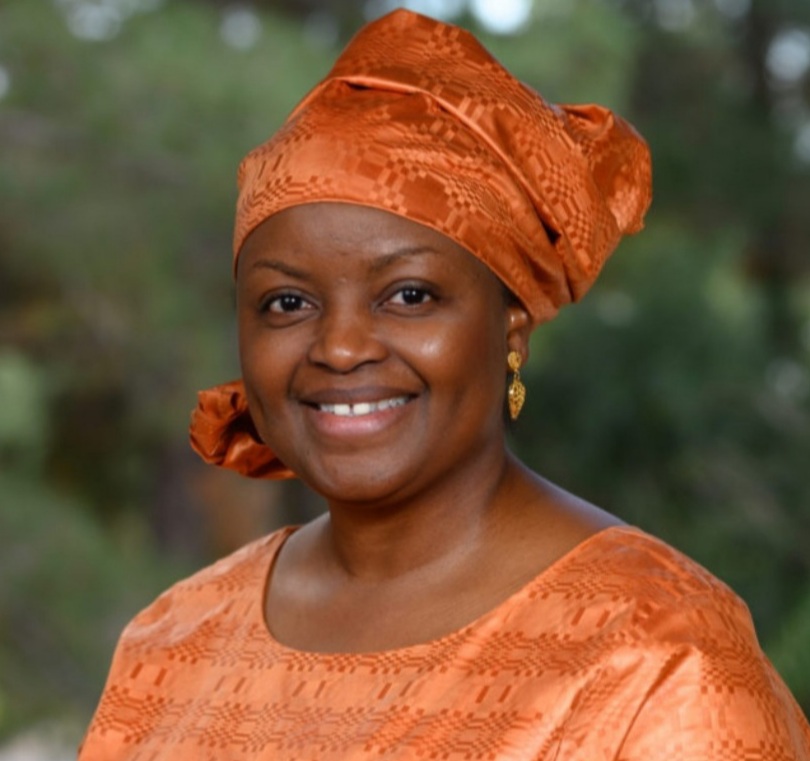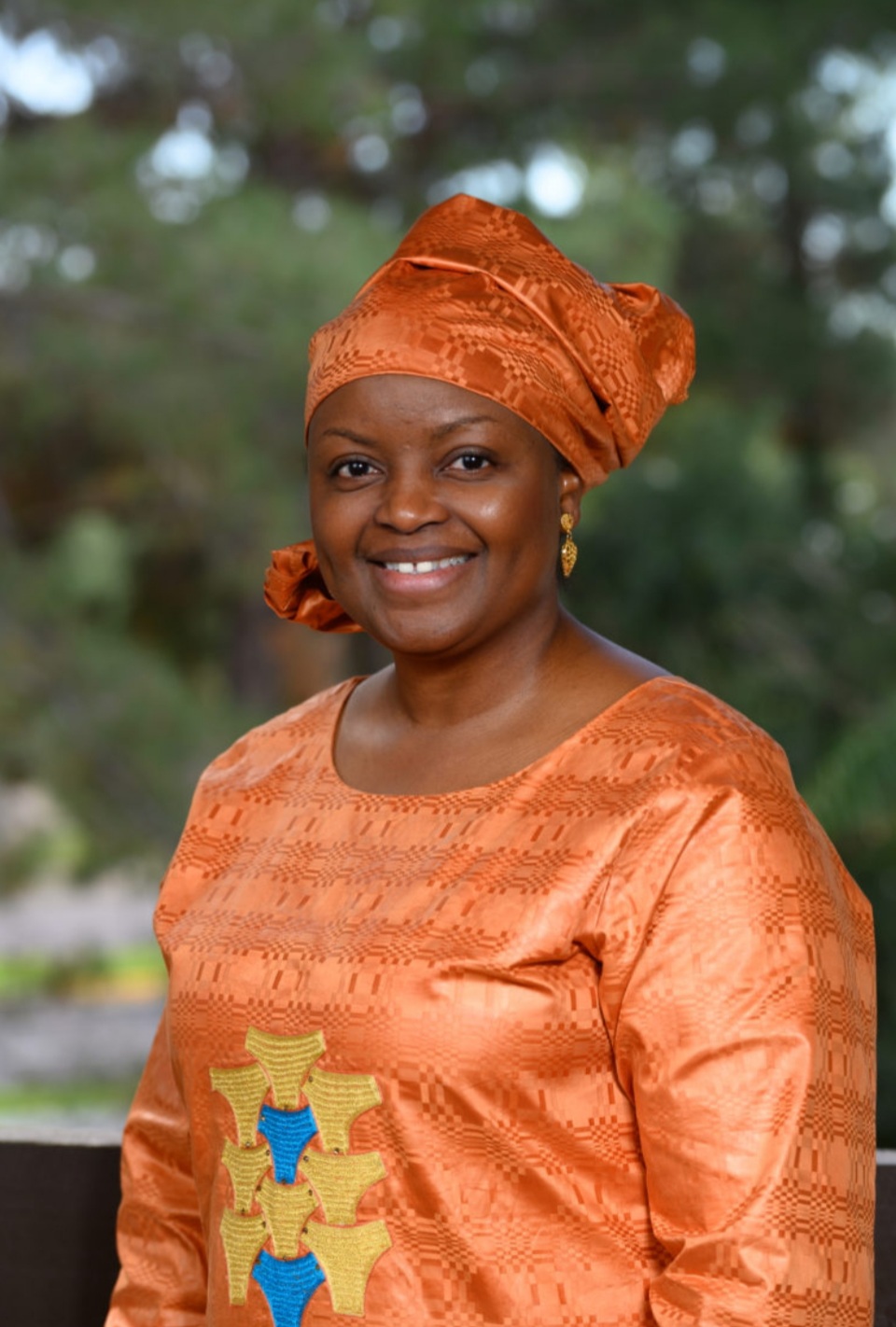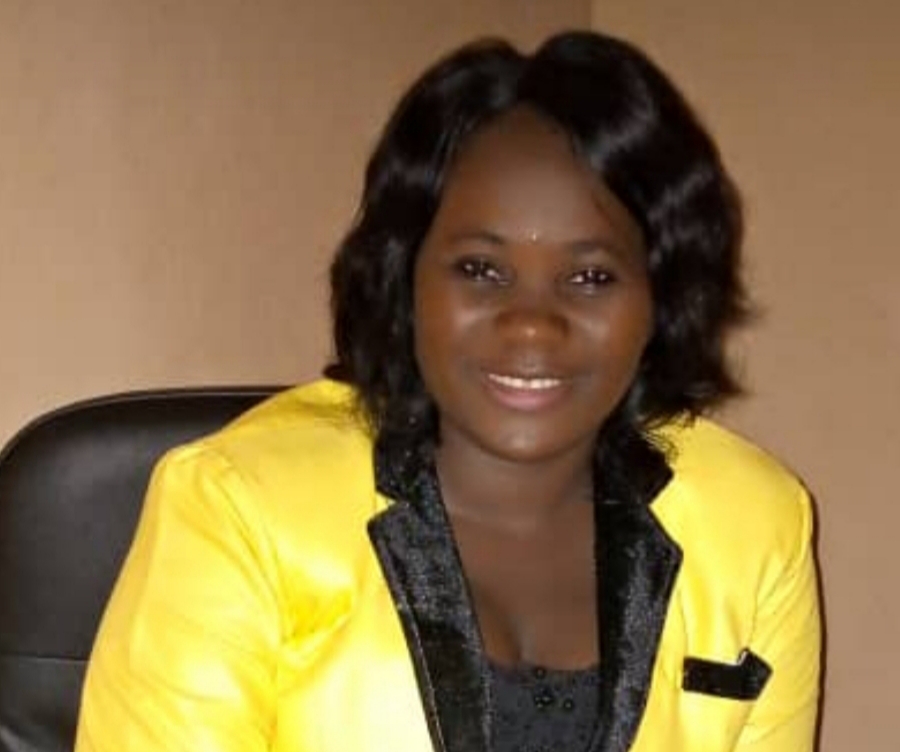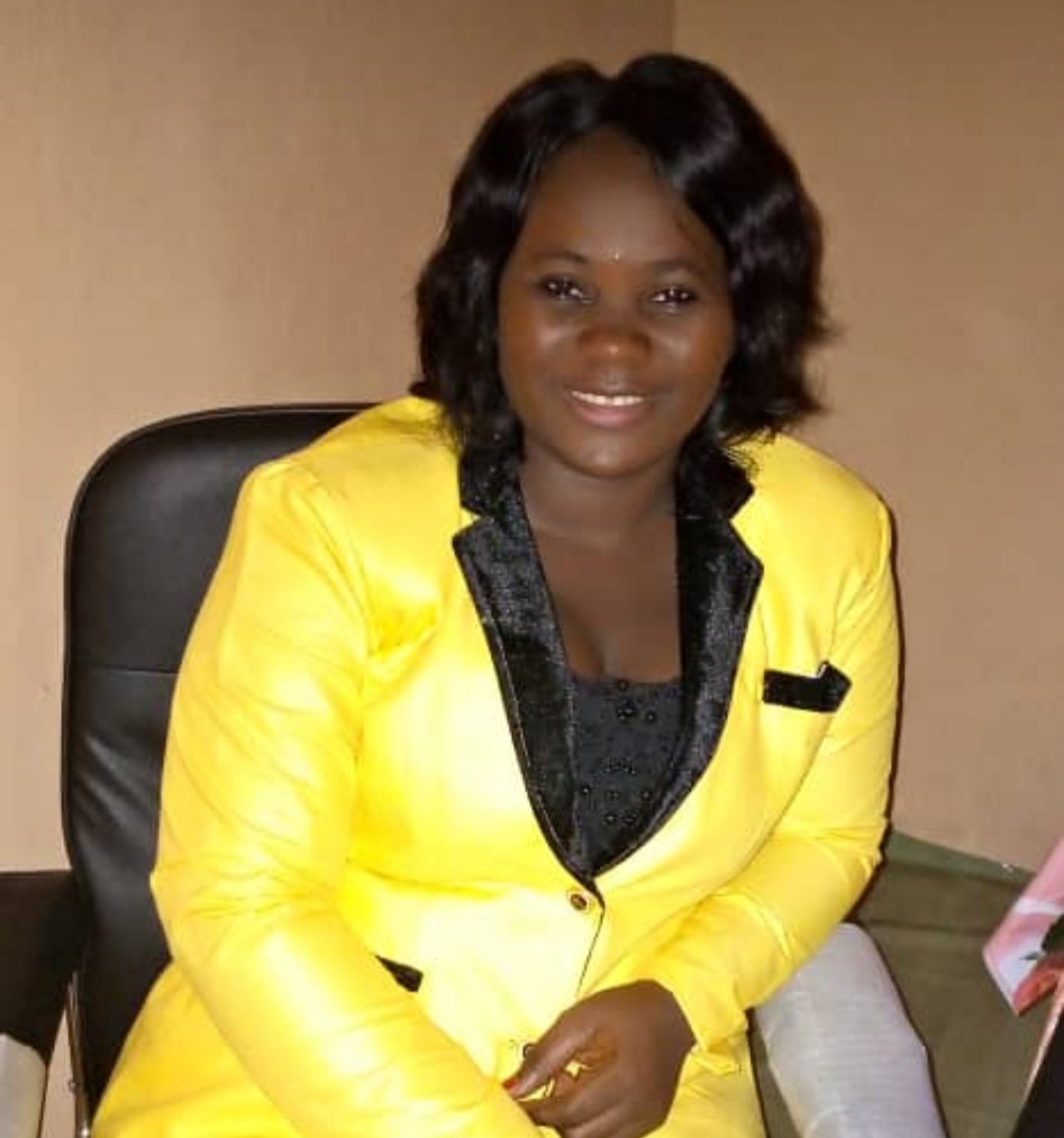
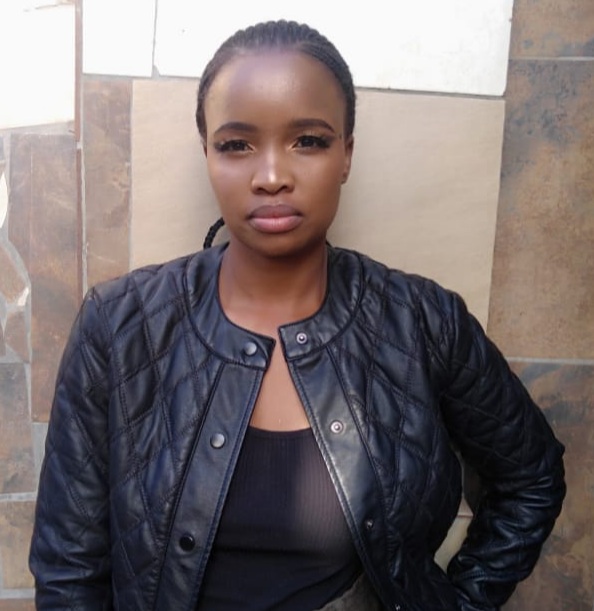
Sindiswa Mabindisa

Sindiswa Mabindisa, founder of Wretched Woman’s Diary

Sindiswa was born in the township of Tembisa, Gauteng and had a very tough upbringing that no child chooses. Her story shows us that we do not choose the situation into which we are born; it chooses us but that with the calling that God bestows upon our lives, it can take one from the slums of the Earth to the Heavens before His Eyes. He sees our beauty in the way people may not and He chooses us to do the work we are called to do, to a door no man can close.

This is Sindiswa’s story…

Their marriage was a mess; they were always fighting. Every weekend my dad was drunk, and he would hit my mom. In 1998, they eventually divorced, and mom moved out and left us with our dad. Since then my dad got involved with women that treated us badly. I remember one incident where I innocently called one of his girlfriends’ “mother”. She got so mad at me and said in a condescending tone, “andingi mamakho wena!” (I am not your mother!).

We, my elder sister (aged 7), little brother (aged 4) and I (aged 6), were then sent to Eastern Cape to live with my dad’s family but we were never made to feel like we were part of the family. We had to fend for ourselves and our little brother, from changing his nappies to doing house chores. We were children but were not treated as children, being recipients of harsh words and treatment, and this had a profound effect on me. But, instead of things getting better, things just got worse.

Back home, in Tembisa, my dad remarried eight years after my parents’ divorce. In the time that we were sent to live with our paternal family, he never supported us. My grandmother, his own mother, took him to the Maintenance Court to seek financial support. But instead of owning up to his responsibilities, he resigned from his job, just so he could evade them. Each time my grandmother took him to court, he resigned from his job. Each time. She tried numerous times, but he refused to support us.  

He then summoned us back to Tembisa to live with him and his new wife, our stepmother. We were welcomed into a living hell but this time, it was only me and my brother. Even though my dad always had a drinking problem, this new life was to escalate into me doing things I never thought in my young mind, that I would ever do.   

While we were back at home, we were forced to eat pap and tomatoes while my dad, his wife and her child would dine out at restaurants. I became the domestic worker at home. I had to cook dinner, do everyone’s laundry, include cleaning their sheets filled with semen, and every housework chore one can think of, on an empty stomach. 

As I said, my dad had a drinking problem but this time, they decided to open a shebeen (a private house selling alcohol) and they made me the “shebeen girl”. I had to sell alcohol from Friday nights until Monday mornings. This decision, of theirs, opened our doors to shady characters and soon, we would have men sleeping over at our house. Strange men, lewd men, sick men. My stepmother invited them in and refused them to leave. She said people were going to kill them, with them being so drunk, and she made space for them to sleep on the floors, alongside me. I always slept on the floors but now, I had company.

Some memories of them are vague, other memories are clear. I recall one of them touching my neck. He kissed my neck and moved his hands between my thighs and said to me that he can do anything he wants with me and he will give me money … I used to share my sleeping space with those men.

As a girl, you want the love of your father, but my dad never loved me. He made it very clear that he did not love me and sometimes, he would hit me for no reason. His words towards me were always harsh but the words that I will never forget is him saying, “Mhla nda thenga umpu uzoba ngowo kuqala umntu endizo mdubula” (The day I buy a gun, you would be the first one I’d shoot) and he always reminded me that he would shoot me once he gets himself a gun.

Finally, 2008 arrived and he got the gun but he never followed through on his threat. In a twist of fate, the year he got the gun is the year I moved out and the year he died.

In April 2008, I moved in with my mom and a few months later, when I returned from a family visit to my aunt in Katlehong, my mom fell sick. She was bedridden and in a hopeless state. I greeted her, “molweni mama” but she didn’t respond. My sister replied and said, “uMama uyagula and akakwazi ukuthetha” (Mom is sick, and she cannot talk). I looked at my mom and she was crying. I didn’t know what to say to her, but I could see she was in pain.

In that moment, I recalled the complexity of our relationship, from the sense of abandonment I felt as a child to the woman suffering before my eyes. Mom could not talk nor walk, so my sister and I used to bathe her and take care of her. Her state was saddening because she could not even tell us when she needed to use the toilet. On the 16th September 2008, I received a call in which my mom managed to muster her strength to tell me that she loves me and a day later, the 17th September 2008, she died.

I was 17 years old at the time she died and shortly after her death; I told my sister that we need to go to dad to ask for food because we had nothing to eat. I begged him for food, but he responded, “Akho kutya apha hambani!” (There’s no food here, so leave!). He was so mad at me for asking and refused. Maybe if it was my sister asking for food, he would have given her. I was so worried because my sister had a two-year-old and we were all hungry. That night he came to our house, but I then ran to his aunt’s house. He followed me to his aunt, along with my stepmother, and wanted to hit me but his aunt told him not to. He then told me, “Uba ndingafa ungezi emngcwabeni wam ngoba nawe uba ufile asoze ndize” (If I die don’t come to my funeral because when you die, I won’t go to yours).  Those were his last words to me because on the 10th November 2008, he died.

We had nowhere to go because when my mom was alive, she was renting and when she died, I asked my aunt if she could rent with us but a month later, she left to live with her biological dad and we had to make plans to move because we didn’t have money for rent. I remember so vividly the times I would knock on people’s doors to ask for a place to sleep. There were nights where I questioned the purpose of my existence.

In 2010, unbeknown to me at the time, the answer to my question was being answered. While I was on a visit in Eastern Cape, my grandmother told me about some young lady who was sick. I asked to go see her and when I got there, she was lying in her own faeces. I asked to bathe her and did that for two weeks. My cousin then asked me to come visit them in Cape Town. When I got there, her own cousin had tuberculosis (TB). I took care of her as well. I would bathe her and take her to the clinic for her checkups until she died in 2011.

In 2016, one of the grandmothers in my extended family, who was mentally ill, suffered from an epileptic fit. She was sick, vomiting and bedridden, in her own faeces. Nobody wanted to assist her, and I was told to call an ambulance. I then offered to bathe her, and this is how I started my career looking after the elderly and the disabled.  

In 2019, I established my non-profit organization called Wretched Woman’s Diary and decided to devote my time to bathing elderly people and people with different disabilities including mental limitations. I have made it my mission to identify the elderly, the frail and the chronically ill within my community and started this organization without any financial assistance or resources. I have taken it upon myself to provide home care visits and nursing care, where possible. I have personally experienced the hardships of taking care of an elderly woman on her death bed, to the extent of bathing her corpse.

Currently, I have four volunteers working for me and they are mainly responsible for dealing with the administrative aspect of Wretched Woman’s Diary which makes me solely responsible for nursing and caring for the victims of neglect. To date, the organization is caring for 10 elderly ladies, including 2 disabled children, on a daily basis.  They are vastly located in Gauteng but in some cases, my work has taken me to the Vaal, Pietermaritzburg and Mpumalanga.

As Wretched Woman’s Diary, we aim to alleviate the stigma against our senior citizens and the disabled, we aim to ensure perpetual care and assistance to the elderly, we aim to provide a safe and caring service to the elderly within their own homes and do away with social ills that are affecting our elders. The dire conditions which our elderly are faced with are disheartening; they are faced with feelings of rejection, loss and poverty and I am hoping to work in partnerships with other individuals and organizations that shares the same vision as I do because my dream is to extend my compassion and services to all provinces in South Africa, in the near future.

I am also studying towards becoming a qualified clinical psychologist with the dream of establishing care centres as far and as wide as I can go, to look after the elderly and individuals with different disabilities and limitations.

As much as I am still broken about my upbringing and have issues that I do not want to talk about, I finally found the purpose in my pain. All the years of hardship and suffering were what were needed to mould me into the person I am today. I can relate to the abandoned, to the neglected and to the rejected because I experienced abandonment, neglect and rejection. Today, I willingly go to sleep hungry, just to give someone else my plate of food, because I remember the little girl who was hungry, most days, and I would never want someone else to suffer the way I did.

If you are interested in learning more about Sindiswa or would like to get in contact with her, please reach out via her Facebook page, Wretched Woman’s Diary, or email her at sindiswamabindisa11@gmail.com
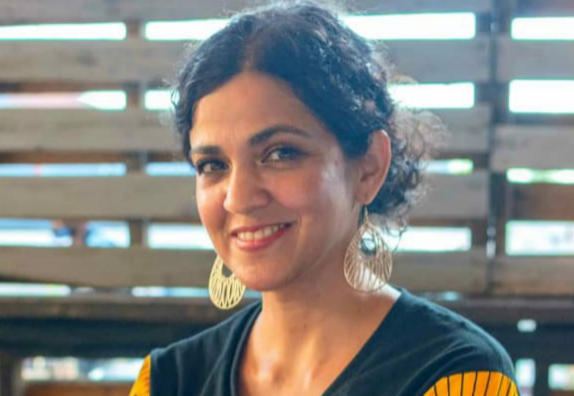
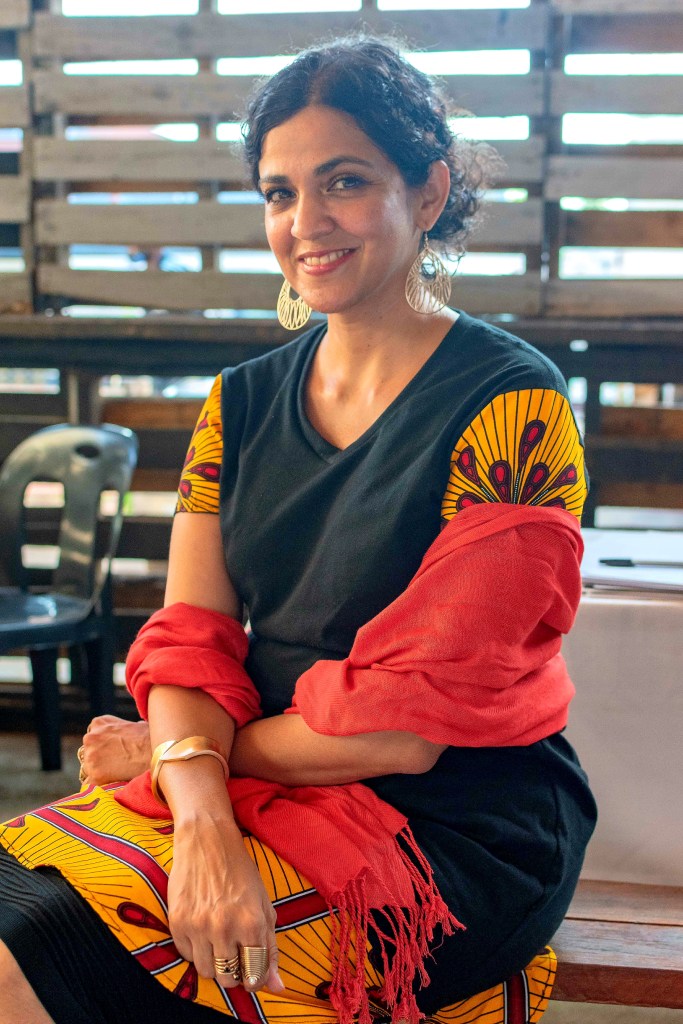
Suraiya Essof

Suraiya Essof, founder of Kites for Peace

Suraiya Essof was named one of the 20 Most Outstanding Zimbabwean Women by The Guardian UK in 2020. She is a tenacious woman who, in spite of her health challenges, has become very influential in bringing together communities, businesses and social networks. Her knack for networking and the ability to create opportunities has seen her social innovative work being recognised and awarded, both locally and internationally. Social entrepreneur, mother, wife and businesswoman are of the many ways in which one can describe her but most importantly, she is proof that to create change, we need to turn inwards before we can power outwards.

This is Suraiya’s story…

I was born in a small mining town, Kwekwe, in the middle of Zimbabwe to a second-generation Zimbabwean father and a South African mother; the youngest of four girls. At the age of 10, I was diagnosed with Type 1 Diabetes. It rocked my family and, in the 90s, with very little access to information, it was indeed a very confusing time. Stories that I would be blind by 30 and an amputee a few years thereafter really got me into a mindset where I felt that time was limited. Likewise, my parents were amazingly proactive; they subscribed to foreign publications of Diabetes magazines and wrote letters and ordered books, just to educate themselves, my siblings and me. Their efforts brought light to my situation and with it the hope that I was not doomed to die a painful, undignified death that had been described by well-meaning yet fearmongering people.

Still, it was difficult. Diabetes is a tight rope of managing your blood sugar levels by finger prick testing several times a day, four insulin injections daily, monitoring what you eat and in what quantities, and making sure you stay active, but also not too active. Managing stress is also a huge part of diabetic care. As a preteen and then a teen at boarding school, I had to contend with stress and anxiety levels that came with trying to negotiate studies, relationships, teen angst, boarding school, autocratic matrons, bullies and a life-threatening condition. Three months before my O level exams, I slipped into a coma due to diabetic ketoacidosis. However, I did well in my exams, but not “well enough” to qualify for a white blazer (a status in Zimbabwean schools associated with being a straight A student) and to fill the big shoes that had been left for me.

I was perceived as an underachiever and with low expectations of myself, academically; I faded into myself, but started to spark socially. Once I reached university level, I shook off the negativity that came with being bullied, was more independent and the world became my oyster.

With internet access and Google, I could get any information I wanted. I started networking, at university and online, to get information I needed for my studies and to help myself and others in various areas. I became a go-to source of information for friends and residence mates. I joined advocacy groups for various causes, co-led fundraisers and through my activism; it expanded my awareness to the plight of others.

The suffering of others can be tremendously sobering, especially when one is self-pitying and is constantly being pitied by one’s own circle. From an oblivious young person, wallowing in my own misfortunes and self-imposed limitations, I awoke to the social injustices that others faced. It seemed futile to feel guilty of my own privilege and of the opportunities and care afforded to me, so I took the initiative and added my name, voice and feet to meaningful causes.

I graduated with distinction, from the University of Johannesburg, with a Bachelor of Commerce degree in Industrial Psychology. On my return to Zimbabwe, I got my first job at a school, where I volunteered to teach a few substitute classes and fell in love with the teaching profession. A few years later, I got married to my soulmate and moved to Harare. I then pursued distance learning and graduated with a Postgraduate Certificate in Education (PGCE) from the University of South Africa while working at a Jewish school for 7 years. As a Muslim who attended Christian schools, being a teacher at the Jewish institution offered yet another perspective to my inherent belief that we are more alike than we are different.

After the completion of my PGCE, my two sons were born, and this again shifted my perspective on the meaning of life and my purpose. As my children grew and my furniture retailing business settled into a rhythm, things came more into focus for me on my path. I decided to follow my dream of uniting communities, teaching peace and spreading the message of kindness, brotherhood and compassion.

In 2014, the year that I embarked on a new journey, I also experienced the sudden loss of my amazing, dynamic mother. There are few words to describe how the death of a loved one impacts your perspective on life. Again, I was more aware of my own mortality and suddenly overwhelmed with the huge responsibility of being a parent myself. Legacy became ever more important to me. What would I leave behind for my children? Had I lived a meaningful life? Have I served others? Did I share? Was I authentic? Would I be a good example? Were the lessons I had left behind be good enough? These questions shaped how I chose to continue my journey.

In the same year, I came across an independent project on Facebook inviting participants to break the world record for the number of kites flown simultaneously. I hosted the event and forty-eight kites were flown in Zimbabwe that year as a part of this initiative. Friends and family picnicked and flew kites. The message was well received; find your joy to find your peace. The world record was broken unofficially the following year, in 2015. That same year, in Zimbabwe, there were calls from the attendees of the previous event to fly kites again; not to break a world record but to celebrate our beautiful environment and to come together in peace on International Day of Peace, 21 September. They scaled the heights of the granite rocks of Ngomokurira and flew bright kites against a stunning backdrop of blue skies and spectacular rock mountains.

With news coverage of the previous year’s festival and increasing interest, 2016 brought a new energy to Kites for Peace. I invited 25 individuals from a WhatsApp group called the Do Gooders to participate in the event. The kite festival had 1000 attendees that year and the following year, in 2017, the number of attendees doubled to 2000! While the initial event was to simply and unofficially break the world record, the subsequent events became a tool of social change.

The Kites for Peace event became a movement that sought to strengthen the ideals that lead to peace. We are committed to the United Nation’s Sustainable Development Goals (SDGs) which we believe are building blocks for peace. In this spirit, and under the Kites for Peace movement, we have engaged over 150 local community charitable organisations to create the Zimbabwe Cares Network. Starting with only 25 at our 2016 event, the Zimbabwe Cares Network is a philanthropic collective of an all-encompassing, community-based and goodwill initiative driven by a shared humanity, compassion, shared vision and a passion to help others. We believe that these organizations are integral to driving social change and use various platforms to network, collaborate and support each other. They meet annually at the Kites for Peace event and use the respective platform to fundraise and raise awareness of their causes. There are currently over 7000 members interacting on our platforms and the impact of this network is immeasurable. Membership for organisations is free and only requires proof of registration. It is coordinated by me and an enthusiastic group of volunteers and is the main project of the Kites for Peace movement.

With increasingly difficult conditions in the country and subsequent increased despair, the need for peace is ever more pressing, and thus the movement for peace has grown in impact, with more people engaging and valuing the need for mental strength, hope and resilience. The 2019 event was held in the jewelled lungs of the city at the Harare Botanical Gardens with a record number of participants and attendees, and in partnership with United Nations Development Programme Zimbabwe. Our 7th event was in 2020. It was an online event which saw more than 20 countries participating, with Kites for Peace festivals held in Tunisia, Nigeria, India, Reunion Island and Zimbabwe.

Through the Kites for Peace platforms, I continue to spread the message of peace and hope and to inspire compassion by highlighting the efforts of the organisations of the Zimbabwe Cares Network all year round. Kites for Peace is a registered organization in Zimbabwe and a registered International Day Of Peace event. It is part of Peace One Day Peace Coalition, a network of global organizations all working towards peace. It continues to grow as a movement for global peace, starting with the individual and inspiring communities to create healthy spaces for recreation and social change. Kites for Peace pledges respect for all life, rejects violence, promotes forgiveness for self and others, promotes goodwill, encourages to uplifts others and help them, to listen to understand and to preserve the planet.

I am driven by my commitment to helping others with support and upliftment through networking and education. I seek to solve the systemic challenges of finding peace in an ever-changing world where economics, politics, climate change issues and the media affects our state of mind.  By promoting inner peace and unity/ubuntu, and through community activism, I aim to change perceptions to drive social change and make us, our communities and the world more productive, purposeful and fulfilled.

I use recreation as a non-intimidating way to approach sensitive issues and to especially encourage children, who are our future policy makers, to become involved in issues that affect individuals, the communities that they live in and the world at large.

I hope that my story will encourage others to have faith in their path, trust their instincts and to truly follow their purpose, even if their purpose is ever changing and their situation is currently not ideal. I believe that no experience is ever wasted and that your path will lead you to your purpose, and ultimately to contentment, fulfilment and perhaps even happiness!

If you are interested in learning more about Suraiya or would like to get in contact with her, please reach out via the Kites for Peace website www.flykitesforpeace.com or email her at suraiya@flykitesforpeace.com 

Isata Kabia

Isata Kabia, founder of Voice of Women Africa and Afrilosophy

Honorable Isata Kabia is a former Member of Parliament of Sierra Leone and was elected to represent constituency 050, in the district of Port Loko for the period 2012-2017. She has served her country since a very young age and continues to develop, motivate and train young girls and women to take up space and make their voices heard. She is very passionate about women empowerment and has made it her life’s mission to see that every girl can dream and strives to assist in providing platforms to make them independent, strong and resourceful.

This is Isata’s story …

In 1980, at the age of eight, I was reunited with my parents who had immigrated to England when I was three years old. During this period of separation from them, I lived with my maternal grandmother in Lunsar, Sierra Leone, which is situated about 2 hours away from my birthplace, Freetown. My maternal grandmother was my World and when my little brother and I were summoned to join our parents in England, I was very sad at the prospect of leaving her in Lunsar.

When I arrived in England, along with my little brother, I was very miserable and did not adjust well to my new surroundings. Everything was so different from back home and I missed my grandmother dearly. As I grew older and became more settled in England, my longing for Sierra Leone grew deeper and I wanted to return home, to see my grandmother. My parents then paid my return ticket to see my grandmother and it was on this vacation that I had my first encounter with my calling. 

During my vacation in Sierra Leone, as a more matured version of myself, I saw the magnanimity of people who had less than me. They had so little compared to the life that I was living back in England, and yet they gave so much of themselves to others. The experience with these women, and people, my people, stirred within me a desire so strong to give back, that for many years since then, their stories became my stories and their stories energized me to make a difference in their lives.

Even though I was still attending school in England, I started supporting the education of girls of my former primary school back home, by sending school materials and even tried establishing a library in my home town of Lunsar. I spent the next several years, before the start of the Civil War, in 1991, choosing to vacation only in Sierra Leone to volunteer at schools or to distribute toys and books to small children or to donate shipped items to hospitals. Every return ticket I paid, since the first, was earned through working holiday jobs back in England; that was how determined I was to keep visiting Sierra Leone and making a difference.

During my years in England, I managed to earn my BSc in Biochemistry and then moved to the United States of America for working purposes. It was here in the USA, in 1998, that I established an organization called African Women of Substance. We protested in front of the White House and raised funds through our brand of beauty pageants by educating people about Sierra Leone and the plight of our children during the Civil War. Through these funds we were able to support two orphanages back home in Freetown.

My passion for my home country led me to become the first president of the Sierra Leone Network in 2003. Under my leadership and after the end of the Civil War, our group of Sierra Leoneans visited Sierra Leone and engaged in the USA to advocate for healthcare services, the provision of education, investments and other services for the people of Sierra Leone.  

My passion for Sierra Leone had only intensified since the seeds of service were sown at the age of sixteen years and while I always planned to return home. The death of my mother, in England in 2006, led to my official return to Sierra Leone. Her death hit me hard and it was a period where my grandmother and I needed each other the most. In this time of personal struggles and the impact it had on my grandmother, I finally made the decision to return home.

Having lived a minority existence based on color, it was fascinating to move back home and experience a minority identity based on gender. Being a woman in Sierra Leone is difficult, but having grown up with the discomfort of being ‘less than’, my default mode has been to challenge the patriarchy here at home just as I have stood up to racism in England and the USA. 

I have chosen to focus specifically on the leadership of women to ensure we are at the table when decisions are being made about us. My organization, Voice of Women Africa is designed to have branches all over Africa, but I have started small, at home, with the Voice of Women Sierra Leone (VoWS) branch. We aim to build a cadre of women who believe in themselves and in other women, to train and encourage 1000 women seeking elected office in our next local and national elections. Our Pathway to Politics programme is carved out to provide knowledge in running a campaign as well as general leadership skills. Our online videos and podcasts will also amplify unheard voices advocating for rights, in service of inspiring similar actions. Our mentoring scheme bridges the generational gap by creating exchanges between our mentees from secondary schools and universities with older women activists. Our podcasts, currently under development, aim to amplify African women’s voices in order to inspire women and girls everywhere.

My social enterprise Afrilosophy, which was established in 2015, provides training in manufacturing and financial management to women and their small businesses. Our training and manufacturing centre was built and became operational in 2017. To date, we have trained 50 youth and women in manufacturing skills, 120 in ceramics and clay works and 250 women in our Village Savings and Loans scheme (VSL) initiative. Through the Village Savings and Loans scheme (VSL) initiative, we support women owned businesses with access to finance, as well as providing an informal health insurance scheme, and an interest free loan for home emergencies. Ten percent of our Afrilosophy trainees have been employed by other companies and twenty five percent of them have their own businesses or are employed by us. We have struggled for five years without support but have been able to impact 500 lives. It is a small number compared to the national scourge we are trying to address but slow progress is better than no progress and we plan to forge ahead irrespective of the circumstances.

I have also designed a programme called WAAW (Working for the Advancement of African Women) which means ‘yes’ in the Senegalese Wolof language. It specifically targets the West African region, with the hopes of starting this year. It is where our expertise through Afrilosophy will be leveraged to support women’s groups in skills training, entrepreneurship, financial inclusion and support in advocacy and creating safe spaces for women.

I want to spend the next five years building a tribe of women to harness that collective power so we can stand together, as women. I am committing this period to building the future we want by investing in women and girls, now. Our organization’s work should create expertise and capacity leadership, so that we can have the critical mass to advocate for affirmative quotas simultaneously as we show courage and seek elected seats.

Storytelling for change is something I have purposefully embarked on through the Voice of Women Sierra Leone, based on the impact that other women’s stories have had on me. Learning about initiatives inspires me to take similar action and contribute to the scaling of those efforts. My story is very much attached to the efforts made by the women and girls I work with, and I want the world to know about them. Telling my story is in service of their empowerment. I cannot empower them but by accompanying them, I am able to amplify their voices, bring attention to their challenges and provide an opportunity for greater support to our small efforts.

I am who I am because of them.

If you are interested in learning more about Isata or would like to get in contact with her, please follow her on her LinkedIn page, http://linkedin.com/in/isata-kabia-41527b29 or email her at hon.kabia@gmail.com

Ramatu Karim Sesay

Ramatu Karim Sesay, founder of Ramatu’s Girls and Women’s Empowerment Sierra Leone

At the age of 25 years, Ramatu has made great strides in spite of the obstacles thrown her way. She has a tremendous will and her story will inspire every little girl who has to fight a culture meant to break her. Her tenacity is outstanding and for her to still be standing today as a single woman, with no children and never having been married in addition to all she has accomplished pays true testament to her feisty spirit.   

This is Ramatu’s story…

My upbringing was tragic and forced me to mature quickly. I had to learn to start doing things for myself, for my siblings and for people in order to survive. At a very tender age, I was sent to live with one of my paternal family members in Port Loko, Sierra Leone to be looked after since my mother was asked to leave the paternal family compound, due to my parents’ divorce. Since she had no means to support her children, she made no objections, at that time. Under the care of my paternal aunt, I suffered tremendously and had to learn to fend for myself and my siblings. I slept on floors, was physically abused and starved, from time to time. I tried raising money for food, by braiding other peoples’ hair, but it was stolen by my aunt. Sometimes, she would also send me to the markets on a hungry stomach to sell items, after school, and when I took 1 000 or 2 000 leones to placate my hunger, she would beat me when I returned home from the markets. On weekends, I was sent to the bush to collect firewood for cooking and the abuse continued with me sometimes eating by neighbours. I endured the mistreatment over the years until she tried forcing me, at the age of 17 years, into an arranged marriage with a 62 year old carpenter. I refused to be forced into this marriage and as a result, was starved.

The final straw came in 2014, aged 19, when my aunt asked me to travel to Banthoron Village in the Port Loko District, where I was stripped naked and received cane lashings by some of the elder brothers of my father because of my refusal to this arrangement and because my aunt tarnished my name by the family who believed her wicked tales of me, including her accusations that I was not intelligent or focused on my studies. While their judgements and beatings pained me, they could not sway me to fall for their tricks because I was able to identify who I truly am and what I wanted to become.

Since I continued being defiant, and spoke up against her and exposed her during the family confrontation, my aunt refused me entry into her home but luckily for me, she was not paying for my education. I was receiving an education through a charitable organization called EducAid Sierra Leone, which caters for the less privileged in Port Loko. However, since she refused to take me back in, I could not return to my aunt’s home and was forced to stay in Banthoron Village, where I was able to read and prepare for my screening exams at another EducAid Sierra Leone branch.

During this period, I developed a deep concern for standing up against perpetrators and became passionate about gender equality and women empowerment. I wanted to improve the lives of all females living in marginalized communities and started engaging with the Banthoron village girls. I encouraged the girls to challenge cultural views that go against their rights to an education and a better life. During one of these educational sessions, I managed to borrow a phone to call one of my female school friends and a male staff member at the school I attended in Port Loko, to explain my family situation. The male staff member promised to get in touch with the Country Director of the EducAid Sierra Leone to assist me in getting out of Banthoron Village. He delivered on his promise and shortly thereafter the Country Director, my female friend and the male staff member (along with another) drove all the way from Port Loko Town to fetch me in Banthoron Village and I started a new life in Maronka Village. While I was sad to leave behind the village girls, I was ecstatic about the positive change in my story.

I was housed by EducAid in one of their buildings that served as a quarantine center during the Ebola Outbreak in 2014 and was appointed as the quarantine home mother, for a short period, to look after children, both girls and boys that were orphaned by the Ebola pandemic. I was later transferred to EducAid Rolal Senior Secondary School Port Loko to continue my schooling. Throughout this period and serving as a group leader to younger children, I managed to graduate high school although it pained me that none of my family members attended my graduation since they disowned me. After completion of high school, I continued serving EducAid and was asked to assist with their EducAid Mgbeni branch. Throughout, I was empowering, encouraging and teaching classes to children under my supervision and was asked to get involved in a Women’s Project teaching girls and women, phonics, mathematics and language arts. It was during this period, months later, that my father made contact with me, to apologize for not standing up for me because of his fear of his family and the repercussions of the elders who do not take kindly to defiance and he encouraged me to focus on my education and was proud of me for what I have accomplished thus far.

In 2016, I was transferred to a new EducAid school in Makeni to continue the Women’s Project and where I continued in my position as a home mother, gender equality representative and head of the safety committee. I also took it upon myself to engage girls in Makeni about female genital mutilation, which is a highly regarded cultural practice. I was of course met with a lot of backlash but the issues were resolved through EducAid Sierra Leone, as part of their organizational work.

I was very happy during my period at EducAid Sierra Leone as I was gaining experience and earning a stipend per month, to survive, since I had no one to support me but towards the end of my tenure, I was a victim of sexual harassment by one of the senior male teachers who wanted to have sex with me in exchange for bread, eggs and other foods but since I refused his advances, he avenged my rejections through falsified reports on my so called misdemeanours and since, there were no open platform to discuss cases of sexual harassment, noting that he was in a position of trust, I was made redundant and my tenure at EducAid Sierra Leone came to an end. It was distressful for me since I was saving most of my monthly stipends to enrol in university and now felt like I was back to square one.

In spite of this, I told myself not to give up and enquired the cost of pursuing a Bachelor of Education degree at the Ernest Bai Koroma University and to my delight my savings covered the first year tuition. To make ends meet, I sold many different snacks on campus and surrounding primary schools because I believed in the power of an education and with the help of good Samaritans, along the way, who assisted me with my struggles, I am now a 4th and final year student, who intend graduating in 2021 with B.Ed., majoring in Community Development with a minor in Agriculture.

As a young and single woman, I have faced a lot of sexual harassment and had to deal with men trying to prey on me, considering my vulnerable situation, but I have honestly been strong and dealt with every obstacle thrown my way in the most dignified way possible and I am extremely grateful for the help of truly good Samaritans who believe in me, my potential and my vision for my future and whose only heartfelt aim is to see me succeed.

My passion, dreams and aspiration for education, women’s rights, development, women empowerment and improving the livelihood of women and girls living in marginalized communities became stronger in my thoughts and heart after being faced with all the hardships. I realized all of those painful experiences have given me more strength of mind, boldness, lessons and the empowerment needed to be vibrant and fearless in the advocacy of young girls and women.

After my fruitful tenure at EducAid Sierra Leone where I gained valuable experience as a volunteer, I transformed my skills and knowledge into rallying a small group of girls in Makeni and started creating awareness on the rights of girls and women and on harmful cultural practices. My efforts have expanded through training and motivating them and as a result, my organization, Ramatu’s Foundation for Girls and Women’s Empowerment Sierra Leone was established on 26 October 2019. The Ramatu’s Foundation for Girls and Women’s Empowerment Sierra Leone is a fully functional foundation registered with the Ministry of Social Welfare, Gender and Children’s Affairs in Makeni with an office space containing 7 rooms, newly recruited staff members and board of directors and office equipment which we will expand as more funds become available.

I am deeply aspired in ensuring all females are educated on their rights and responsibilities and in ensuring that all issues affecting women and girls in Sierra Leone are eradicated with my own leadership and to include men in joining me to win the fight against arranged marriages/child marriages, rape, female genital mutilation and gender-based violence. I want to serve as a global feminist and to continue to tell my story and to help in the development of women and girls living in marginalized communities. All I want to see is a Sierra Leone or a world wherein women and girls are not treated based on selfish cultures, are not deprived of their rights and responsibilities, are given the platform for progress and equality and are given leadership positions and inclusiveness.

If you are interested in learning more about Ramatu or would like to get in contact with her, please follow her on her Facebook page, Ramatu’s Foundation for Girls and Women’s Empowerment Sierra Leone or email her at sramatukarim@gmail.com 

Nisha Singh

Nisha Singh, founder of Niche Wellness

A former preschool owner, currently working in the corporate sector and the founder of Niche Wellness, Nisha Singh is a mentor to many individuals going through personal challenges. Through her personal experience and having obtained her education, she is using her platform to teach human rights and provide mindset empowerment coaching to others, with a long-term vision of becoming a principal of her own school.

This is Nisha’s story …

My journey of stepping into my power started in January 1986 when I married my husband, at the tender age of 18 years. I came into a family with so much dreams of being loved as a wife, a daughter in law and an addition to the new family I found myself in.  Going in to the new family, I took much of Bollywood fantasies in my head but marriage made me realize the harsh reality of married life and being married to a man that would not shield me from the harshness of petty fights within his parents’ home; the home we lived in since he was not earning enough money for us to even rent our own home.

I endured years of pain while we lived with his parents. His mother gave me the same harsh treatment she received from her parent in laws. My husband did not defend me when his mum or family found fault with me for petty issues and began hitting me within three months of our marriage. I could not tell anyone as I would be seen as not being a woman of good standing; why else would a husband hit his wife? Something had to be wrong with me and I was always made to feel less than. I too, had dreams to work and educate myself, and to get my own house which I wanted to make into a home for our future children.

Twenty seven years of abuse when I did not submit to all the lies and taunts and spoke up. I was beaten physically to an extent that I had bruises on my face and my body, but in all of this, I became more resilient to find my own space and path.

Three years into the marriage, after my first child was born, I left my husband and went back to my mother’s house in Durban, South Africa, with an opportunity to make my dream a reality but he felt the distance of his wife and child being away from him. He requested that I return to him in Johannesburg, South Africa and that he would get us our own house. We bought a dilapidated house, worked to renovate it ourselves and made it livable, but the abuse continued …

Whenever he went to his mum’s house, he came back angry and would hit me as he was told some story of me having a boyfriend etc., even while knowing that I was barred from his mum’s house.

Thirteen years later, after staying in our first house, we moved to another suburb, away from his parents, but the abuse continued. By this time though, I was working and strived with night and weekend study classes to educate myself and better my earning power.

One day, in my current home, my eldest son had to grab his father off of me and threw him a few metres away, in the passage, and warned his father that if he ever hit me again, he would hurt his father.

For all the years that I was being abused, I made cases at the police station but never let justice run its course as the family would plead me to drop the charges since he would get a criminal record. So each time I forgave him and withdrew the case.

After nearly twenty seven years of marriage, and all the abuse, I finally found the courage to apply for a divorce. When I applied for a divorce, he tried manipulating me and making me feel less than him because I did not earn as much money as him. It took me nine months to finalize my divorce. I even had to fire my lawyer and took my own divorce case to court in 2012 and it was successful.   

While the court settlement included joint custody, my sons opted to stay with their father and I felt very worthless as a woman but preserved to love my children even more, to let them see me for who I am. I admit that I ill-treated my eldest son to some extent as he was behaving in the same abusive manner as his father but I went for counselling and realized that I needed to help him undo the programming he received from watching his father abuse me.

After the divorce, I continued studying and obtained my Level 6 Early Childhood Development teaching diploma, my paralegal qualification and my life coaching neuro-linguistic programming (NLP) practitioner certification, all with my own finances. I am an independent warrior woman, going on vacations and buying my own assets, whenever the need arises and I now use my real life wisdom to mentor and guide persons stepping into their own power, which took me so long to find. While my marriage ended, not all marriages have to end in divorce or separation; the persons in the marriage need to be guided to work together, focus on fulfilling each other’s needs and respect each other.

Through my experience and years of mentoring, I find that a lot of people are overwhelmed by the circumstances they find themselves in and I want people to know that lessons are presented in all of our challenges and that we must strive to be the change we want in this World. I have also learnt that hurt people hurt others but healed people heal others. My mission and prayer is to help people to step into their own power and to create a life they want as I did for myself, in spite of my circumstances.  

If you are interested in learning more about Nisha or require her life coaching services, please follow her on her Facebook pages, Niche Wellness and Finding Your Niche or email her at  Nichewellness9@gmail.com