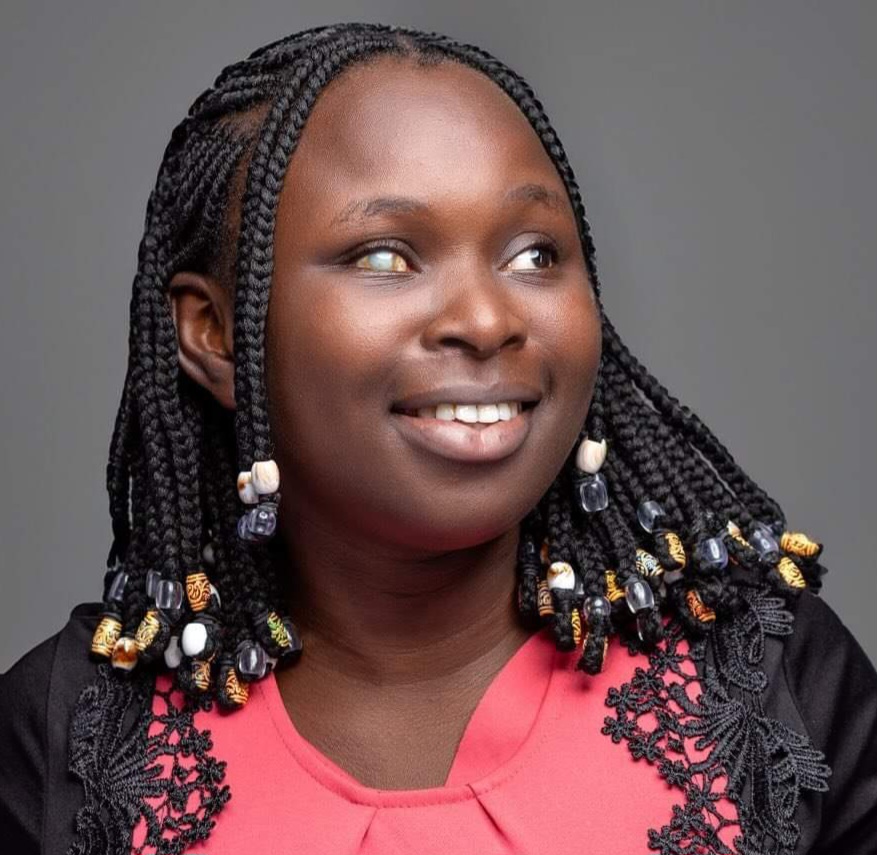
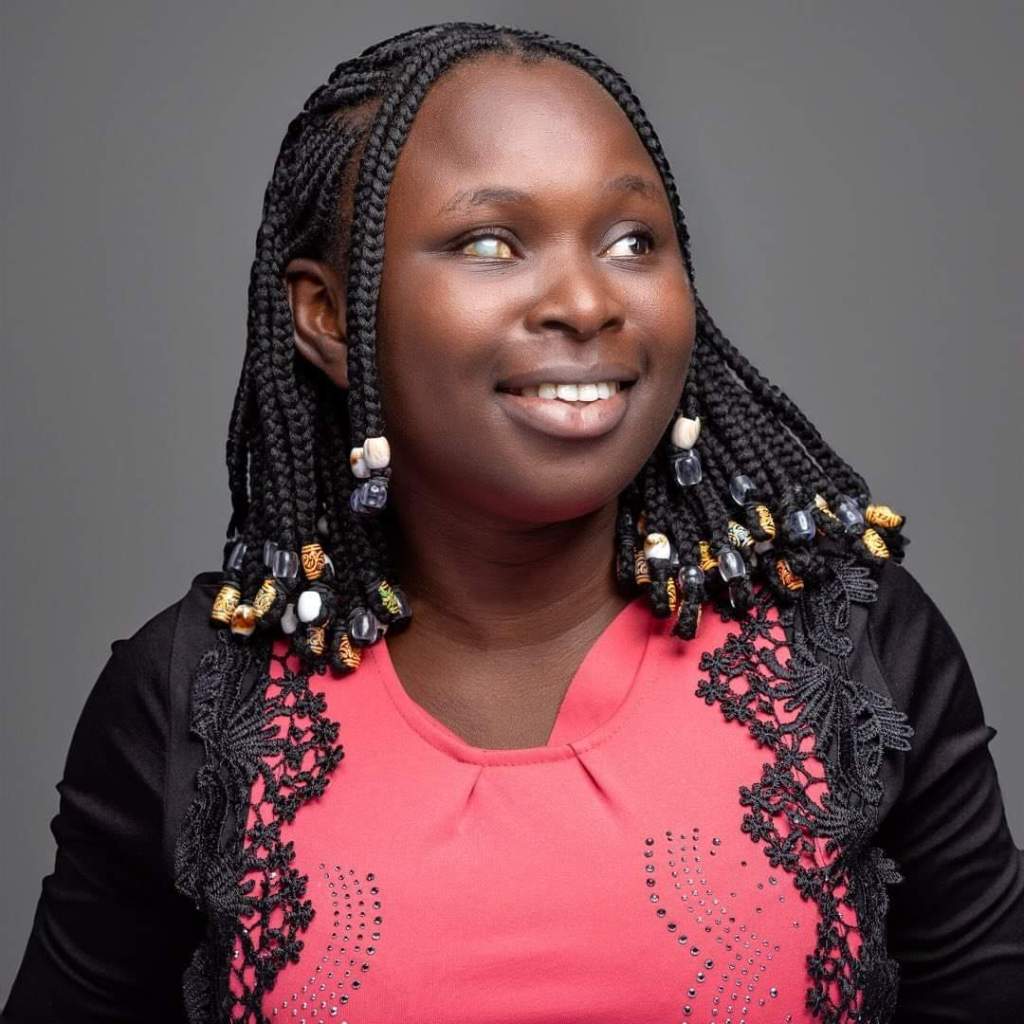
Oluwakemi Odusanya, the founder of Eagle’s Voice International for Disability Rights is driven by her personal experience of living with a visual impairment. She is a disability-rights advocate, a freelance journalist, and holds a Master’s degree in Public and International Affairs. with aspirations to empower many blind women in Nigeria. Her story shows us that a disability can also be acquired and is not simply limited to birth, and that as human beings, we should always be cognizant of the fact that a disability can strike, anyone, at any given moment.
This is Oluwakemi’s story …
“This cannot happen to my child! We don’t have this disease in our lineage!”
My father’s words of anger, aggression and fear, was inflicted on my mother while she hid her pain beneath her beautiful smile, I was confused and wept myself to sleep every night. Little did I know that this was only the start of a new beginning.
Everything changed, in our lives, when at the age of 9 years, I tried to light a matchstick, to prepare dinner for our family. While I lit the matchstick, its particles entered my left eye causing me to feel dizzy and blurring my vision. My parents, thinking it was stress, tried to treat my situation with home remedies.
However, my vision only deteriorated with time, and four years later, my parents received the shocking diagnosis, that I have a retinal detachment in my right eye. My parents were initially shocked and in complete denial but being the eldest of four children and especially my father’s favourite, it was very painful for him to accept my condition but despite the emotional roller-coaster, my parents sought out professional treatment.
After several surgeries and a financial drain, I subsequently made the decision to discontinue with surgeries as there was no hope of recovery and I was tired of treating my eyes with surgical knives. I watched my life unravel, from what I knew it before and what it became after the incident. My self-esteem was at a very low point, my education came to a halt, my classmates deserted me and even my closest family members, my cousins, distanced themselves from me. It was very isolating while everyone pretended that everything would be alright.
At the failure of modern medicine, my parents took me to several herbal doctors, who made me bathe in the river, eat in the jungle, and drink concoctions, all in a bid to restore my sight but to no avail. A friend of my mother then advised her to enrol me in the Pacelli School For The Blind & Partially Sighted Children. It was at this respected school and rehabilitation centre, that I received the necessary skills training and education that facilitated my integration back into mainstream society. While my mother was supportive throughout my transition, it deeply bothered my father.
Wracked with guilt, he could not accept my blindness and would often have intense fights with my mother about it. He wanted my mother around me all the time, to shelter me, and would be mad if, for instance, she arrived home late from the market, as he told her she need to babysit me at all times. All these altercations lowered my confidence, and most times, I wanted to escape from the chaos at home but my mother forged ahead and ensured that I become independent.
After completion of secondary school, I enrolled for a degree in Mass Communication at the University of Lagos. During my studies, I realized that there were only a few women, with disabilities, in university and the reasons were because some could not use the computer independently while others were battling with accepting their disabilities. To prevent myself from becoming a frustrated and lonesome blind woman, I decided to participate in every available activity on campus.
During my second year, I developed a sensitization programme for the university’s campus radio, which aimed to change the mindset and perceptions on disabilities. As a result, my self-confidence increased and communication skills improved. However, the opportunity to join the National Youth Service Corps (NYSC) in Nigeria, after graduation, was a liberating experience.
The National Youth Service Corps (NYSC) is a one-year mandatory service for Nigerian graduates, not older than 30 years, where they are expected to work in a social organization, in line with their studies, but outside of their respective states. Being born and raised in Lagos State, I was posted to Zamfara State, in the Northern parts of Nigeria, a whole 24-hour bus ride from home. Now imagine a blind girl travelling solo, no parents or siblings to protect her or friends to guide her.
Being in the comforts of my home and familiar surroundings, my whole life, this opportunity to explore came at such a great time where I was learning more about my own capabilities. The solo experience strengthened my mobility skills, gave me the confidence to travel alone, and helped me to improve my communication skills and self-resilience. I realized every girl and woman, with a disability, should be given the opportunity, to travel, to discover herself. After three weeks on campground in Zamfara State, I was redeployed to Lagos State for better accessibility and to begin my primary place of assignment at a radio station.
My path from a sighted young girl to a woman, with a visual impairment, which was shaped and inspired by my mother’s unrelenting support and unconditional love, motivated me to want to create a space of change for young women, such as myself, who were not given the opportunities I was given. In 2022, Eagle’s Voice International for Disability Rights was established to equip blind women in Nigeria with basic 21st century skills, to enable them to be self-resilient and to attain leadership roles in media, politics and corporate society. Our vision is to see blind women as active drivers in the Nigerian economy and a Nigerian society that both respects and values visually-impaired women as contributing citizens.
Eagle’s Voice International for Disability Rights, since it inception, participated in many projects and activities. In 2023, we partnered with the Nigeria Association of the Blind, to provide 2-month training to empower ten blind and partially sighted women, in the Lagos metropolis, with computer orientation, community awareness and mobility skills. We also collaborated with non-governmental organizations (NGOs), in Lagos, to organize workshops and seminars, that equipped blind women with essential skills in communication, critical thinking and technical proficiency.
Currently, we are upscaling the leadership skills training project with support of the pollination project, at the University of Lagos, by training twenty blind and partially sighted women, including men, with skills in computer proficiency, communication and emotional intelligence, and orientation and mobility. The training commenced in January 2024 and will conclude in April 2024. The projects and activities have expanded our knowledge and made us aware of a much greater need and capacity to train more women with visual impairments and to demystify the negative perception of people with disabilities.
Although impact can never be measured, many participants have been greatly impacted by our projects and activities, inspiring them in becoming more confident and daring in their aspirations and maximization of their potential. Sensing and watching them bloom is always such a pleasure for everyone involved and we want more of this impact to the extent that we see more people with disabilities in the ministerial sphere of society, where no blind and visually impaired person has ever ventured within Nigerian society. More people with disabilities at the top-tier of society consequently means more impact and positive change for their fellow beings at grassroot level. With this in mind, every action and thought of Eagle’s Voice International for Disability Right is governed by this purpose.
When reflecting on my growth and development and thinking on the different, yet well-meaning, parenting styles of both my parents, I am immensely grateful that even if my father did not initially agree with my mother’s decisions, that she stood her ground in exposing me to the outside world. Any parent want to protect their children but to shelter a child with disabilities will not benefit any such child in the long run. It is best to emphasize on their developments, yet at the same time, to be respectful of their limitations, in helping them navigate their surroundings. Being assertive in their growth is not the same as tough love, because tough love without respect is damaging to their growth.
Thus, the same analogy can be used in dealing with and including people with disabilities in society. To possess disabilities does not automatically equate someone to being incompetent or incapable. The best gift a parent, an organization or society can offer them is to expose children and people with disabilities to educational advancement, skills-training and empowerment projects that will facilitate their integration into and contribution towards mainstream society.
If you are interested in learning more about Oluwakemi or would like to get in contact with her, please reach out via her website eaglesvoice.org, her Facebook page, Eaglesvoice_ng, or email her at kemiodusanya1@gmail.com.
 JOURNEYS OF HER