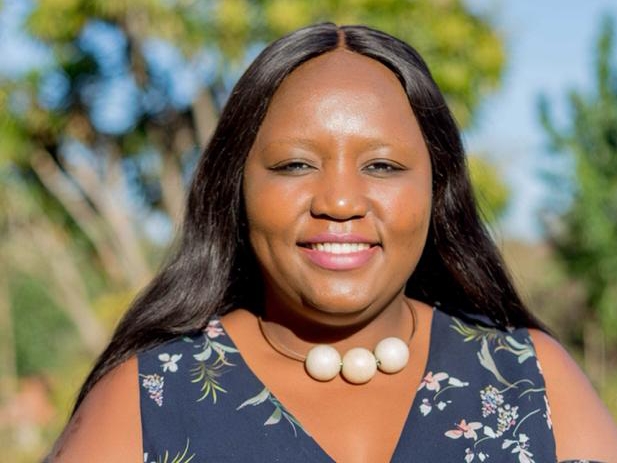
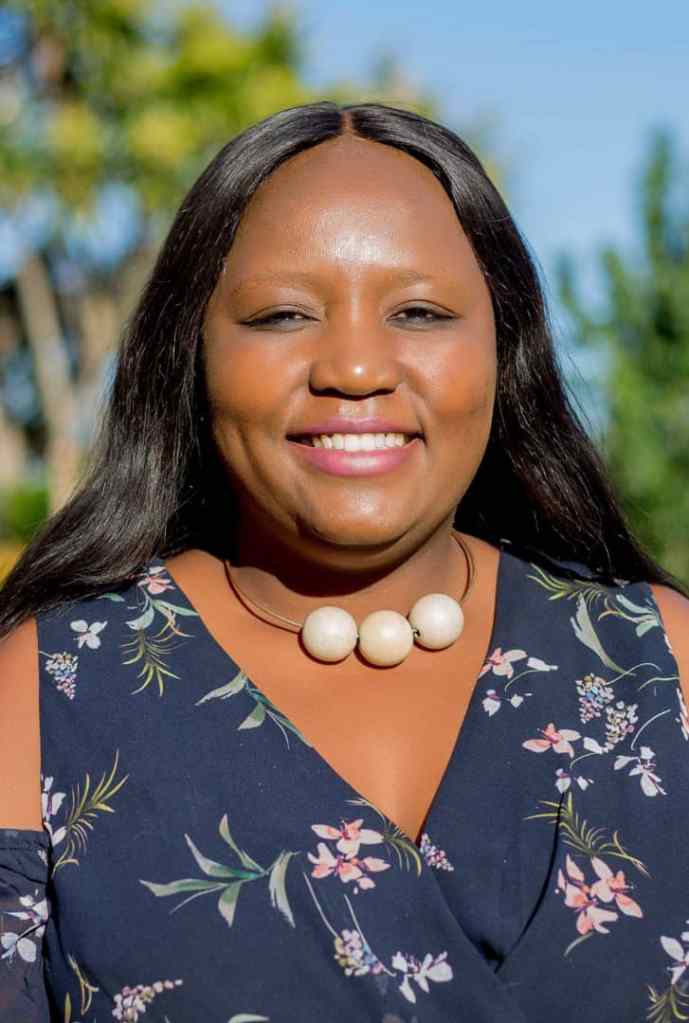
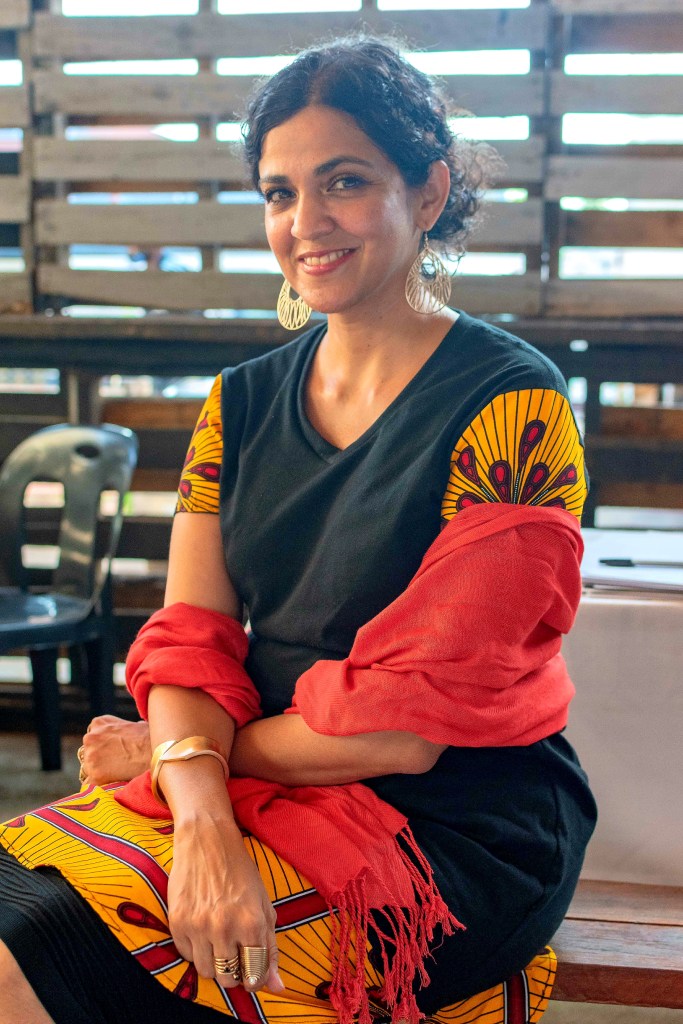
Sylvia Sanyanga is a strong, endearing, and innovative woman who has sought a solution in every challenge. She is a proud mother of three young children who has been hailed for her dedication to service. She has been awarded both the Outstanding Community Pillar and the Local Community Based Organization ZCN Awards by the Zimbabwe Community News Network, in 2020, and is also a 2019 Finalist Nominee for the UK Creativity and Arts Awards for Best Event Organizer and Best Community Leader. Sylvia’s story shows us that the pains and struggles that Life present to us are not there for the sake of destroying us but are there to make us cognizant of the needs within a community and to awaken us to our purpose to serve others within that need.
This is Sylvia’s story…
Growing up, as the eldest of three siblings, I was always close to my mother. Everything she was as an individual was what I aspired to be and everything I have achieved since, has been through her undying love and support for us as children. We were, and still are a very close-knit family even after her unexpected passing in January 2021. Her death has hit us hard but her exemplary life; her involvement in the Ministry, her establishment of the Institute of Healing of Memories branch in Zimbabwe, her hospital visitations to the sick and needy has inspired us to continue her legacy of selflessness, compassion, kindness, and God-consciousness. We are because of her and I am because she is.
Since I had such a wonderful relationship with both my parents and seeing the sacrifices, they made for us as a family, I naturally aspired towards having my own family and after meeting my husband, Eddie, I became a mother to my first and only daughter, Natasha, at the age of 25. As a young mother, and from a family of no health complications, it never occurred to us the challenges that lay ahead. When Natasha was born, she seemed like a perfectly healthy baby girl, even to the doctors, but five years later and through many assessments, she was diagnosed with a hereditary condition called Fanconi Anemia, after experiencing bone marrow failure. It was then discovered that both my husband and I have the recessive gene, and this was a total shock. It was a very confusing and difficult period for us to have to not only discover that it is genetic but to also see our daughter suffer because of this condition.
As time went by, my husband and I started to learn more about Natasha’s diagnosis. Fanconi Anemia is a rare and life-threatening illness and is the most common variant of a disorder called Aplastic Anemia. Fanconi Anemia affects the bone marrow and its inability to produce bone marrow stem cells which in turn produces all types of blood cells that are responsible for the reparation of damaged cells within the body. When an individual’s body does not produce white blood cells, the body cannot fight infection, the red blood cells cannot provide oxygen to the body and a low platelet count cannot stop bodily bleeding. The symptoms of Fanconi Anemia range according to age and person from growth deficiency, abnormal skin pigmentation, unexplained fatigue, easy bruising, nosebleeds and leukemia or solid tumors. However, some children born with Fanconi Anemia, do not show physical signs of Fanconi Anemia and therefore no one could determine anything out of the ordinary with our baby girl.
After Natasha’s diagnosis, in 2013, we were advised that she needed a bone marrow transplant. Quite sadly, there was no medical institution in Zimbabwe that could perform bone marrow transplants and there still is none. As we conducted further research, we discovered that not only was a bone marrow transplant a life-threatening procedure, but it is also very expensive one. It was a very difficult and stressful period for us as a family because we did not have the resources to give our child the best treatment available, but my husband and I decided, to walk in faith and, that we were going to do everything within our power to give our daughter a fighting chance.
Since Zimbabwe did not have the available facilities, and South Africa was too costly, we then shifted our focus beyond borders, to a cheaper option, and found India to be able to assist with our daughter’s condition. We began a fundraising campaign to raise US$100,000 which was required for the bone marrow transplant (US$45,000 for the transplant, US$35,000 for the donor and US$20,000 for airfares and living expenses in India for the entire family for six months). With only two days before the scheduled day of departure to India and having raised only US$23,000 we later received incredible news that an anonymous donor paid for the full transplant cost and was ready to pay US$35,000 if any of us were not a match for Natasha. They also advised us that we could use whatever we had raised for travel and living expenses while in India. It was an absolute miracle!
As a family, we travelled to India. Both my husband and I were not a match for Natasha but our 3-year-old son, Raymond, was. Raymond is our miracle child; he was born perfectly healthy despite Fanconi Anemia being a hereditary condition and us as parents having the recessive gene. Raymond was the perfect match for Natasha, and she received her life-saving treatment without any major complications. As parents, it was never easy to ask Raymond to be his sister’s keeper, but we took that decision as a family because by the end of it all, family is everything to us.
While the operation was a success, the bone marrow transplant does not cure the sufferer of Fanconi Anemia, but it extends their lives beyond the life expectancy of 18 years. As a mother, it does not matter if the doctors say your child has 18 years to live or 40 years to live. As a mother, you will give your child everything that you can to give him or her the best chance at Life, no matter what. I felt that God has bestowed us with this privilege of raising a special child and to treat this Gift of Life with the greatest honor.
In 2015, two years after Natasha’s successful treatment, we were gifted with our third child, Nathan. Nathan, which means God’s Gift, was also born with Fanconi Anemia but unlike Natasha, Nathan was born with physical deformities, which made it easier to detect. His physical deformities included bilateral club hands, an absent radius, no thumbs, an absent right kidney, and severe hearing loss. When he was only two months old, he had to undergo surgery as he had a right inguinal hernia. At six months old, he had corrective surgery to centralize his right hand and one and a half years later, when he was 2 years old, he had another centralization for his left hand. The corrective surgeries would have cost us US$40 000 but were performed pro bono by a team of plastic surgeons from the University of San Francisco that were based in Zimbabwe. We are forever indebted to this amazing team for their selfless contribution because ever since then, Nathan has had full use of his hands and is a thriving and budding artist.
In 2018, when Nathan was 3 years and 6 months, his bone marrow failed, and we once again required a bone marrow transplant in India with Raymond pulling through for us once more. However, there were complications that came with the surgery. Nathan endured numerous infections such as a terrible adenovirus (a common virus that causes a range of illness and cold-like symptoms), a graft versus host disease as he was a haplo-identical match (with his brother Raymond), and had to be in ICU (where at one point we were told to prepare for the worst).
All through this, and my children’s struggles, I was also battling with my own issues. In the years since Natasha’s birth, I have suffered from cysts and adenomyosis. While Nathan was undergoing his treatment in India, I was in severe pain with the growth of a cyst. As a mother tending to a sick child, I put his health before mine and that nearly cost me my life. The growth became life-threatening, and I ended up having to undergo surgery, in India. I also suffer from fibromyalgia, a rheumatic muscular condition which leaves me in constant pain and discomfort.
However, as a mother my pain means nothing to me if my children are well-adjusted and happy. I have and always will put them before me, and it gives me the greatest pleasure to see how full of life and resilient they are. Natasha, Raymond, and Nathan are my life’s greatest joys, and they are in good health, are doing well in school and continue to inspire so many people, both young and old.
Eddie and I went through the most difficult times, watching our children Natasha and Nathan go through pain, particularly with the side effects of chemotherapy that came during their bone marrow transplants. We moved around with a begging bowl, I slept on the floor in general hospitals because that is what you do if you are the primary caregiver, I have had sleepless nights and medical bills piling up because of their condition while having 8 major surgeries of my own. I have been to some of the best hospitals and some which have left a lot to be desired. I have experienced the agony that a parent goes through and the stress that comes when the treatment required is way more than you can ever afford, even if you sold all your possessions. I have been in that place where all you have is hope and faith because your loved one is so ill.
Following our ordeal, Eddie and I agreed that no parent should ever have to go through what we went through, so we founded and registered The Nate Foundation, a non-profit organization that supports children with Aplastic Anemia and related conditions. We also established a subsidiary crowd-funding platform, called Raindrops, to help and assist parents with children suffering from other health conditions that are not related to Fanconi Anemia or Aplastic Anemia.
However, within The Nate Foundation, our support extends beyond fundraising for Aplastic Anemia. We provide psycho-social support to children with Aplastic Anemia and their families and/or caregivers. We also work together with medical personnel in our country to raise awareness of Fanconi Anemia within Zimbabwe and have been able to assist by sending over 6 children to India to receive bone marrow transplants. Over the years, we have assisted patients in countries such as South Africa, Kenya, Zambia, and Nigeria and approximately 20 children have been recipients of The Nate Foundation.
We have done this work with minimal donor support as our government and most people in our country have a limited financial capacity to assist. However, we are excited to announce that we recently received, in August 2021, our first ever grant of US$10,000 from the US-based Fanconi Anemia Research Fund. This huge show of support will ensure that we continue to raise awareness of Fanconi Anemia and provide support to patients, their families, medical personnel, and health facilities.
We also established a special needs preschool called Caterpillar Clubhouse, when we had difficulty in finding a preschool that would accept our son Nathan. Caterpillar Clubhouse is open to all children with various special needs and fosters inclusive learning in mainstream school. We offer a safe and developmentally appropriate environment in which our special children can learn, with a focus on making learning an enjoyable experience for them and to inculcate in them the ability to become lifelong learners. Caterpillar Clubhouse is a self-funded endeavor that charges US$25 per month, per child, and so far, 80 children have entered and left our school grounds and gone on to successfully integrate into mainstream schools with Caterpillar Clubhouse currently hosting 33 children.
Nothing ventured comes without its challenges, but we have been called to serve, and diligently we shall. In addition to continuing our current work, we want to expand by establishing an Aplastic Anemia Treatment Centre, with a bone marrow unit, a learning center for children with special needs, research facilities and a resource library. Our journey of a thousand miles began with one step.
When we count our blessings, we count our children twice. It is such an honor to have beautiful, brave, and loving children and they have taught us so much. The biggest lesson we learnt is that no matter what life throws at you, stand up and fight. There is a blessing in the storm. When we started our journey of a thousand miles, who of us knew that our story of pain and struggle would turn into a tale of beauty and service to others?
If you are interested in learning more about Sylvia or would like to get in contact with her, please reach out via her Facebook pages, The Nate Foundation or Caterpillar Clubhouse, or email her at svsanyanga@gmail.com
 JOURNEYS OF HER