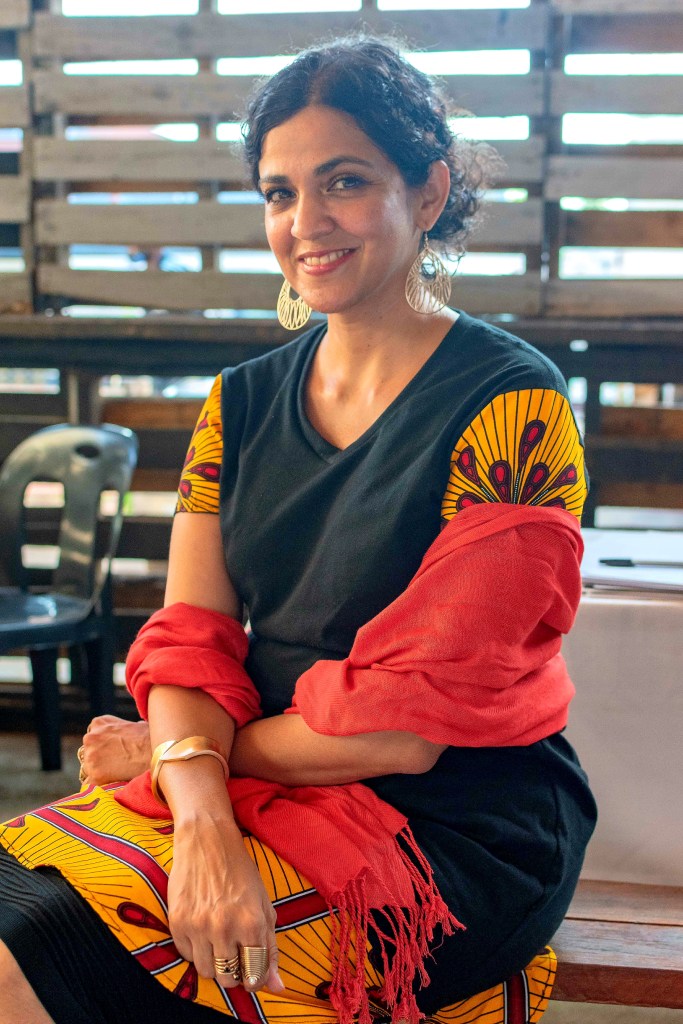


Tabitha Lilungwe

Tabitha Lilungwe, Project Director of Peoples Action for Accountability and Good Governance in Zambia (PAAGZ)

Tabitha Lilungwe, the Project Director of People’s Action for Accountability and Good Governance in Zambia (PAAGZ,) has always been motivated by her drive to make a difference in the lives of others. She served as a Deputy Managing Editor for Lusaka Star, blogs about menstrual education and is a Human Rights Peer Educator. She understands the importance of making an impact, being impacted in her own personal experiences with others, and is always driven by the need to make a difference in everything she touches. Her story shows us that in our journeys, we meet people to inspire them and to be inspired by them and that to never take things for granted.

This is Tabitha’s story …

Born in 1996 in the Southern parts of Africa, in Lusaka, Zambia, I was always driven by my curiosity of the world but was never sure of the career path to take because of my diverse interests in law, medicine and the social sciences. However, being the second eldest of seven children, our financial resources were limited and this consequently narrowed my choices to what was made available, at the time, which was a government scholarship, to study at the University of Zambia. The secured government scholarship, though, did not enable me to study law. Thus, I selected to pursue a degree in Mass Communications but it later became transparent that it was the right choice as it set me on the path I was destined to pursue.

In 2015, I commenced my studies, and three years later, expanded my networks by joining the global Women in News initiative, provided through the university, which is dedicated to gender equality, diversity, and inclusion across the international news industry. Through this network, I became acquainted with female journalists and ventured into the civil society. Networking with civil society leaders, I developed an interest in community outreach and social justice. I collaborated with and volunteered for various non-governmental organizations (NGOs), including Bloggers of Zambia, Alliance for Community Action, and the Centre for Young Leaders in Africa (CYLA) Zambia.

After graduating with my degree in Mass Communications, in 2020, and officially entering the working world, I was approached by a colleague, a well-known Zambian rapper Pilato, to collaborate with him on his non-profit organization, People’s Action for Accountability and Good Governance in Zambia and was subsequently appointed as the Project Director to facilitate the vision of the organization. 

People’s Action for Accountability and Good Governance in Zambia (PAAGZ) is dedicated to advancing governance and accountability processes in Zambia. It focuses on citizen-driven accountability, inclusive governance, and systemic improvements. The organization strategically positions itself to engage with communities, to encourage civic engagement, voter registration, and participation in general elections. The focus areas of the organization are community-led social accountability and public resource management monitoring, artistic freedom and freedom of expression, grassroots mobilization and community empowerment, promoting political awareness and participation and human rights advocacy.

Driven by its mission, PAAGZ also became involved in many campaign partnerships, including with Magamba of Zimbabwe and Selam of Sweden that have resulted in the defamation of the president law being repealed by the President of Zambia and the launch of the Pan-African Network for Artistic Freedom (PANAF) Zambia, respectively. Many of PAAGZ’s initiatives include projects such Activate, Meet my Debt and Ticheze Zambia. Activate focuses on mobilizing and empowering young people to register and vote in the general elections, Ticheze Zambia provides platforms for amplification of citizens’ voices and promoting government accountability and Meet My Debt is designed to bridge the information gap across, social classes, and to make the debt management discourse accessible to the general public.

Through these respective projects, 800 women and youths, across 13 rural constituencies in Zambia. were positively impacted. We have also successfully amplified the demand for social and democratic accountability. Notably, PAAGZ’s efforts had a tangible influence on political campaign messages for the August 2021 elections, with a substantial voter turnout of 70%, the highest since Zambia’s first multi-party elections in 1991. More than half of the 70% of voters were below the age of 35 and it shows the effectiveness of our projects but also highlights the growing role of young people in shaping the political landscape.

In addition to creating political awareness through PAAGZ, I am driven by my own personal experience of being a 15-year-old girl and not knowing how to manage my periods. Growing up in a conservative society, menstruation is a taboo topic, leading me to realize the prevalent issue of period poverty affecting many young girls in Zambia. As a result of it being a difficult topic to discuss, this inadvertently leads to teenage pregnancies, with approximately 30% of Zambian girls becoming pregnant at aged 18, resulting in higher high-school to university dropouts.

With this in mind, I created a blog Lilungwe Daily to create awareness among young girls but will extend my services from blogging to formally establishing a youth hub, the Harmony Healthy Club, in the near future. Harmony Healthy Club will focus on issues associated with adolescence, early marriages, teenage pregnancies and menstruation. It will also create a safe space, without stigma and discrimination, where sexual education can be discussed, especially in a society that encourages abstinence over comprehensive sexual education. It aims to focus on the well-being of young women and to provide them with sexual and reproductive health, with the long-term goal of reducing teenage pregnancies. Plans for its launch are underway, with the initial roll-out to be introduced in my community, Kanyama, with the aim of expanding to other areas in Zambia.

Throughout all my pursuits, over the years, I always think back to my university days, particularly my friendship with my former classmate, Matilda Chali, who impacted me deeply. We were two peas in a pod and did everything together, from our chosen modules to tutorial groups and even lived at the same student residence. Being 7 years older than me, Matilda inspired me with her story to reach university levels and we vowed and made a promise, to each other, that one day when we are “successful enough”, we would share our story, with the world, but she never got to share hers. Matilda unexpectedly died, shortly after achieving her life-long dream of a university education. At aged 32, she passed away, alone in another province in Zambia, where she was working, with cerebral malaria.

Her passing came as a complete shock to my system and deeply affected me, reminding me of the fragility of life and to share our stories, and experiences, with others. it made me realize the importance of not waiting on second chances because not everyone gets a second chance in life. Sometimes, as I go through my life, I have those moments where I want to call Matilda, to tell her of the latest developments in my life, then in that fraction of a second, I have to remind myself that she is no longer.

As humans, we tend to fool ourselves by thinking that we have time but the clock is always silently ticking in the background. Seize that opportunity that may never come again because while hardships may be temporary, the rewards of success are reverberating. Be present in everything that you do, for yourself and others, because that moment will eventually become a memory. Share the ebbs and flows of your life, the struggles and successes, with others, so that your story becomes your legacy that inspires others to succeed in their own paths. We meet people for a reason and often that reason is to show us how we are all interconnected and to also show us the importance and impact we, as individuals, can have on others.

If you are interested in learning more about Tabitha or would like to get in contact with her, please reach out via the Facebook page, Peoples Action for Accountability and Good Governance in Zambia (PAAGZ) read her blog Lilungwe Daily, or email her at tabitalilungwe@gmail.com or tabitalilungwe@peoplesactionzambia.org

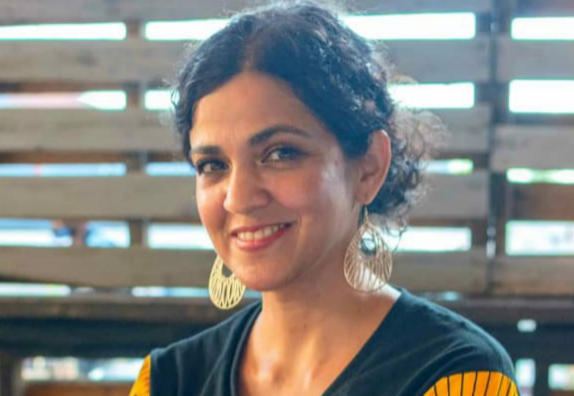
In loving memory of Matilda Chali (right) standing next to Tabitha Lilungwe (left)

Suraiya Essof

Suraiya Essof, founder of Kites for Peace

Suraiya Essof was named one of the 20 Most Outstanding Zimbabwean Women by The Guardian UK in 2020. She is a tenacious woman who, in spite of her health challenges, has become very influential in bringing together communities, businesses and social networks. Her knack for networking and the ability to create opportunities has seen her social innovative work being recognised and awarded, both locally and internationally. Social entrepreneur, mother, wife and businesswoman are of the many ways in which one can describe her but most importantly, she is proof that to create change, we need to turn inwards before we can power outwards.

This is Suraiya’s story…

I was born in a small mining town, Kwekwe, in the middle of Zimbabwe to a second-generation Zimbabwean father and a South African mother; the youngest of four girls. At the age of 10, I was diagnosed with Type 1 Diabetes. It rocked my family and, in the 90s, with very little access to information, it was indeed a very confusing time. Stories that I would be blind by 30 and an amputee a few years thereafter really got me into a mindset where I felt that time was limited. Likewise, my parents were amazingly proactive; they subscribed to foreign publications of Diabetes magazines and wrote letters and ordered books, just to educate themselves, my siblings and me. Their efforts brought light to my situation and with it the hope that I was not doomed to die a painful, undignified death that had been described by well-meaning yet fearmongering people.

Still, it was difficult. Diabetes is a tight rope of managing your blood sugar levels by finger prick testing several times a day, four insulin injections daily, monitoring what you eat and in what quantities, and making sure you stay active, but also not too active. Managing stress is also a huge part of diabetic care. As a preteen and then a teen at boarding school, I had to contend with stress and anxiety levels that came with trying to negotiate studies, relationships, teen angst, boarding school, autocratic matrons, bullies and a life-threatening condition. Three months before my O level exams, I slipped into a coma due to diabetic ketoacidosis. However, I did well in my exams, but not “well enough” to qualify for a white blazer (a status in Zimbabwean schools associated with being a straight A student) and to fill the big shoes that had been left for me.

I was perceived as an underachiever and with low expectations of myself, academically; I faded into myself, but started to spark socially. Once I reached university level, I shook off the negativity that came with being bullied, was more independent and the world became my oyster.

With internet access and Google, I could get any information I wanted. I started networking, at university and online, to get information I needed for my studies and to help myself and others in various areas. I became a go-to source of information for friends and residence mates. I joined advocacy groups for various causes, co-led fundraisers and through my activism; it expanded my awareness to the plight of others.

The suffering of others can be tremendously sobering, especially when one is self-pitying and is constantly being pitied by one’s own circle. From an oblivious young person, wallowing in my own misfortunes and self-imposed limitations, I awoke to the social injustices that others faced. It seemed futile to feel guilty of my own privilege and of the opportunities and care afforded to me, so I took the initiative and added my name, voice and feet to meaningful causes.

I graduated with distinction, from the University of Johannesburg, with a Bachelor of Commerce degree in Industrial Psychology. On my return to Zimbabwe, I got my first job at a school, where I volunteered to teach a few substitute classes and fell in love with the teaching profession. A few years later, I got married to my soulmate and moved to Harare. I then pursued distance learning and graduated with a Postgraduate Certificate in Education (PGCE) from the University of South Africa while working at a Jewish school for 7 years. As a Muslim who attended Christian schools, being a teacher at the Jewish institution offered yet another perspective to my inherent belief that we are more alike than we are different.

After the completion of my PGCE, my two sons were born, and this again shifted my perspective on the meaning of life and my purpose. As my children grew and my furniture retailing business settled into a rhythm, things came more into focus for me on my path. I decided to follow my dream of uniting communities, teaching peace and spreading the message of kindness, brotherhood and compassion.

In 2014, the year that I embarked on a new journey, I also experienced the sudden loss of my amazing, dynamic mother. There are few words to describe how the death of a loved one impacts your perspective on life. Again, I was more aware of my own mortality and suddenly overwhelmed with the huge responsibility of being a parent myself. Legacy became ever more important to me. What would I leave behind for my children? Had I lived a meaningful life? Have I served others? Did I share? Was I authentic? Would I be a good example? Were the lessons I had left behind be good enough? These questions shaped how I chose to continue my journey.

In the same year, I came across an independent project on Facebook inviting participants to break the world record for the number of kites flown simultaneously. I hosted the event and forty-eight kites were flown in Zimbabwe that year as a part of this initiative. Friends and family picnicked and flew kites. The message was well received; find your joy to find your peace. The world record was broken unofficially the following year, in 2015. That same year, in Zimbabwe, there were calls from the attendees of the previous event to fly kites again; not to break a world record but to celebrate our beautiful environment and to come together in peace on International Day of Peace, 21 September. They scaled the heights of the granite rocks of Ngomokurira and flew bright kites against a stunning backdrop of blue skies and spectacular rock mountains.

With news coverage of the previous year’s festival and increasing interest, 2016 brought a new energy to Kites for Peace. I invited 25 individuals from a WhatsApp group called the Do Gooders to participate in the event. The kite festival had 1000 attendees that year and the following year, in 2017, the number of attendees doubled to 2000! While the initial event was to simply and unofficially break the world record, the subsequent events became a tool of social change.

The Kites for Peace event became a movement that sought to strengthen the ideals that lead to peace. We are committed to the United Nation’s Sustainable Development Goals (SDGs) which we believe are building blocks for peace. In this spirit, and under the Kites for Peace movement, we have engaged over 150 local community charitable organisations to create the Zimbabwe Cares Network. Starting with only 25 at our 2016 event, the Zimbabwe Cares Network is a philanthropic collective of an all-encompassing, community-based and goodwill initiative driven by a shared humanity, compassion, shared vision and a passion to help others. We believe that these organizations are integral to driving social change and use various platforms to network, collaborate and support each other. They meet annually at the Kites for Peace event and use the respective platform to fundraise and raise awareness of their causes. There are currently over 7000 members interacting on our platforms and the impact of this network is immeasurable. Membership for organisations is free and only requires proof of registration. It is coordinated by me and an enthusiastic group of volunteers and is the main project of the Kites for Peace movement.

With increasingly difficult conditions in the country and subsequent increased despair, the need for peace is ever more pressing, and thus the movement for peace has grown in impact, with more people engaging and valuing the need for mental strength, hope and resilience. The 2019 event was held in the jewelled lungs of the city at the Harare Botanical Gardens with a record number of participants and attendees, and in partnership with United Nations Development Programme Zimbabwe. Our 7th event was in 2020. It was an online event which saw more than 20 countries participating, with Kites for Peace festivals held in Tunisia, Nigeria, India, Reunion Island and Zimbabwe.

Through the Kites for Peace platforms, I continue to spread the message of peace and hope and to inspire compassion by highlighting the efforts of the organisations of the Zimbabwe Cares Network all year round. Kites for Peace is a registered organization in Zimbabwe and a registered International Day Of Peace event. It is part of Peace One Day Peace Coalition, a network of global organizations all working towards peace. It continues to grow as a movement for global peace, starting with the individual and inspiring communities to create healthy spaces for recreation and social change. Kites for Peace pledges respect for all life, rejects violence, promotes forgiveness for self and others, promotes goodwill, encourages to uplifts others and help them, to listen to understand and to preserve the planet.

I am driven by my commitment to helping others with support and upliftment through networking and education. I seek to solve the systemic challenges of finding peace in an ever-changing world where economics, politics, climate change issues and the media affects our state of mind.  By promoting inner peace and unity/ubuntu, and through community activism, I aim to change perceptions to drive social change and make us, our communities and the world more productive, purposeful and fulfilled.

I use recreation as a non-intimidating way to approach sensitive issues and to especially encourage children, who are our future policy makers, to become involved in issues that affect individuals, the communities that they live in and the world at large.

I hope that my story will encourage others to have faith in their path, trust their instincts and to truly follow their purpose, even if their purpose is ever changing and their situation is currently not ideal. I believe that no experience is ever wasted and that your path will lead you to your purpose, and ultimately to contentment, fulfilment and perhaps even happiness!

If you are interested in learning more about Suraiya or would like to get in contact with her, please reach out via the Kites for Peace website www.flykitesforpeace.com or email her at suraiya@flykitesforpeace.com