

Sharon Nambakire

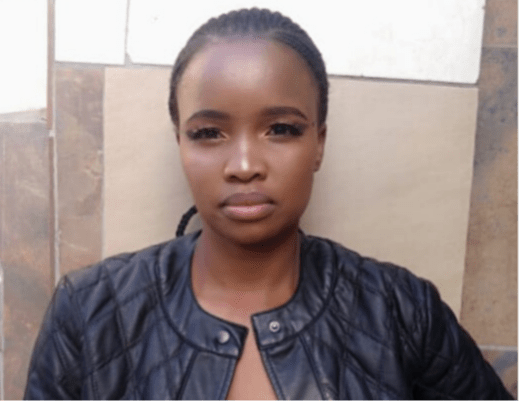
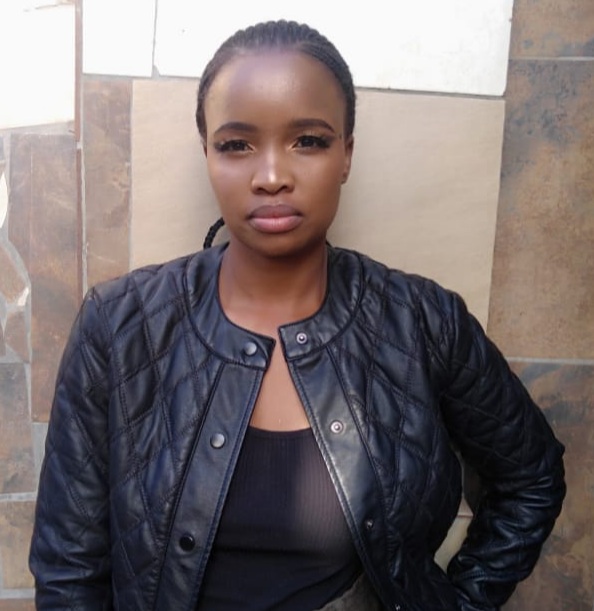
Sharon Nambakire, the founder of the MHAMIA Foundation and SIYA TV Uganda

Sharon Nambakire, the founder of the Mental Health and Mental Illness Awareness Foundation (MHAMIA) and Siya TV Uganda, an online streaming channel, is a mental health advocate and humanitarian who is dedicated to helping the vulnerable and needy populations within Uganda. Shaped by her struggles of socioeconomic hardships, Sharon vowed as a little girl to become a contributing citizen of society. Her story shows us that a pure, good heart will always shine through, and that it will lead us to doors of opportunities no money can.

This is Sharon’s story …

As the youngest child and only daughter among eight siblings, I grew up surrounded by the love of my brothers and hardworking mother. After my parents’ divorce, when I was a little girl, my mother had to fend for us, her children, single-handedly, in the bustling and unforgiving terrain of Makindye, Kampala. Life was hard, and money was little to come by but my mother forged ahead by working as a cook at a nearby primary school, to pay for our school fees and to make ends meet.

During the school holidays, our mother cooked maize that my siblings and I would sell on the streets of Kampala but in spite of all her efforts, the financial woes just deepened, resulting in my mother being forced to send two of my brothers to live with her own mother in Entebbe, a neigbouring city of Kampala.

Seeing the hardships, the sweat and the struggles of my family, was the only life I knew. I did not know of a life beyond the microcosm of my own existence and that of my neighbours. We all went about our lives, living hand to mouth and hustling to earn the basic living standards. Surrounded by this reality, I had no dreams, growing up, but I most certainly aspired to be like my mother; hardworking, loyal and dedicated to the upkeep of her children who were sadly neglected by our own father.

A short while after the divorce of my parents, my father was initially present in our lives. I remember him bringing us stuff, at times, to support us in his own way but he was not very present growing up. As an adult, I harbour no resentment nor hate towards him because I understand how hard life can get although the little girl in me always questions the ‘why’. Be that as it may, our lives continued without him because our mother became our sole focus.

I thought our financial woes were normal until it was time for me to attend primary school. It was here that I realized just how bad our situation was because the schoolchildren would make fun of me. They made fun of my shoes, saying I wore my brother’s shoes and my schoolbag, was basically a plastic, polythene bag. I also got chased away from the school premises, during exams, because my mother defaulted on my school fees. I did not inform my mother of the bullying as I knew how hard she was trying to give us the best she could. Despite all the struggles, I became close to one of the teachers, Madam Christine, when I reported the bullying to her and she helped me with my term fees and provided me with books to read, to improve my English since Luganda is my home language.

Growing into a more socially aware young girl, and entering my secondary schooling years, I always used to admire the other children that had better resources than me but it seemed like such a far-fetched reality for me to have nice stuff. Our financial woes resulted in me skipping a school term and working as a nanny, washing clothes and selling maize, to save up money to return to school but even then, it was not enough. When I reached Senior Four, my mother wanted me to attend a vocational institute but I was determined to finish secondary school by attaining my A-Levels.

Fortunately, the secondary school that I attended, Molly and Paul High School, always received visits from American missionaries and through one of these visits, I met a lady by the name of Kimberly, two years prior, during Senior Two, and we kept in touch since then, via emails, as I did not own a cellphone back then.

When I reached my wit’s end on how to proceed with completing my schooling, despite working for extra money, I decided to explain my situation to Kimberly and she offered to pay my school fees for me. With her help, I managed to finish my A-Levels and am forever indebted to her for her assistance.

Shortly after the completion of secondary schooling and with my passion for talking, I received an opportunity to venture into online broadcasting, on a pioneering channel called Vory Wood TV and was trained on the job. During my first stint, I had a show, called Follow Up, where I interviewed different people in the movie industry, every Friday. Later on, I joined Crown TV Uganda, where we hosted The Expendables, interviewing different people in the music industry and then TMC where we hosted the Deep Dive show, once again focusing on the entertainment industry but I eventually quitted the industry due to the prevalent nature of sexual harassment – of which I refused to be a victim of – and decided to focus full-time in the non-profit sector, while hosting my own online broadcasting show called Siya TV Uganda.

Due to growing up very poor, I developed an affinity for helping those just like me. It was during secondary schooling years, when in Senior Five, that our school grounds shifted from Kibuye, to a village in the MPIGI District. It was here that I saw children coming to school without shoes. I was so touched by their plight that I prayed to God to one day put me in a position where I am able to help others. The decision to follow through on my prayers came after I quit working for others, in the online broadcasting sector, and ventured on my own.

In 2021, I established the Sharon Inspiring Youth Africa (SIYA) Foundation dedicated to the upliftment of the youth. During this period, for three years, my family, friends and I would collect shoes and clothes for school-going children, to give them a sense of dignity when attending schools. We also provided stationery and any other materials, to facilitate their school-going years, and to this day as an organization, we still do these collection drives albeit under a different name,

We rebranded the SIYA Foundation to the Mental Health and Mental Illness Awareness (MHAMIA) Foundation, in 2024, shortly after the suicide of my cousin in April 2023. His death came as a complete shock to our family, which many deemed as a result of witchcraft, which is a common misconception among Ugandans. I have to admit, even I was not clued up on mental health, and its prevalence, until I had to educate myself on it and with this, the MHAMIA Foundation was born.

The purpose of the MHAMIA Foundation is to create mental health awareness and destigmatize misconceptions surrounding mental illness in Uganda. To date, we have had outreach programmes within twenty-two communities, including schools. Through our awareness campaigns, both the youth and older generations have gained insight and understanding on topics relating to the importance of mental health and well-being and the demystification of witchcraft, as its cause. As an organization, and through my online broadcasting show, we hope to reach more people and create a culture of acceptance, non-judgement and compassion towards those suffering from mental health issues and to stress the importance of mental well-being.

By the end of my life, when I look back on all the milestones in my life, I want to be proud of myself for taking the needed steps to help others. I want to help people. I want to listen to them, without judgement. I want to be there, even if its just my presence. I also want to encourage others to be the needed tool of change within their respective societies. You do not need the world to make a difference but the world certainly needs you, to make that difference, to be like the Madam Christine’s and the Kimberley’s that shines their light when it is most needed.

While I may not be a university graduate, although this is a milestone and dream, I will achieve in the foreseeable future, God-Willing, my journey shows that it does not take an education to make a difference. It simply takes a good heart, with pure intentions, to light the candles of others, so they, too, can achieve their dreams.

If you are interested in learning more about Sharon or would like to get in contact with her, please reach out via her website https://mhamia.ahavah-creations.org/, her Facebook page, MHAMIA Foundation, or email her at mhamiafoundation18@gmail.com.
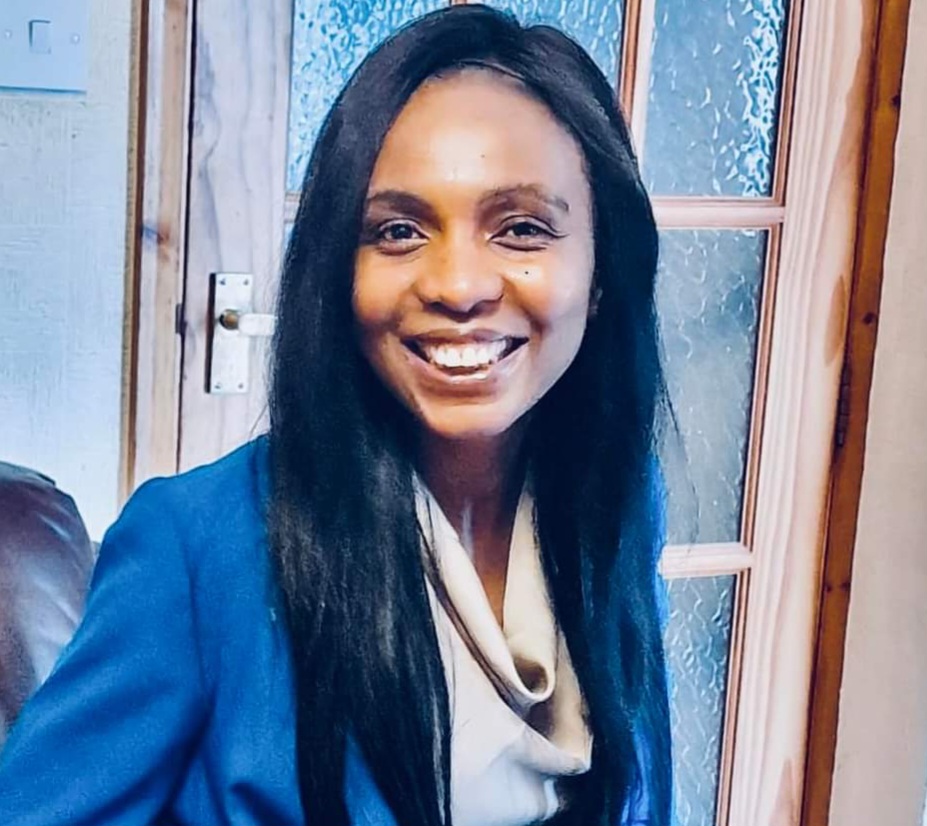
Joy Chinwe Aguguo

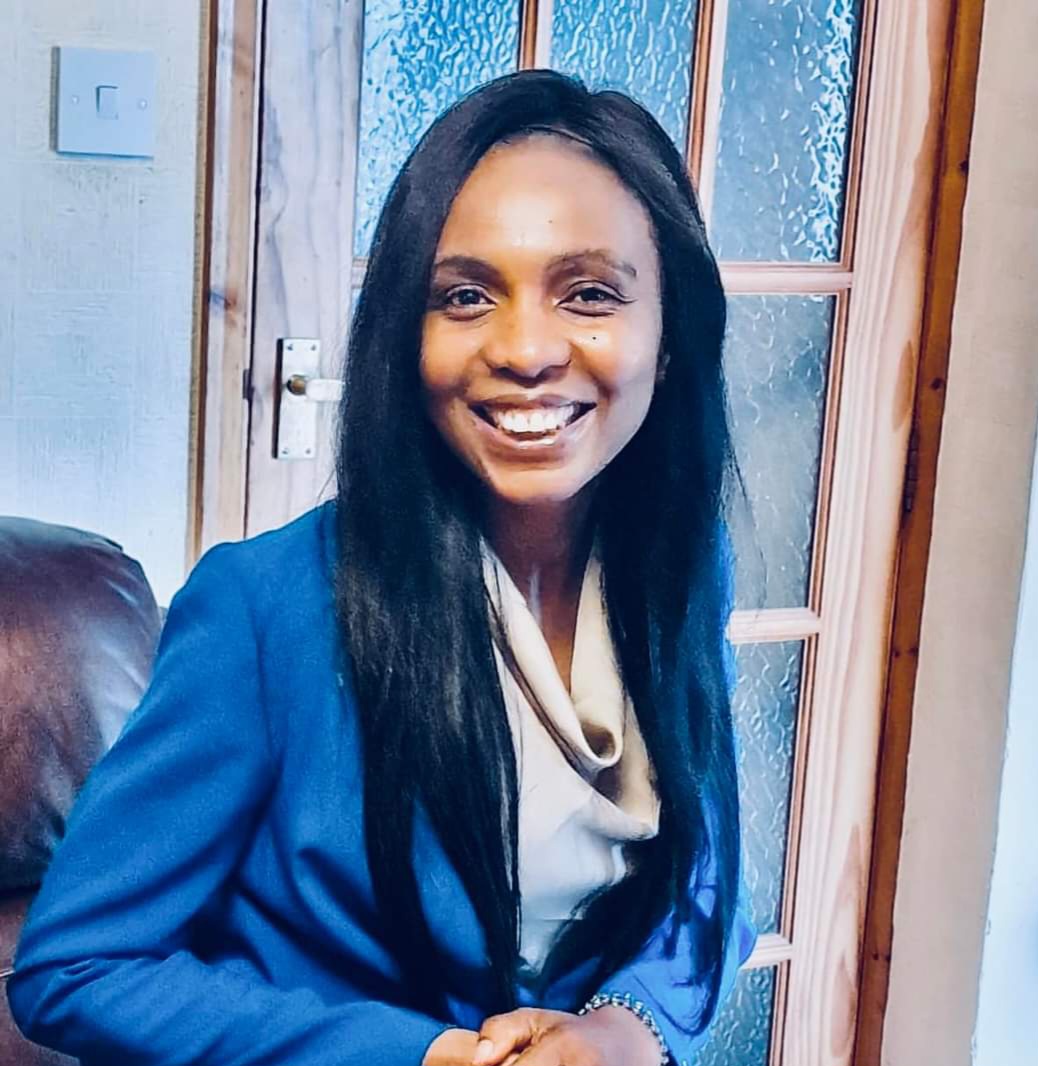
Joy Chinwe Aguguo, founder of the Joy Chinwe Foundation and Joy in Health

Joy Chinwe Aguguo, the founder of Joy Chinwe Foundation and Joy in Health is motivated by her personal experience, of leaving her Nigerian homeland to the shores of Europe. She is driven to create awareness, on migration and health, for the minority groups within her newfound home and dedicates her time to uplifting and empowering others, such as herself. She wears many hats, as an author, a motivational speaker, a woman in tech and a health advocate. Her story shows us that traversing foreign terrains is never an easy feat but with the right mindset, you can achieve anything.

This is Joy’s story …

As the eldest daughter, born into an Igbo family in the Eastern parts of Nigeria, I always felt the need to empower myself with the deep-seated desire of supporting my loved ones and this desire was strengthened by the sudden passing of my father during my secondary school years. The devastation and grief that accompanied me with the loss of my father was searingly painful, but this motivated me even more to pursue my education and subsequently increase my employment potentiality. While I intended to study Medicine, unforeseen circumstances lead me to pursue a degree in Marketing. 

During my studies in Marketing, a fated encounter with a Nigerian man, working in Italy, at that time, changed the trajectory of my path. I was initially hesitant in marrying him because this meant I would forsake my dream of attaining my higher education but with the intervention of my grandmother who approached the family stipulating her condition of first wanting me to finish my degree in Nigeria, I happily married my husband, upon the completion of my degree, and excitedly followed him to the shores of Italy.

In 1999, I arrived in Italy with great hopes and expectations, as the perception within my community and in the broader African context, was that Europe is a land of opportunities, especially prior to the growing European migrant crisis. However, this feeling was short-lived as the harsh realities of migration in Europe started to sink in and within the first six months, I was battling with language barriers, cultural adjustments, stereotypical views of African immigrants and the icy cold European weather and was struggling to find employment, going for months without a job. 

It was a stressful period for me as I was desperately seeking work until an opportunity finally arrived when a friend informed us of a company in a neighbouring village that was seeking employees. Filled with anticipation and optimism, I was accompanied by my brother-in-law to pursue this opportunity, only to be met with a devastating (and heartbreaking) blow. The director callously informed us that “no blacks” were welcomed. Overwhelmed with a sense of injustice, I wept bitterly, grappling with the realization that, in their eyes, I was reduced to nothing more than my race and immigration status, despite knowing my worth as a capable human being. 

Despite my despair, the rejection proved to be a catalyst for my growth. More determined and refusing to let adversity get the better of me, I started researching any available offers and seized an opportunity to enrol in a one-year social care programme, which was a totally different field from Marketing. Nonetheless, the different path chosen led me to meaningful experiences.

After completing the social care programme, I secured a position as a social assistant for the elderly in a hospital in Italy. Through this experience, I encountered like-minded individuals who viewed me neither as black or an immigrant, but as a contributing citizen, based on my essence. Although the early stages of my work were marked by instances of racism, discrimination, and disrespect from some colleagues, the unwavering support from my director, managers, and close colleagues prevented these challenges from significantly affecting me. Additionally, I have diligently mastered the Italian language and forged meaningful relationships during my time in Italy, fostering connections with both Italians and individuals of other nationalities. Therefore, what initially appeared to be a bitter experience in my job search ultimately revealed itself as a blessing in disguise.

While carving out a good and sustainable life for myself in Italy, giving birth to three beautiful children and working in hospital, I was consciously aware of the plight of my fellow Africans, crossing perilous waters, in dinghy boats, in search of a better life who now had to battle with issues such as human trafficking and illegal migration on the shores of Europe. Through my observations, I was inspired to write my story, drawing from my own experiences as an African living on European shores to create awareness for my fellow Africans and to debunk the myths of life in Europe. With this, I penned and published my first book entitled The Morning Sunset.  

In addition to my first book, I established the Joy Chinwe Foundation with the aim of raising awareness among the people of Africa about the perils of illegal migration and undertaking hazardous journeys, to Europe. As an organization, we provide support to victims of human trafficking and illegal migration. The aims and objectives of the Joy Chinwe Foundation is to campaign for the provision of support in the development and delivery of programmes, studies, and technical expertise on combating migrant smuggling and trafficking of women, and children in a manner consistent with law, to sensitize young people on the dangers behind travelling to the West, through the desert and the Mediterranean Sea and we offer expert advice, research, and needed financial assistance to the victims of human trafficking. 

After thirteen years in Italy, we left for the United Kingdom in pursuit of better educational opportunities for our children, especially when my eldest daughter entered secondary school. Comparatively, the United Kingdom was so much easier to relocate to as there were no language barriers. It was while working briefly in residential homes, that I got admitted into a Masters programme, subsequently attaining a Masters in Human Resource Management, and eventually specializing and earning the professional distinction of being a Chartered Member of the United Kingdom’s Institute of Personnel and Development (CIPD), currently navigating the ever-evolving landscape of Information Technology and finding myself at the intersection of human ingenuity and technological advancement.  

Although I was chasing the corporate world, in my heart, I was still driven by a fervent commitment to effect change and subsequently, established another non-profit organization called Joy in Health. The purpose of Joy in Health is dedicated to the physical and mental well-being of Black, Asian and Minority ethnic groups and strives to dispel the ignorance associated with the importance of their well-being which inadvertently leads them to neglecting their health.

Through awareness campaigns, educational initiatives, and digital platforms, Joy in Health strives to empower individuals to prioritize their health and lead fulfilling lives by providing insights on managing diseases like high blood pressure, mental health, kidney diseases, and diabetes. We prioritize education by extending our efforts to social media platforms, particularly YouTube and podcasting, where we collaborate with medical professionals to disseminate crucial health information within our communities, such as healthcare awareness and prevention and cure of ill-health related ailments, to foster a culture of proactive self-care. We intend not only to inform but also to bridge the gap in understanding, speaking in ways and languages, that resonates with the diverse communities within the Black, Asian, Minority ethnic population with the goal of a healthier population who have access to their fundamental human right of high-quality healthcare.

Looking back on my journey, leaving my country at the age of 23, to build a life with someone I barely knew, at the time, I can honestly say this; you never know what is waiting for you on the other side of taking risks and all it takes is courage. Some might say I was young and naïve but like a child, any child, they learn and grow by not knowing and that ignorance is their biggest asset because to know is to fear. If I knew I would be facing all the hurdles I subsequently did, I probably would have said no but I took that leap of faith with great hopes and in spite of all the struggles, it has been a journey worth taking because if I didn’t embark on the journey I did, I would never have made the impact I do, in the way I do, which is powered by my personal experience.

In the mosaic of my life, today, I find myself at the crossroads of various roles; a professional in Information Technology, a devoted mother to three children, a supportive wife, and a fervent advocate for health and well-being. Each aspect of my journey adds depth and complexity to my narrative, weaving together a tapestry of experiences and aspirations. As I navigate through life, I am guided by the threads of curiosity, resilience, and a steadfast belief in the profound impact of both words and actions. Together, these elements shape the ever-evolving story of my life.

If you are interested in learning more about Joy or would like to get in contact with her, please reach out via her website, joyinhealthservices.com, check out her YouTube channel, Joy in Health by Joy Chinwe Aguguo, or email her at chinweduru@me.com.

Sindiswa Mabindisa

Sindiswa Mabindisa, founder of Wretched Woman’s Diary

Sindiswa was born in the township of Tembisa, Gauteng and had a very tough upbringing that no child chooses. Her story shows us that we do not choose the situation into which we are born; it chooses us but that with the calling that God bestows upon our lives, it can take one from the slums of the Earth to the Heavens before His Eyes. He sees our beauty in the way people may not and He chooses us to do the work we are called to do, to a door no man can close.

This is Sindiswa’s story…

Their marriage was a mess; they were always fighting. Every weekend my dad was drunk, and he would hit my mom. In 1998, they eventually divorced, and mom moved out and left us with our dad. Since then my dad got involved with women that treated us badly. I remember one incident where I innocently called one of his girlfriends’ “mother”. She got so mad at me and said in a condescending tone, “andingi mamakho wena!” (I am not your mother!).

We, my elder sister (aged 7), little brother (aged 4) and I (aged 6), were then sent to Eastern Cape to live with my dad’s family but we were never made to feel like we were part of the family. We had to fend for ourselves and our little brother, from changing his nappies to doing house chores. We were children but were not treated as children, being recipients of harsh words and treatment, and this had a profound effect on me. But, instead of things getting better, things just got worse.

Back home, in Tembisa, my dad remarried eight years after my parents’ divorce. In the time that we were sent to live with our paternal family, he never supported us. My grandmother, his own mother, took him to the Maintenance Court to seek financial support. But instead of owning up to his responsibilities, he resigned from his job, just so he could evade them. Each time my grandmother took him to court, he resigned from his job. Each time. She tried numerous times, but he refused to support us.  

He then summoned us back to Tembisa to live with him and his new wife, our stepmother. We were welcomed into a living hell but this time, it was only me and my brother. Even though my dad always had a drinking problem, this new life was to escalate into me doing things I never thought in my young mind, that I would ever do.   

While we were back at home, we were forced to eat pap and tomatoes while my dad, his wife and her child would dine out at restaurants. I became the domestic worker at home. I had to cook dinner, do everyone’s laundry, include cleaning their sheets filled with semen, and every housework chore one can think of, on an empty stomach. 

As I said, my dad had a drinking problem but this time, they decided to open a shebeen (a private house selling alcohol) and they made me the “shebeen girl”. I had to sell alcohol from Friday nights until Monday mornings. This decision, of theirs, opened our doors to shady characters and soon, we would have men sleeping over at our house. Strange men, lewd men, sick men. My stepmother invited them in and refused them to leave. She said people were going to kill them, with them being so drunk, and she made space for them to sleep on the floors, alongside me. I always slept on the floors but now, I had company.

Some memories of them are vague, other memories are clear. I recall one of them touching my neck. He kissed my neck and moved his hands between my thighs and said to me that he can do anything he wants with me and he will give me money … I used to share my sleeping space with those men.

As a girl, you want the love of your father, but my dad never loved me. He made it very clear that he did not love me and sometimes, he would hit me for no reason. His words towards me were always harsh but the words that I will never forget is him saying, “Mhla nda thenga umpu uzoba ngowo kuqala umntu endizo mdubula” (The day I buy a gun, you would be the first one I’d shoot) and he always reminded me that he would shoot me once he gets himself a gun.

Finally, 2008 arrived and he got the gun but he never followed through on his threat. In a twist of fate, the year he got the gun is the year I moved out and the year he died.

In April 2008, I moved in with my mom and a few months later, when I returned from a family visit to my aunt in Katlehong, my mom fell sick. She was bedridden and in a hopeless state. I greeted her, “molweni mama” but she didn’t respond. My sister replied and said, “uMama uyagula and akakwazi ukuthetha” (Mom is sick, and she cannot talk). I looked at my mom and she was crying. I didn’t know what to say to her, but I could see she was in pain.

In that moment, I recalled the complexity of our relationship, from the sense of abandonment I felt as a child to the woman suffering before my eyes. Mom could not talk nor walk, so my sister and I used to bathe her and take care of her. Her state was saddening because she could not even tell us when she needed to use the toilet. On the 16th September 2008, I received a call in which my mom managed to muster her strength to tell me that she loves me and a day later, the 17th September 2008, she died.

I was 17 years old at the time she died and shortly after her death; I told my sister that we need to go to dad to ask for food because we had nothing to eat. I begged him for food, but he responded, “Akho kutya apha hambani!” (There’s no food here, so leave!). He was so mad at me for asking and refused. Maybe if it was my sister asking for food, he would have given her. I was so worried because my sister had a two-year-old and we were all hungry. That night he came to our house, but I then ran to his aunt’s house. He followed me to his aunt, along with my stepmother, and wanted to hit me but his aunt told him not to. He then told me, “Uba ndingafa ungezi emngcwabeni wam ngoba nawe uba ufile asoze ndize” (If I die don’t come to my funeral because when you die, I won’t go to yours).  Those were his last words to me because on the 10th November 2008, he died.

We had nowhere to go because when my mom was alive, she was renting and when she died, I asked my aunt if she could rent with us but a month later, she left to live with her biological dad and we had to make plans to move because we didn’t have money for rent. I remember so vividly the times I would knock on people’s doors to ask for a place to sleep. There were nights where I questioned the purpose of my existence.

In 2010, unbeknown to me at the time, the answer to my question was being answered. While I was on a visit in Eastern Cape, my grandmother told me about some young lady who was sick. I asked to go see her and when I got there, she was lying in her own faeces. I asked to bathe her and did that for two weeks. My cousin then asked me to come visit them in Cape Town. When I got there, her own cousin had tuberculosis (TB). I took care of her as well. I would bathe her and take her to the clinic for her checkups until she died in 2011.

In 2016, one of the grandmothers in my extended family, who was mentally ill, suffered from an epileptic fit. She was sick, vomiting and bedridden, in her own faeces. Nobody wanted to assist her, and I was told to call an ambulance. I then offered to bathe her, and this is how I started my career looking after the elderly and the disabled.  

In 2019, I established my non-profit organization called Wretched Woman’s Diary and decided to devote my time to bathing elderly people and people with different disabilities including mental limitations. I have made it my mission to identify the elderly, the frail and the chronically ill within my community and started this organization without any financial assistance or resources. I have taken it upon myself to provide home care visits and nursing care, where possible. I have personally experienced the hardships of taking care of an elderly woman on her death bed, to the extent of bathing her corpse.

Currently, I have four volunteers working for me and they are mainly responsible for dealing with the administrative aspect of Wretched Woman’s Diary which makes me solely responsible for nursing and caring for the victims of neglect. To date, the organization is caring for 10 elderly ladies, including 2 disabled children, on a daily basis.  They are vastly located in Gauteng but in some cases, my work has taken me to the Vaal, Pietermaritzburg and Mpumalanga.

As Wretched Woman’s Diary, we aim to alleviate the stigma against our senior citizens and the disabled, we aim to ensure perpetual care and assistance to the elderly, we aim to provide a safe and caring service to the elderly within their own homes and do away with social ills that are affecting our elders. The dire conditions which our elderly are faced with are disheartening; they are faced with feelings of rejection, loss and poverty and I am hoping to work in partnerships with other individuals and organizations that shares the same vision as I do because my dream is to extend my compassion and services to all provinces in South Africa, in the near future.

I am also studying towards becoming a qualified clinical psychologist with the dream of establishing care centres as far and as wide as I can go, to look after the elderly and individuals with different disabilities and limitations.

As much as I am still broken about my upbringing and have issues that I do not want to talk about, I finally found the purpose in my pain. All the years of hardship and suffering were what were needed to mould me into the person I am today. I can relate to the abandoned, to the neglected and to the rejected because I experienced abandonment, neglect and rejection. Today, I willingly go to sleep hungry, just to give someone else my plate of food, because I remember the little girl who was hungry, most days, and I would never want someone else to suffer the way I did.

If you are interested in learning more about Sindiswa or would like to get in contact with her, please reach out via her Facebook page, Wretched Woman’s Diary, or email her at sindiswamabindisa11@gmail.com