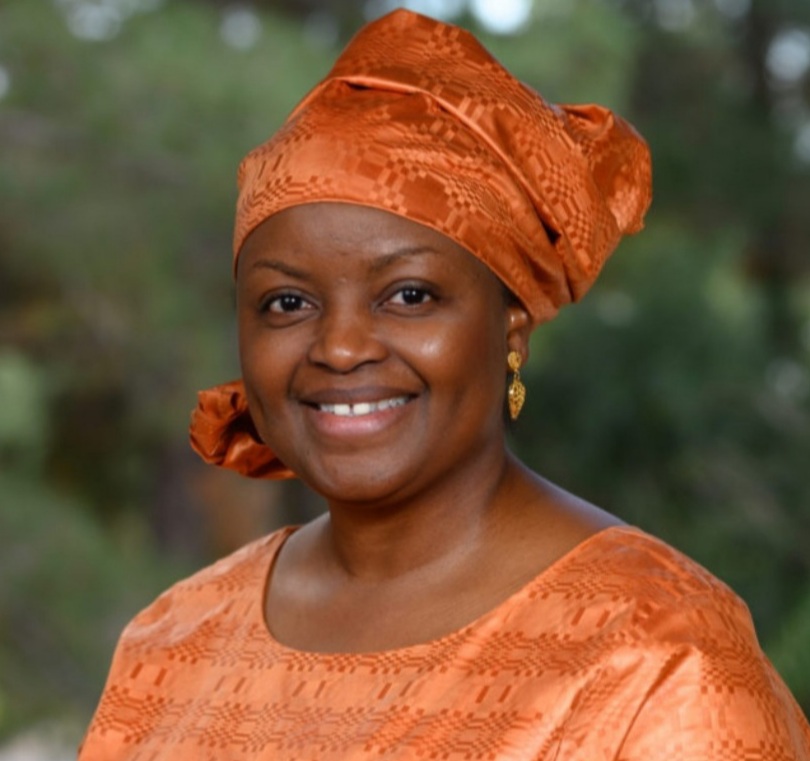
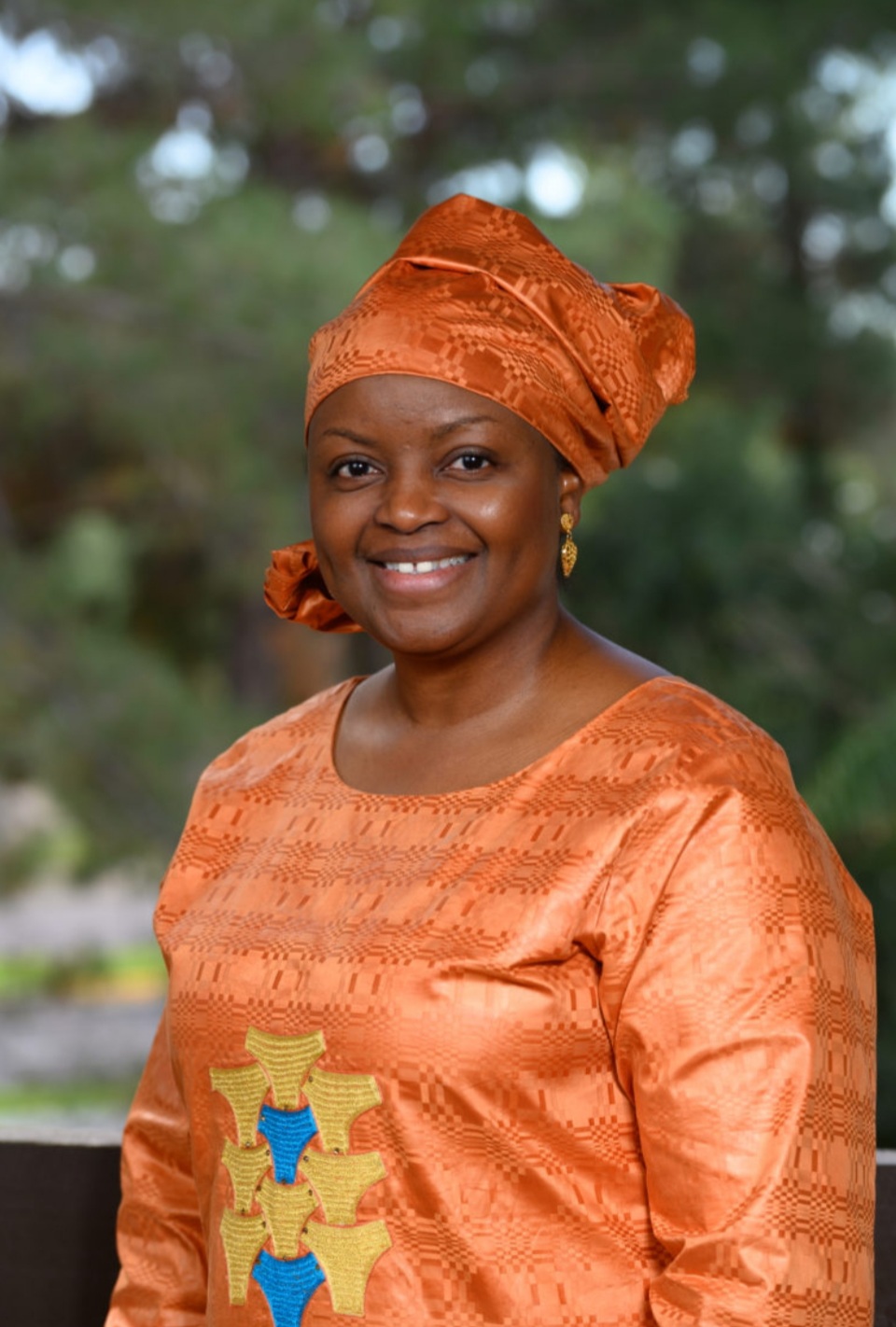
Isata Kabia

Isata Kabia, founder of Voice of Women Africa and Afrilosophy

Honorable Isata Kabia is a former Member of Parliament of Sierra Leone and was elected to represent constituency 050, in the district of Port Loko for the period 2012-2017. She has served her country since a very young age and continues to develop, motivate and train young girls and women to take up space and make their voices heard. She is very passionate about women empowerment and has made it her life’s mission to see that every girl can dream and strives to assist in providing platforms to make them independent, strong and resourceful.

This is Isata’s story …

In 1980, at the age of eight, I was reunited with my parents who had immigrated to England when I was three years old. During this period of separation from them, I lived with my maternal grandmother in Lunsar, Sierra Leone, which is situated about 2 hours away from my birthplace, Freetown. My maternal grandmother was my World and when my little brother and I were summoned to join our parents in England, I was very sad at the prospect of leaving her in Lunsar.

When I arrived in England, along with my little brother, I was very miserable and did not adjust well to my new surroundings. Everything was so different from back home and I missed my grandmother dearly. As I grew older and became more settled in England, my longing for Sierra Leone grew deeper and I wanted to return home, to see my grandmother. My parents then paid my return ticket to see my grandmother and it was on this vacation that I had my first encounter with my calling. 

During my vacation in Sierra Leone, as a more matured version of myself, I saw the magnanimity of people who had less than me. They had so little compared to the life that I was living back in England, and yet they gave so much of themselves to others. The experience with these women, and people, my people, stirred within me a desire so strong to give back, that for many years since then, their stories became my stories and their stories energized me to make a difference in their lives.

Even though I was still attending school in England, I started supporting the education of girls of my former primary school back home, by sending school materials and even tried establishing a library in my home town of Lunsar. I spent the next several years, before the start of the Civil War, in 1991, choosing to vacation only in Sierra Leone to volunteer at schools or to distribute toys and books to small children or to donate shipped items to hospitals. Every return ticket I paid, since the first, was earned through working holiday jobs back in England; that was how determined I was to keep visiting Sierra Leone and making a difference.

During my years in England, I managed to earn my BSc in Biochemistry and then moved to the United States of America for working purposes. It was here in the USA, in 1998, that I established an organization called African Women of Substance. We protested in front of the White House and raised funds through our brand of beauty pageants by educating people about Sierra Leone and the plight of our children during the Civil War. Through these funds we were able to support two orphanages back home in Freetown.

My passion for my home country led me to become the first president of the Sierra Leone Network in 2003. Under my leadership and after the end of the Civil War, our group of Sierra Leoneans visited Sierra Leone and engaged in the USA to advocate for healthcare services, the provision of education, investments and other services for the people of Sierra Leone.  

My passion for Sierra Leone had only intensified since the seeds of service were sown at the age of sixteen years and while I always planned to return home. The death of my mother, in England in 2006, led to my official return to Sierra Leone. Her death hit me hard and it was a period where my grandmother and I needed each other the most. In this time of personal struggles and the impact it had on my grandmother, I finally made the decision to return home.

Having lived a minority existence based on color, it was fascinating to move back home and experience a minority identity based on gender. Being a woman in Sierra Leone is difficult, but having grown up with the discomfort of being ‘less than’, my default mode has been to challenge the patriarchy here at home just as I have stood up to racism in England and the USA. 

I have chosen to focus specifically on the leadership of women to ensure we are at the table when decisions are being made about us. My organization, Voice of Women Africa is designed to have branches all over Africa, but I have started small, at home, with the Voice of Women Sierra Leone (VoWS) branch. We aim to build a cadre of women who believe in themselves and in other women, to train and encourage 1000 women seeking elected office in our next local and national elections. Our Pathway to Politics programme is carved out to provide knowledge in running a campaign as well as general leadership skills. Our online videos and podcasts will also amplify unheard voices advocating for rights, in service of inspiring similar actions. Our mentoring scheme bridges the generational gap by creating exchanges between our mentees from secondary schools and universities with older women activists. Our podcasts, currently under development, aim to amplify African women’s voices in order to inspire women and girls everywhere.

My social enterprise Afrilosophy, which was established in 2015, provides training in manufacturing and financial management to women and their small businesses. Our training and manufacturing centre was built and became operational in 2017. To date, we have trained 50 youth and women in manufacturing skills, 120 in ceramics and clay works and 250 women in our Village Savings and Loans scheme (VSL) initiative. Through the Village Savings and Loans scheme (VSL) initiative, we support women owned businesses with access to finance, as well as providing an informal health insurance scheme, and an interest free loan for home emergencies. Ten percent of our Afrilosophy trainees have been employed by other companies and twenty five percent of them have their own businesses or are employed by us. We have struggled for five years without support but have been able to impact 500 lives. It is a small number compared to the national scourge we are trying to address but slow progress is better than no progress and we plan to forge ahead irrespective of the circumstances.

I have also designed a programme called WAAW (Working for the Advancement of African Women) which means ‘yes’ in the Senegalese Wolof language. It specifically targets the West African region, with the hopes of starting this year. It is where our expertise through Afrilosophy will be leveraged to support women’s groups in skills training, entrepreneurship, financial inclusion and support in advocacy and creating safe spaces for women.

I want to spend the next five years building a tribe of women to harness that collective power so we can stand together, as women. I am committing this period to building the future we want by investing in women and girls, now. Our organization’s work should create expertise and capacity leadership, so that we can have the critical mass to advocate for affirmative quotas simultaneously as we show courage and seek elected seats.

Storytelling for change is something I have purposefully embarked on through the Voice of Women Sierra Leone, based on the impact that other women’s stories have had on me. Learning about initiatives inspires me to take similar action and contribute to the scaling of those efforts. My story is very much attached to the efforts made by the women and girls I work with, and I want the world to know about them. Telling my story is in service of their empowerment. I cannot empower them but by accompanying them, I am able to amplify their voices, bring attention to their challenges and provide an opportunity for greater support to our small efforts.

I am who I am because of them.

If you are interested in learning more about Isata or would like to get in contact with her, please follow her on her LinkedIn page, http://linkedin.com/in/isata-kabia-41527b29 or email her at hon.kabia@gmail.com
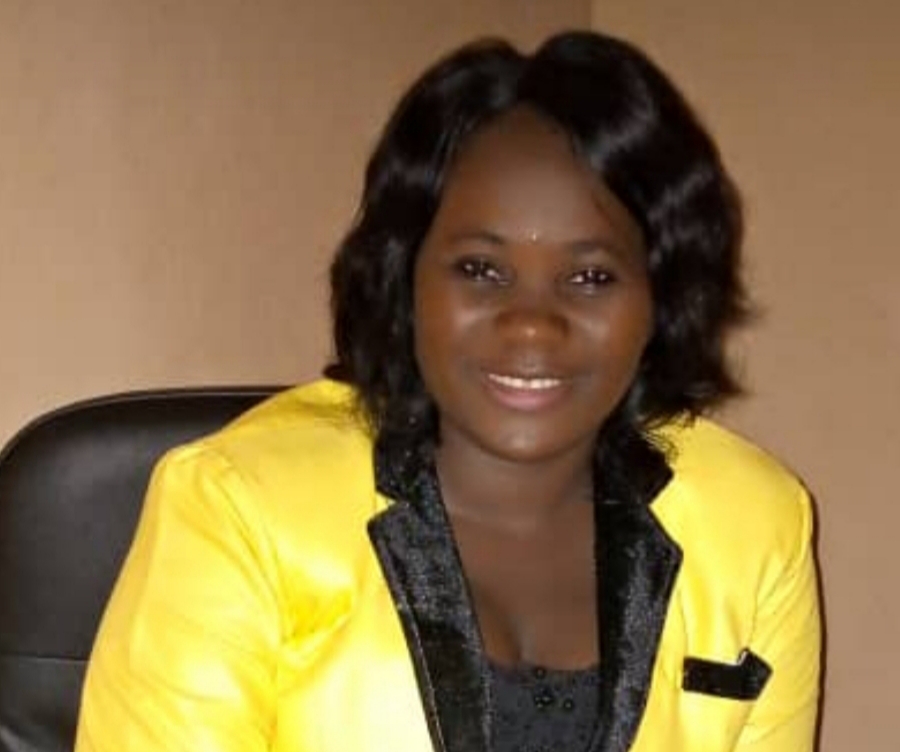
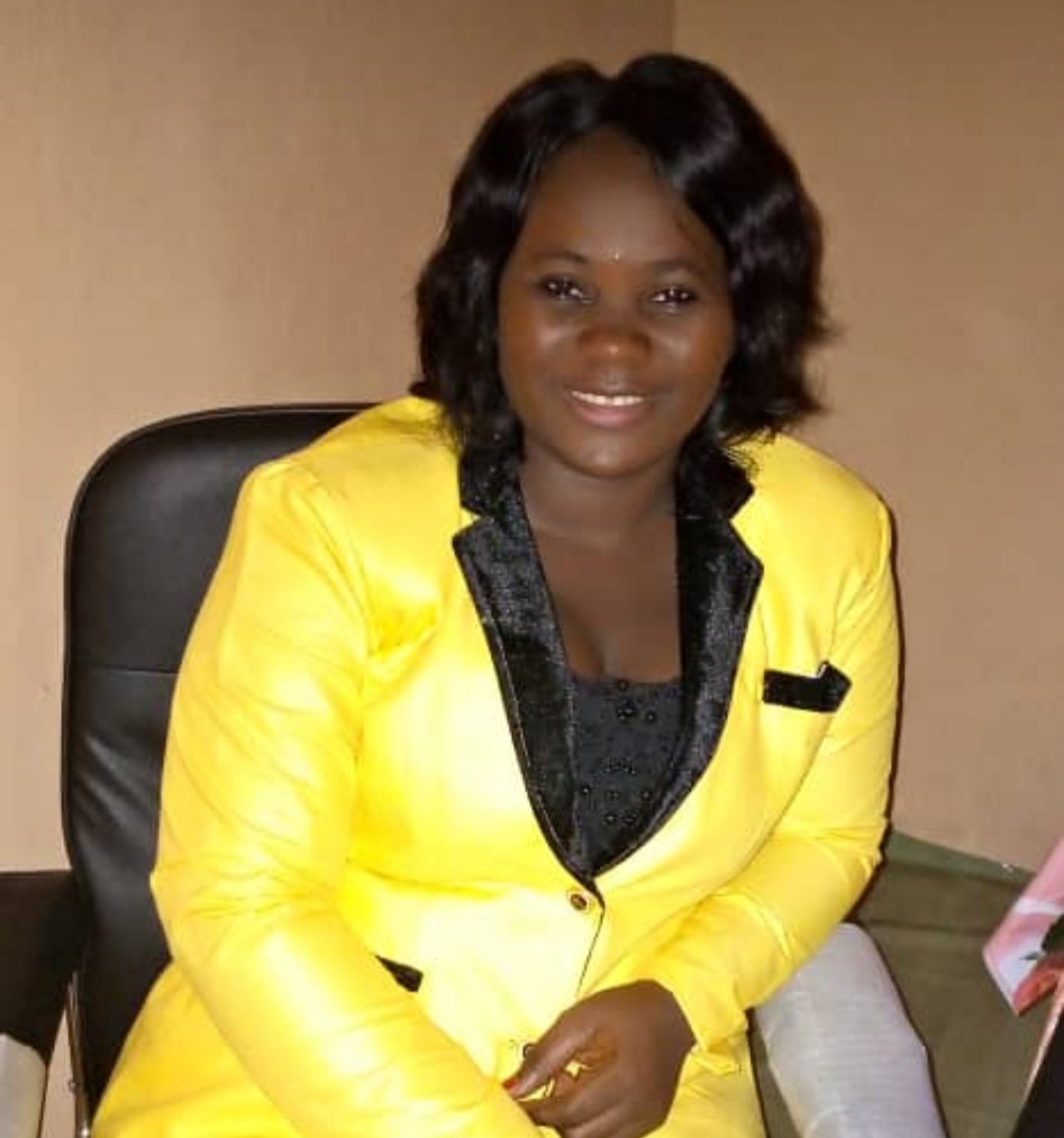
Ramatu Karim Sesay

Ramatu Karim Sesay, founder of Ramatu’s Girls and Women’s Empowerment Sierra Leone

At the age of 25 years, Ramatu has made great strides in spite of the obstacles thrown her way. She has a tremendous will and her story will inspire every little girl who has to fight a culture meant to break her. Her tenacity is outstanding and for her to still be standing today as a single woman, with no children and never having been married in addition to all she has accomplished pays true testament to her feisty spirit.   

This is Ramatu’s story…

My upbringing was tragic and forced me to mature quickly. I had to learn to start doing things for myself, for my siblings and for people in order to survive. At a very tender age, I was sent to live with one of my paternal family members in Port Loko, Sierra Leone to be looked after since my mother was asked to leave the paternal family compound, due to my parents’ divorce. Since she had no means to support her children, she made no objections, at that time. Under the care of my paternal aunt, I suffered tremendously and had to learn to fend for myself and my siblings. I slept on floors, was physically abused and starved, from time to time. I tried raising money for food, by braiding other peoples’ hair, but it was stolen by my aunt. Sometimes, she would also send me to the markets on a hungry stomach to sell items, after school, and when I took 1 000 or 2 000 leones to placate my hunger, she would beat me when I returned home from the markets. On weekends, I was sent to the bush to collect firewood for cooking and the abuse continued with me sometimes eating by neighbours. I endured the mistreatment over the years until she tried forcing me, at the age of 17 years, into an arranged marriage with a 62 year old carpenter. I refused to be forced into this marriage and as a result, was starved.

The final straw came in 2014, aged 19, when my aunt asked me to travel to Banthoron Village in the Port Loko District, where I was stripped naked and received cane lashings by some of the elder brothers of my father because of my refusal to this arrangement and because my aunt tarnished my name by the family who believed her wicked tales of me, including her accusations that I was not intelligent or focused on my studies. While their judgements and beatings pained me, they could not sway me to fall for their tricks because I was able to identify who I truly am and what I wanted to become.

Since I continued being defiant, and spoke up against her and exposed her during the family confrontation, my aunt refused me entry into her home but luckily for me, she was not paying for my education. I was receiving an education through a charitable organization called EducAid Sierra Leone, which caters for the less privileged in Port Loko. However, since she refused to take me back in, I could not return to my aunt’s home and was forced to stay in Banthoron Village, where I was able to read and prepare for my screening exams at another EducAid Sierra Leone branch.

During this period, I developed a deep concern for standing up against perpetrators and became passionate about gender equality and women empowerment. I wanted to improve the lives of all females living in marginalized communities and started engaging with the Banthoron village girls. I encouraged the girls to challenge cultural views that go against their rights to an education and a better life. During one of these educational sessions, I managed to borrow a phone to call one of my female school friends and a male staff member at the school I attended in Port Loko, to explain my family situation. The male staff member promised to get in touch with the Country Director of the EducAid Sierra Leone to assist me in getting out of Banthoron Village. He delivered on his promise and shortly thereafter the Country Director, my female friend and the male staff member (along with another) drove all the way from Port Loko Town to fetch me in Banthoron Village and I started a new life in Maronka Village. While I was sad to leave behind the village girls, I was ecstatic about the positive change in my story.

I was housed by EducAid in one of their buildings that served as a quarantine center during the Ebola Outbreak in 2014 and was appointed as the quarantine home mother, for a short period, to look after children, both girls and boys that were orphaned by the Ebola pandemic. I was later transferred to EducAid Rolal Senior Secondary School Port Loko to continue my schooling. Throughout this period and serving as a group leader to younger children, I managed to graduate high school although it pained me that none of my family members attended my graduation since they disowned me. After completion of high school, I continued serving EducAid and was asked to assist with their EducAid Mgbeni branch. Throughout, I was empowering, encouraging and teaching classes to children under my supervision and was asked to get involved in a Women’s Project teaching girls and women, phonics, mathematics and language arts. It was during this period, months later, that my father made contact with me, to apologize for not standing up for me because of his fear of his family and the repercussions of the elders who do not take kindly to defiance and he encouraged me to focus on my education and was proud of me for what I have accomplished thus far.

In 2016, I was transferred to a new EducAid school in Makeni to continue the Women’s Project and where I continued in my position as a home mother, gender equality representative and head of the safety committee. I also took it upon myself to engage girls in Makeni about female genital mutilation, which is a highly regarded cultural practice. I was of course met with a lot of backlash but the issues were resolved through EducAid Sierra Leone, as part of their organizational work.

I was very happy during my period at EducAid Sierra Leone as I was gaining experience and earning a stipend per month, to survive, since I had no one to support me but towards the end of my tenure, I was a victim of sexual harassment by one of the senior male teachers who wanted to have sex with me in exchange for bread, eggs and other foods but since I refused his advances, he avenged my rejections through falsified reports on my so called misdemeanours and since, there were no open platform to discuss cases of sexual harassment, noting that he was in a position of trust, I was made redundant and my tenure at EducAid Sierra Leone came to an end. It was distressful for me since I was saving most of my monthly stipends to enrol in university and now felt like I was back to square one.

In spite of this, I told myself not to give up and enquired the cost of pursuing a Bachelor of Education degree at the Ernest Bai Koroma University and to my delight my savings covered the first year tuition. To make ends meet, I sold many different snacks on campus and surrounding primary schools because I believed in the power of an education and with the help of good Samaritans, along the way, who assisted me with my struggles, I am now a 4th and final year student, who intend graduating in 2021 with B.Ed., majoring in Community Development with a minor in Agriculture.

As a young and single woman, I have faced a lot of sexual harassment and had to deal with men trying to prey on me, considering my vulnerable situation, but I have honestly been strong and dealt with every obstacle thrown my way in the most dignified way possible and I am extremely grateful for the help of truly good Samaritans who believe in me, my potential and my vision for my future and whose only heartfelt aim is to see me succeed.

My passion, dreams and aspiration for education, women’s rights, development, women empowerment and improving the livelihood of women and girls living in marginalized communities became stronger in my thoughts and heart after being faced with all the hardships. I realized all of those painful experiences have given me more strength of mind, boldness, lessons and the empowerment needed to be vibrant and fearless in the advocacy of young girls and women.

After my fruitful tenure at EducAid Sierra Leone where I gained valuable experience as a volunteer, I transformed my skills and knowledge into rallying a small group of girls in Makeni and started creating awareness on the rights of girls and women and on harmful cultural practices. My efforts have expanded through training and motivating them and as a result, my organization, Ramatu’s Foundation for Girls and Women’s Empowerment Sierra Leone was established on 26 October 2019. The Ramatu’s Foundation for Girls and Women’s Empowerment Sierra Leone is a fully functional foundation registered with the Ministry of Social Welfare, Gender and Children’s Affairs in Makeni with an office space containing 7 rooms, newly recruited staff members and board of directors and office equipment which we will expand as more funds become available.

I am deeply aspired in ensuring all females are educated on their rights and responsibilities and in ensuring that all issues affecting women and girls in Sierra Leone are eradicated with my own leadership and to include men in joining me to win the fight against arranged marriages/child marriages, rape, female genital mutilation and gender-based violence. I want to serve as a global feminist and to continue to tell my story and to help in the development of women and girls living in marginalized communities. All I want to see is a Sierra Leone or a world wherein women and girls are not treated based on selfish cultures, are not deprived of their rights and responsibilities, are given the platform for progress and equality and are given leadership positions and inclusiveness.

If you are interested in learning more about Ramatu or would like to get in contact with her, please follow her on her Facebook page, Ramatu’s Foundation for Girls and Women’s Empowerment Sierra Leone or email her at sramatukarim@gmail.com