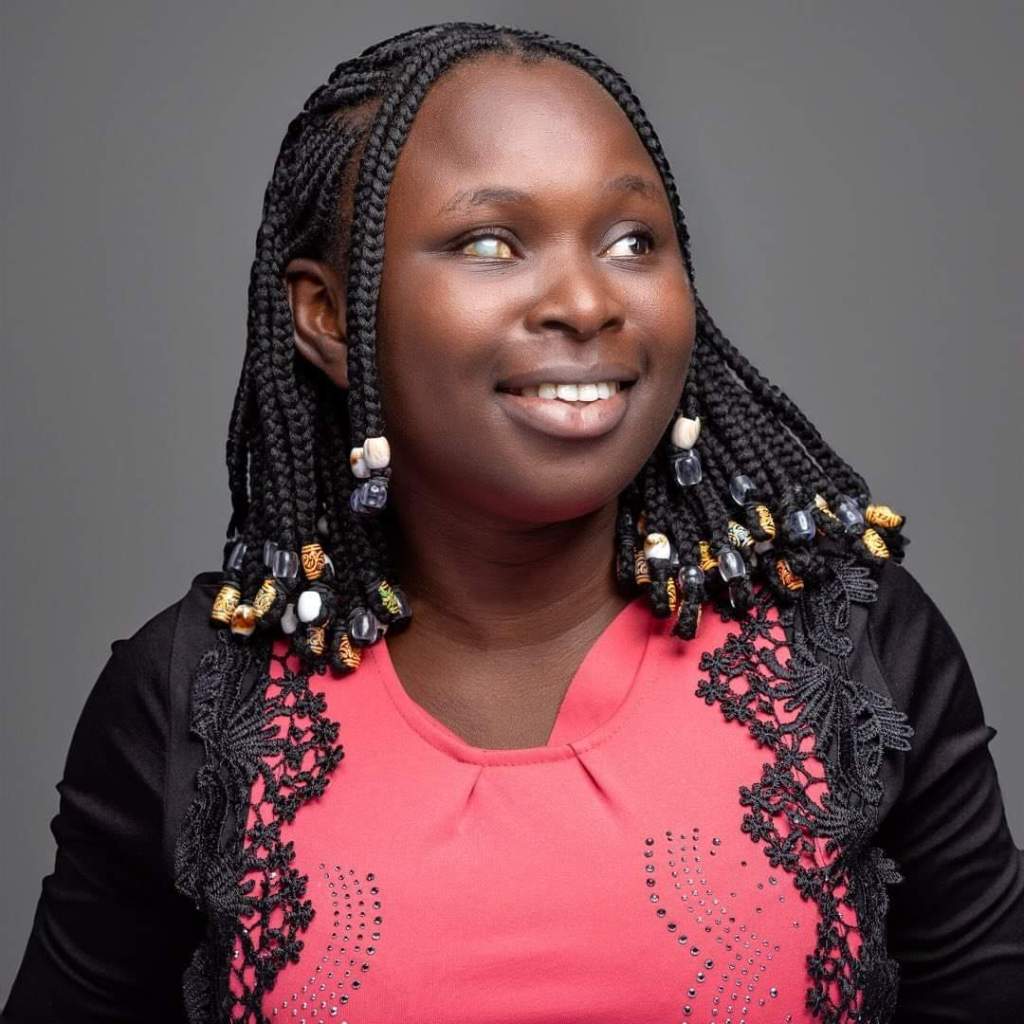
Oluwakemi Odusanya

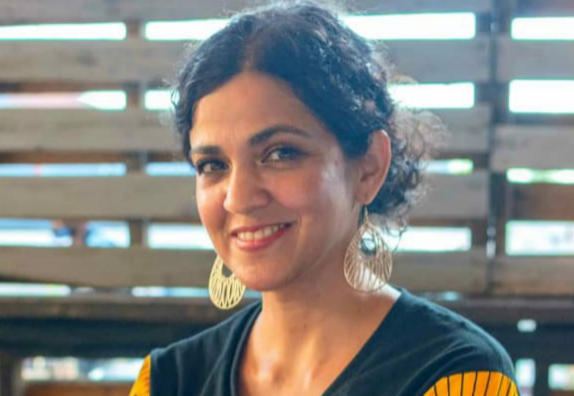
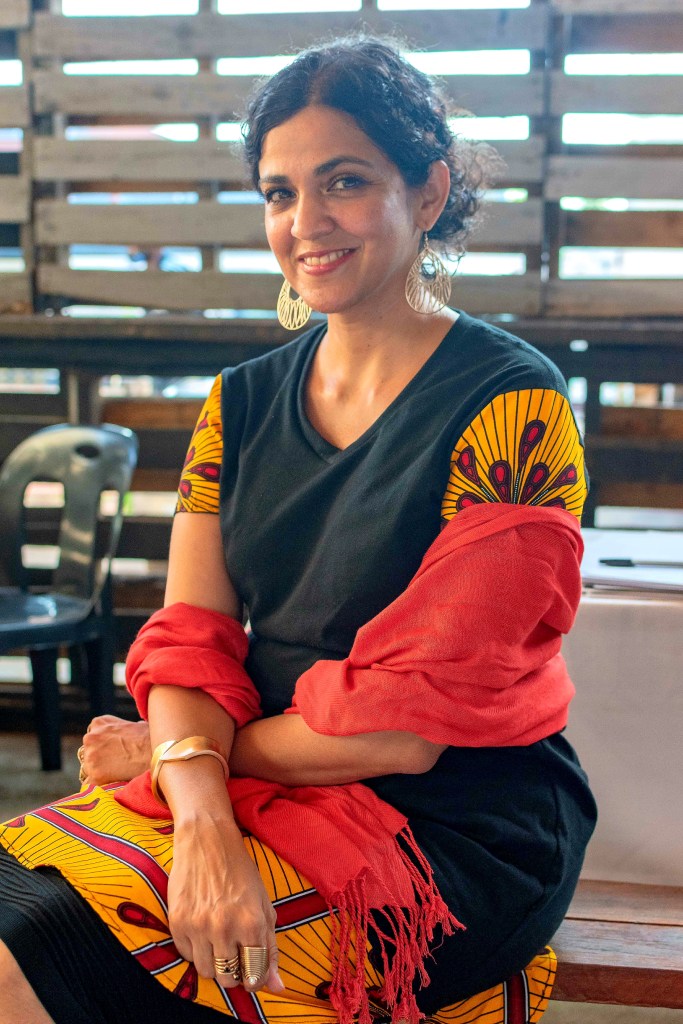
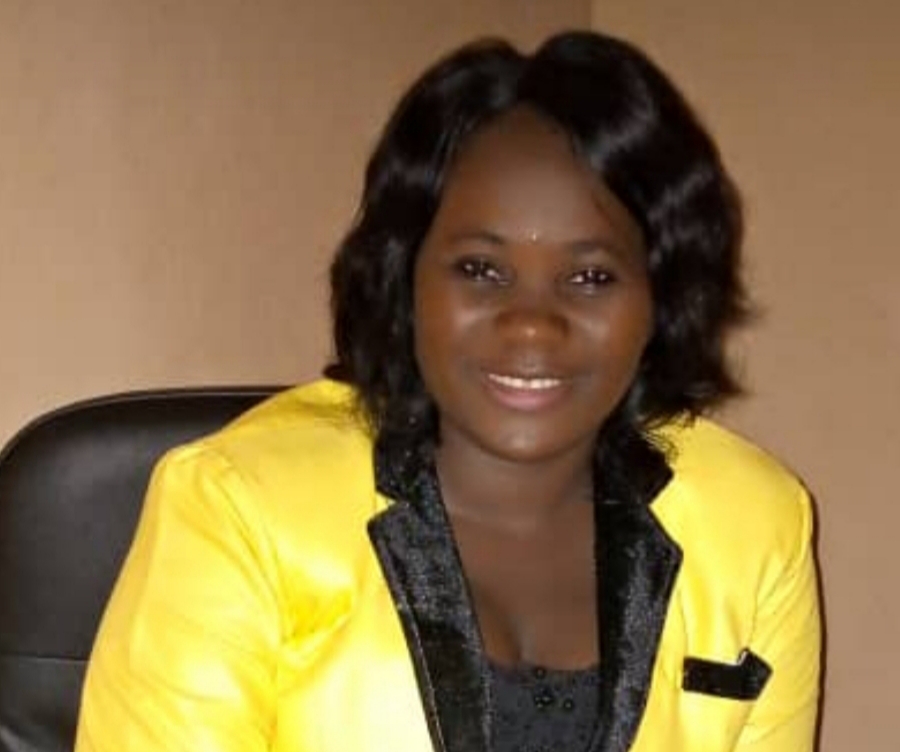
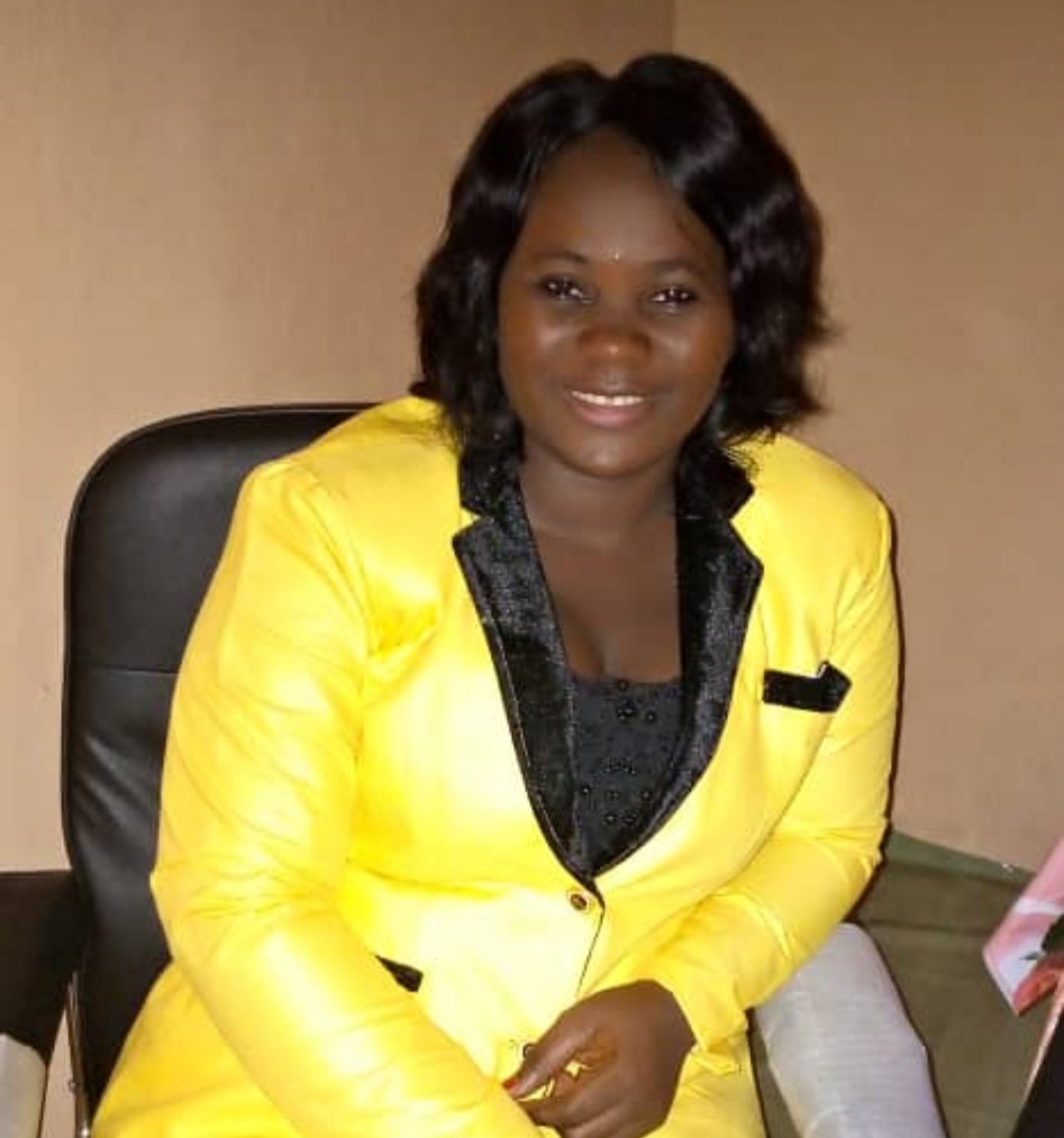
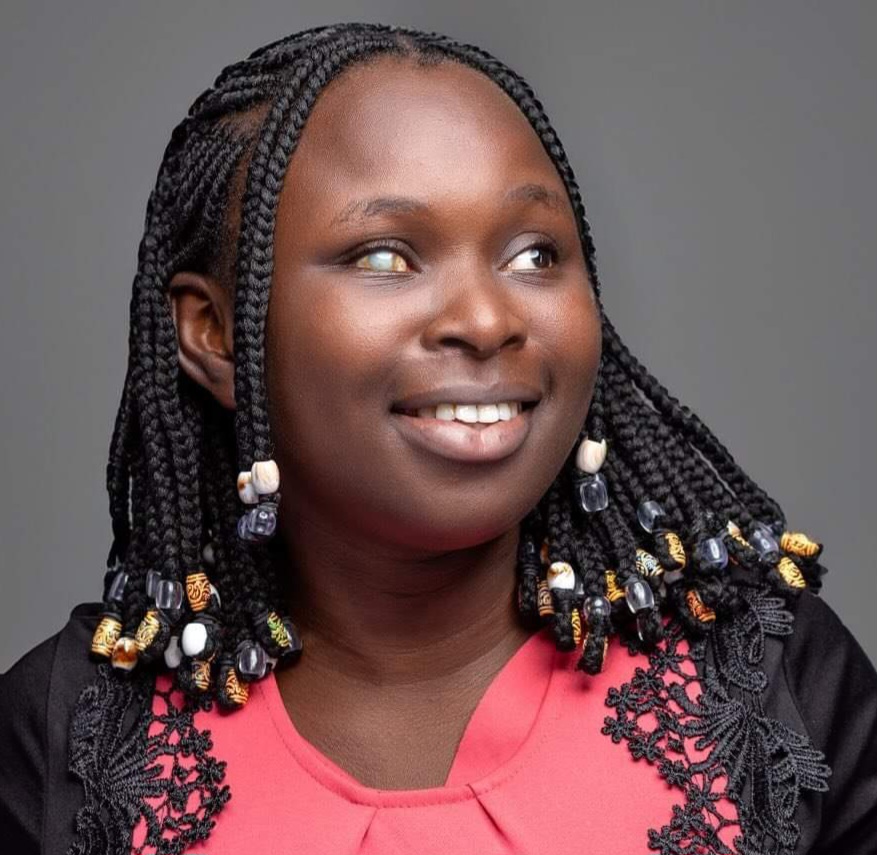
Oluwakemi Odusanya, founder of Eagle’s Voice International for Disability Rights

Oluwakemi Odusanya, the founder of Eagle’s Voice International for Disability Rights is driven by her personal experience of living with a visual impairment. She is a disability-rights advocate, a freelance journalist, and holds a Master’s degree in Public and International Affairs. with aspirations to empower many blind women in Nigeria. Her story shows us that a disability can also be acquired and is not simply limited to birth, and that as human beings, we should always be cognizant of the fact that a disability can strike, anyone, at any given moment.

This is Oluwakemi’s story …

“This cannot happen to my child! We don’t have this disease in our lineage!”

My father’s words of anger, aggression and fear, was inflicted on my mother while she hid her pain beneath her beautiful smile, I was confused and wept myself to sleep every night. Little did I know that this was only the start of a new beginning.

Everything changed, in our lives, when at the age of 9 years, I tried to light a matchstick, to prepare dinner for our family. While I lit the matchstick, its particles entered my left eye causing me to feel dizzy and blurring my vision. My parents, thinking it was stress, tried to treat my situation with home remedies.

However, my vision only deteriorated with time, and four years later, my parents received the shocking diagnosis, that I have a retinal detachment in my right eye. My parents were initially shocked and in complete denial but being the eldest of four children and especially my father’s favourite, it was very painful for him to accept my condition but despite the emotional roller-coaster, my parents sought out professional treatment.

After several surgeries and a financial drain, I subsequently made the decision to discontinue with surgeries as there was no hope of recovery and I was tired of treating my eyes with surgical knives. I watched my life unravel, from what I knew it before and what it became after the incident. My self-esteem was at a very low point, my education came to a halt, my classmates deserted me and even my closest family members, my cousins, distanced themselves from me. It was very isolating while everyone pretended that everything would be alright.

At the failure of modern medicine, my parents took me to several herbal doctors, who made me bathe in the river, eat in the jungle, and drink concoctions, all in a bid to restore my sight but to no avail. A friend of my mother then advised her to enrol me in the Pacelli School For The Blind & Partially Sighted Children. It was at this respected school and rehabilitation centre, that I received the necessary skills training and education that facilitated my integration back into mainstream society. While my mother was supportive throughout my transition, it deeply bothered my father.

Wracked with guilt, he could not accept my blindness and would often have intense fights with my mother about it. He wanted my mother around me all the time, to shelter me, and would be mad if, for instance, she arrived home late from the market, as he told her she need to babysit me at all times. All these altercations lowered my confidence, and most times, I wanted to escape from the chaos at home but my mother forged ahead and ensured that I become independent.

After completion of secondary school, I enrolled for a degree in Mass Communication at the University of Lagos. During my studies, I realized that there were only a few women, with disabilities, in university and the reasons were because some could not use the computer independently while others were battling with accepting their disabilities. To prevent myself from becoming a frustrated and lonesome blind woman, I decided to participate in every available activity on campus.

During my second year, I developed a sensitization programme for the university’s campus radio, which aimed to change the mindset and perceptions on disabilities. As a result, my self-confidence increased and communication skills improved. However, the opportunity to join the National Youth Service Corps (NYSC) in Nigeria, after graduation, was a liberating experience.

The National Youth Service Corps (NYSC) is a one-year mandatory service for Nigerian graduates, not older than 30 years, where they are expected to work in a social organization, in line with their studies, but outside of their respective states. Being born and raised in Lagos State, I was posted to Zamfara State, in the Northern parts of Nigeria, a whole 24-hour bus ride from home. Now imagine a blind girl travelling solo, no parents or siblings to protect her or friends to guide her.

Being in the comforts of my home and familiar surroundings, my whole life, this opportunity to explore came at such a great time where I was learning more about my own capabilities. The solo experience strengthened my mobility skills, gave me the confidence to travel alone, and helped me to improve my communication skills and self-resilience. I realized every girl and woman, with a disability, should be given the opportunity, to travel, to discover herself. After three weeks on campground in Zamfara State, I was redeployed to Lagos State for better accessibility and to begin my primary place of assignment at a radio station.

My path from a sighted young girl to a woman, with a visual impairment, which was shaped and inspired by my mother’s unrelenting support and unconditional love, motivated me to want to create a space of change for young women, such as myself, who were not given the opportunities I was given. In 2022, Eagle’s Voice International for Disability Rights was established to equip blind women in Nigeria with basic 21st century skills, to enable them to be self-resilient and to attain leadership roles in media, politics and corporate society. Our vision is to see blind women as active drivers in the Nigerian economy and a Nigerian society that both respects and values visually-impaired women as contributing citizens.

Eagle’s Voice International for Disability Rights, since it inception, participated in many projects and activities. In 2023, we partnered with the Nigeria Association of the Blind, to provide 2-month training to empower ten blind and partially sighted women, in the Lagos metropolis, with computer orientation, community awareness and mobility skills. We also collaborated with non-governmental organizations (NGOs), in Lagos, to organize workshops and seminars, that equipped blind women with essential skills in communication, critical thinking and technical proficiency.

Currently, we are upscaling the leadership skills training project with support of the pollination project, at the University of Lagos, by training twenty blind and partially sighted women, including men, with skills in computer proficiency, communication and emotional intelligence, and orientation and mobility. The training commenced in January 2024 and will conclude in April 2024. The projects and activities have expanded our knowledge and made us aware of a much greater need and capacity to train more women with visual impairments and to demystify the negative perception of people with disabilities.

Although impact can never be measured, many participants have been greatly impacted by our projects and activities, inspiring them in becoming more confident and daring in their aspirations and maximization of their potential. Sensing and watching them bloom is always such a pleasure for everyone involved and we want more of this impact to the extent that we see more people with disabilities in the ministerial sphere of society, where no blind and visually impaired person has ever ventured within Nigerian society. More people with disabilities at the top-tier of society consequently means more impact and positive change for their fellow beings at grassroot level. With this in mind, every action and thought of Eagle’s Voice International for Disability Right is governed by this purpose.

When reflecting on my growth and development and thinking on the different, yet well-meaning, parenting styles of both my parents, I am immensely grateful that even if my father did not initially agree with my mother’s decisions, that she stood her ground in exposing me to the outside world. Any parent want to protect their children but to shelter a child with disabilities will not benefit any such child in the long run. It is best to emphasize on their developments, yet at the same time, to be respectful of their limitations, in helping them navigate their surroundings. Being assertive in their growth is not the same as tough love, because tough love without respect is damaging to their growth.

Thus, the same analogy can be used in dealing with and including people with disabilities in society. To possess disabilities does not automatically equate someone to being incompetent or incapable. The best gift a parent, an organization or society can offer them is to expose children and people with disabilities to educational advancement, skills-training and empowerment projects that will facilitate their integration into and contribution towards mainstream society. 

If you are interested in learning more about Oluwakemi or would like to get in contact with her, please reach out via her website eaglesvoice.org, her Facebook page, Eaglesvoice_ng, or email her at kemiodusanya1@gmail.com.
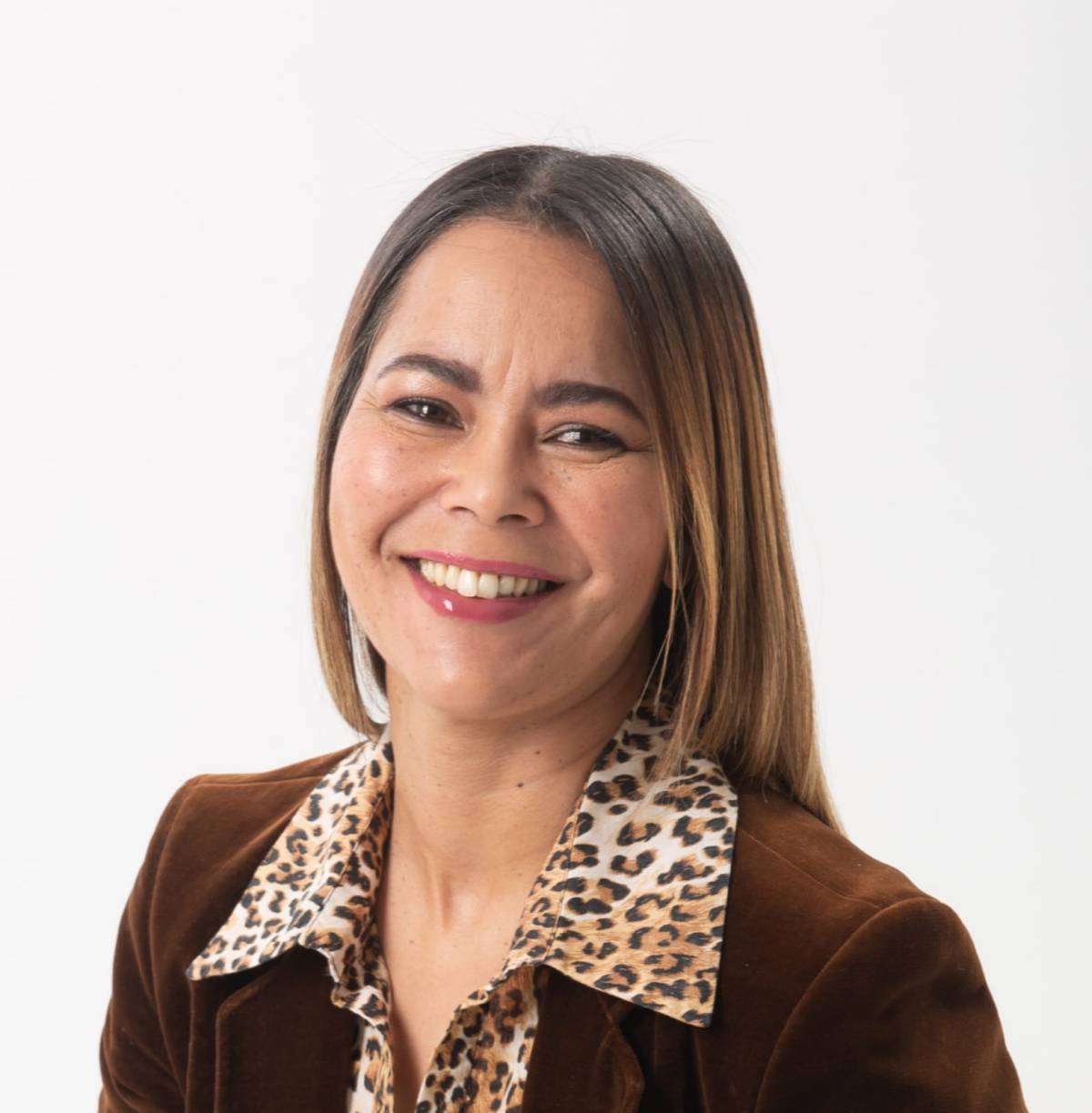
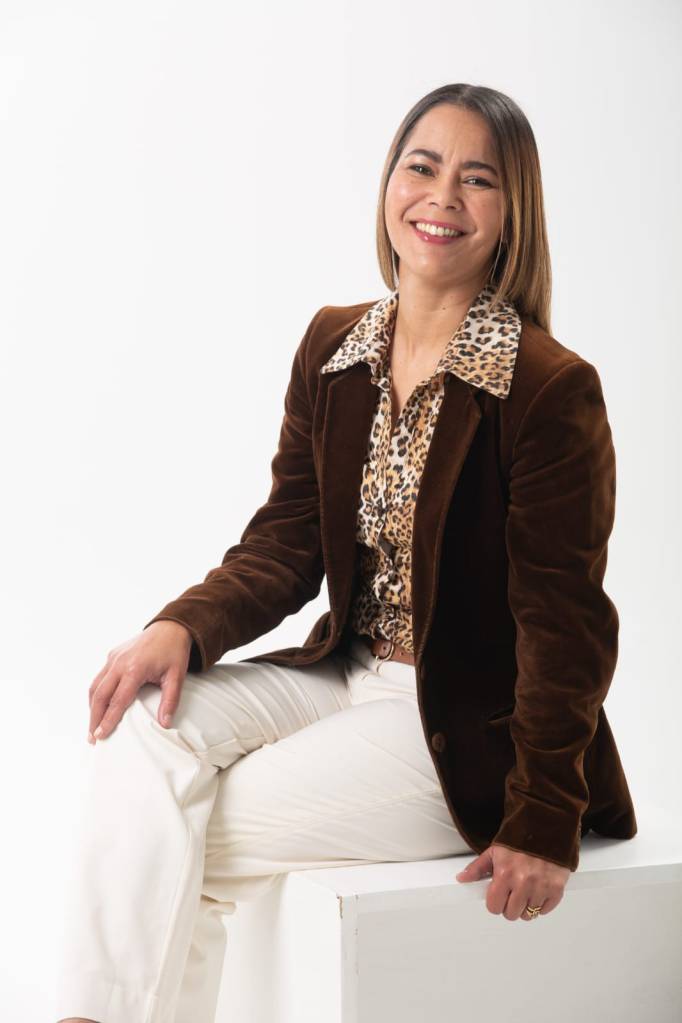
Suraya Williams

Suraya Williams, founder of Design26 Foundation

Suraya Williams, the founder of the Design26 Foundation, has been featured in several local South African newspapers, media campaigns and has been awarded recognition for her contribution to the young women of the Cape Flats, through her skills empowerment programme. Her story shows us that the key to our destiny is often right in front of us and that no matter what path we choose to follow, it will keep bringing us back to what we need to do and when we persevere to answer that call, the level of impact and influence we leave in our wake, is momentous.

This is Suraya’s story…

I was born in Bonteheuwel, a suburb within the larger Cape Flats region of Cape Town, South Africa, that is often only associated with gangsterism, poverty and crime. My parents, with their growing family, lived in a backyard shack and the struggle to make ends meet, within a segregated coloured community, under the Apartheid regime, were both common but also our norm.

When I was 2 years of age, in 1979, my parents moved into their own home, in Rocklands, Mitchell’s Plain; another area within the segregated Cape Flats. My father was a paint contractor and my mother was a clothing factory worker, with both of them having obtained a primary school education.  

In 1984, my mother was retrenched, when most clothing manufacturing companies, in Cape Town, were closed down. Subsequently, she made the decision to use her seamstress skills and worked from home.  However, due to the lack of a formal education, she worked from hand to mouth, barely making a minimum wage.

As a little girl, growing up, I remember always standing alongside her while she did her sewing and cut-make and trim (CMT) work. She would always tell me, in these shared moments, that she wants me to continue in her footsteps when she passes on. I secretly scoffed at the idea of taking over from her, as I believed it was a dying industry flooded with low-paid labourers destined for a life of continued poverty and destitution. I wanted better for my own life and sewing was not what I associated with having or doing better.

Determined to do better, and to help our parents in our own small way, my older sister and I, aged 14 years, would work for a salon on weekends and earned R30 (US$2) and a plate of food. In 1992, aged 15, during Grade 10, I started working for Kentucky Fried Chicken (KFC) after school hours and during weekends, earning R450 (US$29) every second weekend. In 1996, I finally graduated from secondary school, after failing Grade 10, at first attempt, but through sheer persistence and focus, I finished school, at aged 19.

Upon completion of secondary school, I did a one year secretarial course that enabled me to get my first formal job as a receptionist, at a community newspaper house, Cape Flats Mirror and Muslim Views. After a one year stint, I saw an opportunity to progress as a secretary at a much bigger company and in 1999, secured the job. However, a few years later, I got retrenched, in 2004, but soon thereafter, I became employed as an administrator at a well-known accounting and auditing firm, Mazars. Within two years of being employed, I progressed from being an administrator to becoming a personal assistant to two directors at the firm.

I have had to hustle all my life to get to this level of ease, from being a child of menial workers to working in the corporate sector but just when things seemed to be falling into place, my life was, unknowingly at the time, starting to shift gears, and steered me onto a pathway that was always meant to be my destiny.

In 2006, my mother passed away of yellow jaundice. Her death was sudden and shocking. Two weeks after she was diagnosed, all her organs failed and sadly she passed away, on my birthday, the 26th of January. She bequeathed her sewing machines and all her dressmaking equipment and fabrics to me; the middle child of her five children, but I was just as disinterested in sewing then as I was while growing up. I was not prepared though to dispose of it just yet, as it held sentimental value, and instead stored the sewing machines in the garage, until I found a suitable candidate to give them to.  

Three months after my mother’s passing, my brother was murdered as he was a state witness to another murder. It was hard losing two family members in quick succession. I then decided to have another child, who was unfortunately born with a weak immune system. With a sickly baby and being in and out of hospitals, while shouldering other responsibilities, compounded by increasing responsibilities at work, this subsequently interfered with my career. I was not in an emotionally good space to deal with the trauma and hardships but I somehow soldiered on because I was afraid of losing my financial independence.

During one incident of having to be home to tend to a sick baby, I was approached by my cousin who insisted that I make her child a 21st birthday dress. I flatly refused but she was persistent saying that I have the machinery, left her fabric with me and stated that my mother used to be the one making dresses for the family and I should give it a try.

Weeks passed by and her fabric started to haunt me. as her child’s 21st birthday party drew closer. Eventually, one Saturday morning, I thought let me just give this a try and if I mess up, she is well aware of me never having sewed in my life. I called her up to bring her daughter over for measurements and then the magic started to happen. Everything I thought I did not know, I knew. I made that dress from the memories of seeing my mother making dresses. It was a complete out of body experience. It felt as if my mother was with me in spirit guiding my hands, in every cut, every trim, and every measurement. I never knew I was capable of this. Needless to say, my first beautifully made pumpkin-styled dress and bolero jacket were a success. To have created it from scratch and to see the kind of joy I brought to my family changed me internally and a dream within me, my mother’s dream, was born.

I went about my normal, daily life, striving to keep my financial independence, but the dream kept growing within me and presented me with mixed emotions and potential challenges. Do I leave my job to pursue something that I did not know anything about or do I stay in my comfort zone and sacrifice my soul’s desire? What do I do?  

After opening up to my husband about wanting to start my own clothing line, and with his full support, I handed in my resignation letter in September 2012. Instead of accepting the resignation letter, my directors made a counter-offer, offering me more money, which I accepted. I thought maybe more money is what I needed for the extra responsibilities that I had to take on but the feeling of wanting to make dresses and making women smile did not leave me. Two months later, after 14 years in the corporate world, I resolutely handed in my final resignation letter and embarked on my destined path.  

With no knowledge nor qualification of how to manage a business, I established Design26 (Pty) Ltd, a public company, in February 2013, in commemoration of my late mother and the significance of her passing and my birthdate. I started from my bedroom, with two inherited sewing machines and R500 (US$33) to open a bank account. I manufactured women’s ready-to-wear clothing, custom-made matric ball dresses and wedding dresses and each year, I would donate a matric ball dress to a less fortunate girl living in Mitchell’s Plain. Two years went by, and I realized I was selling dresses but without making a profit. I then enlisted in a small business management course offered by the University of Stellenbosch, at a discounted price, specifically for people living in the Mitchell’s Plain area. Through this course, I learnt skills on presentation, marketing and financial management and realized that in order to be charitable, and make a difference, I need to ensure that I am profitable.      

Fast forward to 2018, I have been donating matric ball dresses for several years now and would follow up with each of my customers on whether they passed secondary school and enquired about their future plans. The common response I would get is that they cannot afford to further their studies and some struggled to find employment because they lacked working experience or skills. Since many of them could not find employment, they then turned to one of the many social ills that clouded the Cape Flats; teenage pregnancies.   

Teenage pregnancies is a scourge that deeply affects the lives of young girls living in the Cape Flats. A third of girls, between the ages of 15 and 20, fall pregnant, each year, and instead of things improving, it appears to be getting worse. The problem is not always solved through the use of contraceptives. It goes deeper than this; it can be influenced or directly impacted by other social factors such as an unstable home environment, drug and alcohol abuse, gender-based violence, gangsterism and crime and high rates of unemployment.

The circumstances of these girls really affected me and galvanized me to be more involved by imparting my skills to them. I then registered the Design26 Foundation, a non-profit organisation and public benefit entity, and set about offering a free sewing skills training course for underprivileged girls, from the ages of 15 to 20, from Mitchell’s Plain and the greater Cape Flats area, with the hope of making them employable, self-sustainable and restoring dignity to women in my community. 

To date, the Design26 Foundation has assisted 104 women; 50% of them are working class women, over the ages of 20, who attended our paid courses, to start their own businesses or to sew as a side hustle or for their personal needs. The other 50% are teenage mothers or underprivileged girls, between the ages of 15 and 20 years, which we offer our sewing skills training course to, for free of charge. Both salaried and free courses, which are FP&M SETA (Fibre Processing and Manufacturing Sector Education and Training Authority) Accredited, are conducted over a 12 week or 6 month period.  40% of these women have started their own businesses. The Design26 Foundation also have an alumni programme that provides further mentoring and opportunities to the women who attended our courses and shared networks, in  which these women have access to our premises and are able to make use of our machinery to improve the quality of their products.

Currently, with 3 directors, of which I am actively involved in the day to day operations of the organization, and 2 qualified facilitators. who became qualified through our skills training programme, the Design26 Foundation provide these weekly classes on a Monday, Tuesday and Saturday, from 8h30 to 12h30, in an adjoining section to my house.  We are only able to accommodate five ladies per class, due to space constraints. However, we are in the process of securing land to develop a fully operational skills center in Mitchell’s Plain and to expand our skills training course, with an in-house CMT (cut-make and trim) factory, to be able to provide employment opportunities to women who completed our skills programme.

As the founder of Design26, I hope to reach out to more young girls, to start them off with skills during their most formative years, and to keep them focused on the future. The social reality of these young girls in the Cape Flats are often daunting and disempowering and can easily distract them from a life that they are capable of achieving. However, success is still within their reach if they stay focused. My message to these young girls; teenage mothers or not, is that there are organizations out there, like ours, that care about your well-being and while success may seem outside of your reach, with consistent effort, time and dedication, it is achievable.

If you are interested in learning more about Suraya or would like to get in contact with her, please follow her on her Facebook page, https://web.facebook.com/design26foundation or email her at info@design26foundation.org.za

Suraiya Essof

Suraiya Essof, founder of Kites for Peace

Suraiya Essof was named one of the 20 Most Outstanding Zimbabwean Women by The Guardian UK in 2020. She is a tenacious woman who, in spite of her health challenges, has become very influential in bringing together communities, businesses and social networks. Her knack for networking and the ability to create opportunities has seen her social innovative work being recognised and awarded, both locally and internationally. Social entrepreneur, mother, wife and businesswoman are of the many ways in which one can describe her but most importantly, she is proof that to create change, we need to turn inwards before we can power outwards.

This is Suraiya’s story…

I was born in a small mining town, Kwekwe, in the middle of Zimbabwe to a second-generation Zimbabwean father and a South African mother; the youngest of four girls. At the age of 10, I was diagnosed with Type 1 Diabetes. It rocked my family and, in the 90s, with very little access to information, it was indeed a very confusing time. Stories that I would be blind by 30 and an amputee a few years thereafter really got me into a mindset where I felt that time was limited. Likewise, my parents were amazingly proactive; they subscribed to foreign publications of Diabetes magazines and wrote letters and ordered books, just to educate themselves, my siblings and me. Their efforts brought light to my situation and with it the hope that I was not doomed to die a painful, undignified death that had been described by well-meaning yet fearmongering people.

Still, it was difficult. Diabetes is a tight rope of managing your blood sugar levels by finger prick testing several times a day, four insulin injections daily, monitoring what you eat and in what quantities, and making sure you stay active, but also not too active. Managing stress is also a huge part of diabetic care. As a preteen and then a teen at boarding school, I had to contend with stress and anxiety levels that came with trying to negotiate studies, relationships, teen angst, boarding school, autocratic matrons, bullies and a life-threatening condition. Three months before my O level exams, I slipped into a coma due to diabetic ketoacidosis. However, I did well in my exams, but not “well enough” to qualify for a white blazer (a status in Zimbabwean schools associated with being a straight A student) and to fill the big shoes that had been left for me.

I was perceived as an underachiever and with low expectations of myself, academically; I faded into myself, but started to spark socially. Once I reached university level, I shook off the negativity that came with being bullied, was more independent and the world became my oyster.

With internet access and Google, I could get any information I wanted. I started networking, at university and online, to get information I needed for my studies and to help myself and others in various areas. I became a go-to source of information for friends and residence mates. I joined advocacy groups for various causes, co-led fundraisers and through my activism; it expanded my awareness to the plight of others.

The suffering of others can be tremendously sobering, especially when one is self-pitying and is constantly being pitied by one’s own circle. From an oblivious young person, wallowing in my own misfortunes and self-imposed limitations, I awoke to the social injustices that others faced. It seemed futile to feel guilty of my own privilege and of the opportunities and care afforded to me, so I took the initiative and added my name, voice and feet to meaningful causes.

I graduated with distinction, from the University of Johannesburg, with a Bachelor of Commerce degree in Industrial Psychology. On my return to Zimbabwe, I got my first job at a school, where I volunteered to teach a few substitute classes and fell in love with the teaching profession. A few years later, I got married to my soulmate and moved to Harare. I then pursued distance learning and graduated with a Postgraduate Certificate in Education (PGCE) from the University of South Africa while working at a Jewish school for 7 years. As a Muslim who attended Christian schools, being a teacher at the Jewish institution offered yet another perspective to my inherent belief that we are more alike than we are different.

After the completion of my PGCE, my two sons were born, and this again shifted my perspective on the meaning of life and my purpose. As my children grew and my furniture retailing business settled into a rhythm, things came more into focus for me on my path. I decided to follow my dream of uniting communities, teaching peace and spreading the message of kindness, brotherhood and compassion.

In 2014, the year that I embarked on a new journey, I also experienced the sudden loss of my amazing, dynamic mother. There are few words to describe how the death of a loved one impacts your perspective on life. Again, I was more aware of my own mortality and suddenly overwhelmed with the huge responsibility of being a parent myself. Legacy became ever more important to me. What would I leave behind for my children? Had I lived a meaningful life? Have I served others? Did I share? Was I authentic? Would I be a good example? Were the lessons I had left behind be good enough? These questions shaped how I chose to continue my journey.

In the same year, I came across an independent project on Facebook inviting participants to break the world record for the number of kites flown simultaneously. I hosted the event and forty-eight kites were flown in Zimbabwe that year as a part of this initiative. Friends and family picnicked and flew kites. The message was well received; find your joy to find your peace. The world record was broken unofficially the following year, in 2015. That same year, in Zimbabwe, there were calls from the attendees of the previous event to fly kites again; not to break a world record but to celebrate our beautiful environment and to come together in peace on International Day of Peace, 21 September. They scaled the heights of the granite rocks of Ngomokurira and flew bright kites against a stunning backdrop of blue skies and spectacular rock mountains.

With news coverage of the previous year’s festival and increasing interest, 2016 brought a new energy to Kites for Peace. I invited 25 individuals from a WhatsApp group called the Do Gooders to participate in the event. The kite festival had 1000 attendees that year and the following year, in 2017, the number of attendees doubled to 2000! While the initial event was to simply and unofficially break the world record, the subsequent events became a tool of social change.

The Kites for Peace event became a movement that sought to strengthen the ideals that lead to peace. We are committed to the United Nation’s Sustainable Development Goals (SDGs) which we believe are building blocks for peace. In this spirit, and under the Kites for Peace movement, we have engaged over 150 local community charitable organisations to create the Zimbabwe Cares Network. Starting with only 25 at our 2016 event, the Zimbabwe Cares Network is a philanthropic collective of an all-encompassing, community-based and goodwill initiative driven by a shared humanity, compassion, shared vision and a passion to help others. We believe that these organizations are integral to driving social change and use various platforms to network, collaborate and support each other. They meet annually at the Kites for Peace event and use the respective platform to fundraise and raise awareness of their causes. There are currently over 7000 members interacting on our platforms and the impact of this network is immeasurable. Membership for organisations is free and only requires proof of registration. It is coordinated by me and an enthusiastic group of volunteers and is the main project of the Kites for Peace movement.

With increasingly difficult conditions in the country and subsequent increased despair, the need for peace is ever more pressing, and thus the movement for peace has grown in impact, with more people engaging and valuing the need for mental strength, hope and resilience. The 2019 event was held in the jewelled lungs of the city at the Harare Botanical Gardens with a record number of participants and attendees, and in partnership with United Nations Development Programme Zimbabwe. Our 7th event was in 2020. It was an online event which saw more than 20 countries participating, with Kites for Peace festivals held in Tunisia, Nigeria, India, Reunion Island and Zimbabwe.

Through the Kites for Peace platforms, I continue to spread the message of peace and hope and to inspire compassion by highlighting the efforts of the organisations of the Zimbabwe Cares Network all year round. Kites for Peace is a registered organization in Zimbabwe and a registered International Day Of Peace event. It is part of Peace One Day Peace Coalition, a network of global organizations all working towards peace. It continues to grow as a movement for global peace, starting with the individual and inspiring communities to create healthy spaces for recreation and social change. Kites for Peace pledges respect for all life, rejects violence, promotes forgiveness for self and others, promotes goodwill, encourages to uplifts others and help them, to listen to understand and to preserve the planet.

I am driven by my commitment to helping others with support and upliftment through networking and education. I seek to solve the systemic challenges of finding peace in an ever-changing world where economics, politics, climate change issues and the media affects our state of mind.  By promoting inner peace and unity/ubuntu, and through community activism, I aim to change perceptions to drive social change and make us, our communities and the world more productive, purposeful and fulfilled.

I use recreation as a non-intimidating way to approach sensitive issues and to especially encourage children, who are our future policy makers, to become involved in issues that affect individuals, the communities that they live in and the world at large.

I hope that my story will encourage others to have faith in their path, trust their instincts and to truly follow their purpose, even if their purpose is ever changing and their situation is currently not ideal. I believe that no experience is ever wasted and that your path will lead you to your purpose, and ultimately to contentment, fulfilment and perhaps even happiness!

If you are interested in learning more about Suraiya or would like to get in contact with her, please reach out via the Kites for Peace website www.flykitesforpeace.com or email her at suraiya@flykitesforpeace.com 

Isata Kabia

Isata Kabia, founder of Voice of Women Africa and Afrilosophy

Honorable Isata Kabia is a former Member of Parliament of Sierra Leone and was elected to represent constituency 050, in the district of Port Loko for the period 2012-2017. She has served her country since a very young age and continues to develop, motivate and train young girls and women to take up space and make their voices heard. She is very passionate about women empowerment and has made it her life’s mission to see that every girl can dream and strives to assist in providing platforms to make them independent, strong and resourceful.

This is Isata’s story …

In 1980, at the age of eight, I was reunited with my parents who had immigrated to England when I was three years old. During this period of separation from them, I lived with my maternal grandmother in Lunsar, Sierra Leone, which is situated about 2 hours away from my birthplace, Freetown. My maternal grandmother was my World and when my little brother and I were summoned to join our parents in England, I was very sad at the prospect of leaving her in Lunsar.

When I arrived in England, along with my little brother, I was very miserable and did not adjust well to my new surroundings. Everything was so different from back home and I missed my grandmother dearly. As I grew older and became more settled in England, my longing for Sierra Leone grew deeper and I wanted to return home, to see my grandmother. My parents then paid my return ticket to see my grandmother and it was on this vacation that I had my first encounter with my calling. 

During my vacation in Sierra Leone, as a more matured version of myself, I saw the magnanimity of people who had less than me. They had so little compared to the life that I was living back in England, and yet they gave so much of themselves to others. The experience with these women, and people, my people, stirred within me a desire so strong to give back, that for many years since then, their stories became my stories and their stories energized me to make a difference in their lives.

Even though I was still attending school in England, I started supporting the education of girls of my former primary school back home, by sending school materials and even tried establishing a library in my home town of Lunsar. I spent the next several years, before the start of the Civil War, in 1991, choosing to vacation only in Sierra Leone to volunteer at schools or to distribute toys and books to small children or to donate shipped items to hospitals. Every return ticket I paid, since the first, was earned through working holiday jobs back in England; that was how determined I was to keep visiting Sierra Leone and making a difference.

During my years in England, I managed to earn my BSc in Biochemistry and then moved to the United States of America for working purposes. It was here in the USA, in 1998, that I established an organization called African Women of Substance. We protested in front of the White House and raised funds through our brand of beauty pageants by educating people about Sierra Leone and the plight of our children during the Civil War. Through these funds we were able to support two orphanages back home in Freetown.

My passion for my home country led me to become the first president of the Sierra Leone Network in 2003. Under my leadership and after the end of the Civil War, our group of Sierra Leoneans visited Sierra Leone and engaged in the USA to advocate for healthcare services, the provision of education, investments and other services for the people of Sierra Leone.  

My passion for Sierra Leone had only intensified since the seeds of service were sown at the age of sixteen years and while I always planned to return home. The death of my mother, in England in 2006, led to my official return to Sierra Leone. Her death hit me hard and it was a period where my grandmother and I needed each other the most. In this time of personal struggles and the impact it had on my grandmother, I finally made the decision to return home.

Having lived a minority existence based on color, it was fascinating to move back home and experience a minority identity based on gender. Being a woman in Sierra Leone is difficult, but having grown up with the discomfort of being ‘less than’, my default mode has been to challenge the patriarchy here at home just as I have stood up to racism in England and the USA. 

I have chosen to focus specifically on the leadership of women to ensure we are at the table when decisions are being made about us. My organization, Voice of Women Africa is designed to have branches all over Africa, but I have started small, at home, with the Voice of Women Sierra Leone (VoWS) branch. We aim to build a cadre of women who believe in themselves and in other women, to train and encourage 1000 women seeking elected office in our next local and national elections. Our Pathway to Politics programme is carved out to provide knowledge in running a campaign as well as general leadership skills. Our online videos and podcasts will also amplify unheard voices advocating for rights, in service of inspiring similar actions. Our mentoring scheme bridges the generational gap by creating exchanges between our mentees from secondary schools and universities with older women activists. Our podcasts, currently under development, aim to amplify African women’s voices in order to inspire women and girls everywhere.

My social enterprise Afrilosophy, which was established in 2015, provides training in manufacturing and financial management to women and their small businesses. Our training and manufacturing centre was built and became operational in 2017. To date, we have trained 50 youth and women in manufacturing skills, 120 in ceramics and clay works and 250 women in our Village Savings and Loans scheme (VSL) initiative. Through the Village Savings and Loans scheme (VSL) initiative, we support women owned businesses with access to finance, as well as providing an informal health insurance scheme, and an interest free loan for home emergencies. Ten percent of our Afrilosophy trainees have been employed by other companies and twenty five percent of them have their own businesses or are employed by us. We have struggled for five years without support but have been able to impact 500 lives. It is a small number compared to the national scourge we are trying to address but slow progress is better than no progress and we plan to forge ahead irrespective of the circumstances.

I have also designed a programme called WAAW (Working for the Advancement of African Women) which means ‘yes’ in the Senegalese Wolof language. It specifically targets the West African region, with the hopes of starting this year. It is where our expertise through Afrilosophy will be leveraged to support women’s groups in skills training, entrepreneurship, financial inclusion and support in advocacy and creating safe spaces for women.

I want to spend the next five years building a tribe of women to harness that collective power so we can stand together, as women. I am committing this period to building the future we want by investing in women and girls, now. Our organization’s work should create expertise and capacity leadership, so that we can have the critical mass to advocate for affirmative quotas simultaneously as we show courage and seek elected seats.

Storytelling for change is something I have purposefully embarked on through the Voice of Women Sierra Leone, based on the impact that other women’s stories have had on me. Learning about initiatives inspires me to take similar action and contribute to the scaling of those efforts. My story is very much attached to the efforts made by the women and girls I work with, and I want the world to know about them. Telling my story is in service of their empowerment. I cannot empower them but by accompanying them, I am able to amplify their voices, bring attention to their challenges and provide an opportunity for greater support to our small efforts.

I am who I am because of them.

If you are interested in learning more about Isata or would like to get in contact with her, please follow her on her LinkedIn page, http://linkedin.com/in/isata-kabia-41527b29 or email her at hon.kabia@gmail.com

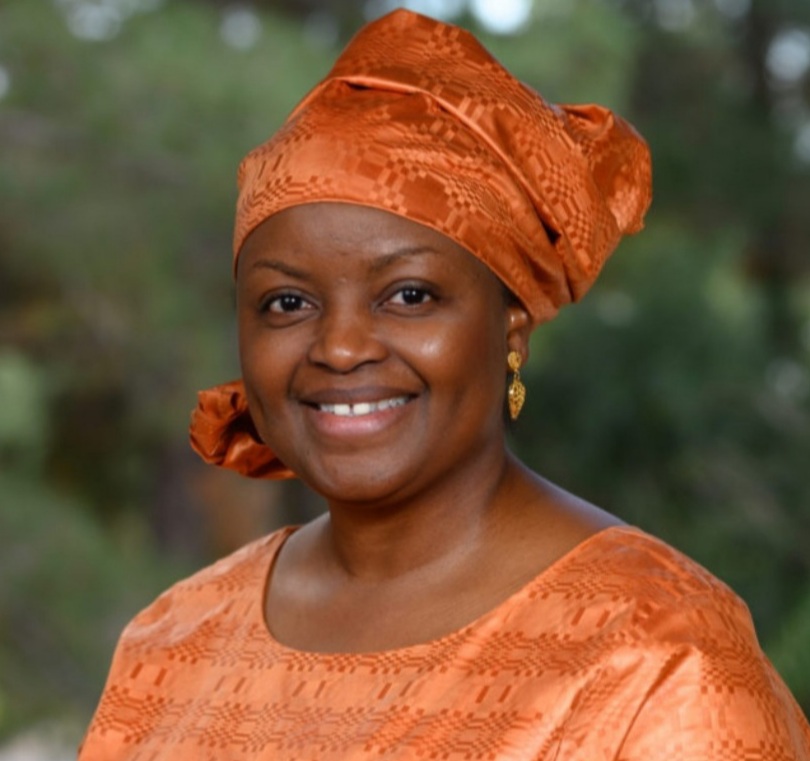
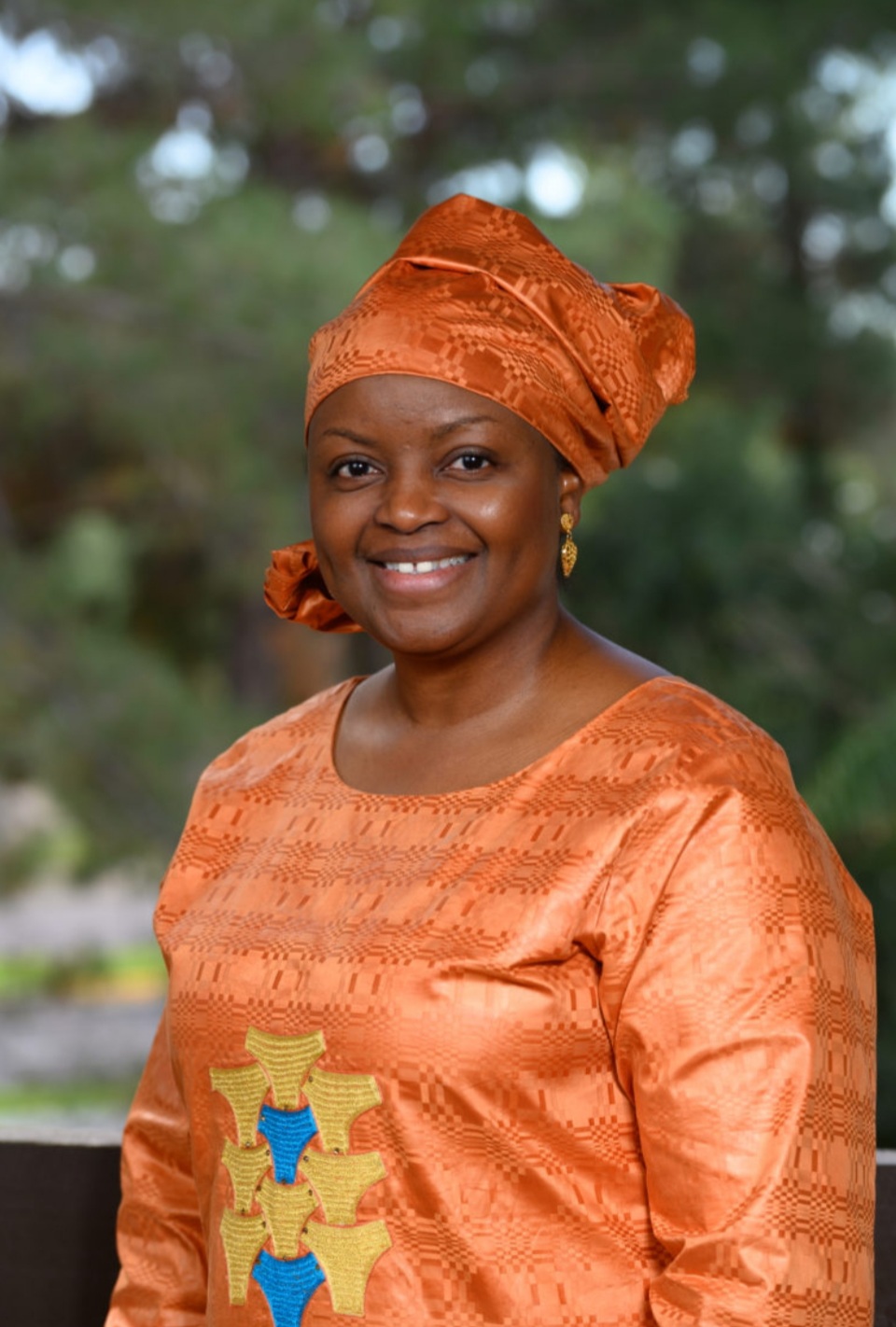
Ramatu Karim Sesay

Ramatu Karim Sesay, founder of Ramatu’s Girls and Women’s Empowerment Sierra Leone

At the age of 25 years, Ramatu has made great strides in spite of the obstacles thrown her way. She has a tremendous will and her story will inspire every little girl who has to fight a culture meant to break her. Her tenacity is outstanding and for her to still be standing today as a single woman, with no children and never having been married in addition to all she has accomplished pays true testament to her feisty spirit.   

This is Ramatu’s story…

My upbringing was tragic and forced me to mature quickly. I had to learn to start doing things for myself, for my siblings and for people in order to survive. At a very tender age, I was sent to live with one of my paternal family members in Port Loko, Sierra Leone to be looked after since my mother was asked to leave the paternal family compound, due to my parents’ divorce. Since she had no means to support her children, she made no objections, at that time. Under the care of my paternal aunt, I suffered tremendously and had to learn to fend for myself and my siblings. I slept on floors, was physically abused and starved, from time to time. I tried raising money for food, by braiding other peoples’ hair, but it was stolen by my aunt. Sometimes, she would also send me to the markets on a hungry stomach to sell items, after school, and when I took 1 000 or 2 000 leones to placate my hunger, she would beat me when I returned home from the markets. On weekends, I was sent to the bush to collect firewood for cooking and the abuse continued with me sometimes eating by neighbours. I endured the mistreatment over the years until she tried forcing me, at the age of 17 years, into an arranged marriage with a 62 year old carpenter. I refused to be forced into this marriage and as a result, was starved.

The final straw came in 2014, aged 19, when my aunt asked me to travel to Banthoron Village in the Port Loko District, where I was stripped naked and received cane lashings by some of the elder brothers of my father because of my refusal to this arrangement and because my aunt tarnished my name by the family who believed her wicked tales of me, including her accusations that I was not intelligent or focused on my studies. While their judgements and beatings pained me, they could not sway me to fall for their tricks because I was able to identify who I truly am and what I wanted to become.

Since I continued being defiant, and spoke up against her and exposed her during the family confrontation, my aunt refused me entry into her home but luckily for me, she was not paying for my education. I was receiving an education through a charitable organization called EducAid Sierra Leone, which caters for the less privileged in Port Loko. However, since she refused to take me back in, I could not return to my aunt’s home and was forced to stay in Banthoron Village, where I was able to read and prepare for my screening exams at another EducAid Sierra Leone branch.

During this period, I developed a deep concern for standing up against perpetrators and became passionate about gender equality and women empowerment. I wanted to improve the lives of all females living in marginalized communities and started engaging with the Banthoron village girls. I encouraged the girls to challenge cultural views that go against their rights to an education and a better life. During one of these educational sessions, I managed to borrow a phone to call one of my female school friends and a male staff member at the school I attended in Port Loko, to explain my family situation. The male staff member promised to get in touch with the Country Director of the EducAid Sierra Leone to assist me in getting out of Banthoron Village. He delivered on his promise and shortly thereafter the Country Director, my female friend and the male staff member (along with another) drove all the way from Port Loko Town to fetch me in Banthoron Village and I started a new life in Maronka Village. While I was sad to leave behind the village girls, I was ecstatic about the positive change in my story.

I was housed by EducAid in one of their buildings that served as a quarantine center during the Ebola Outbreak in 2014 and was appointed as the quarantine home mother, for a short period, to look after children, both girls and boys that were orphaned by the Ebola pandemic. I was later transferred to EducAid Rolal Senior Secondary School Port Loko to continue my schooling. Throughout this period and serving as a group leader to younger children, I managed to graduate high school although it pained me that none of my family members attended my graduation since they disowned me. After completion of high school, I continued serving EducAid and was asked to assist with their EducAid Mgbeni branch. Throughout, I was empowering, encouraging and teaching classes to children under my supervision and was asked to get involved in a Women’s Project teaching girls and women, phonics, mathematics and language arts. It was during this period, months later, that my father made contact with me, to apologize for not standing up for me because of his fear of his family and the repercussions of the elders who do not take kindly to defiance and he encouraged me to focus on my education and was proud of me for what I have accomplished thus far.

In 2016, I was transferred to a new EducAid school in Makeni to continue the Women’s Project and where I continued in my position as a home mother, gender equality representative and head of the safety committee. I also took it upon myself to engage girls in Makeni about female genital mutilation, which is a highly regarded cultural practice. I was of course met with a lot of backlash but the issues were resolved through EducAid Sierra Leone, as part of their organizational work.

I was very happy during my period at EducAid Sierra Leone as I was gaining experience and earning a stipend per month, to survive, since I had no one to support me but towards the end of my tenure, I was a victim of sexual harassment by one of the senior male teachers who wanted to have sex with me in exchange for bread, eggs and other foods but since I refused his advances, he avenged my rejections through falsified reports on my so called misdemeanours and since, there were no open platform to discuss cases of sexual harassment, noting that he was in a position of trust, I was made redundant and my tenure at EducAid Sierra Leone came to an end. It was distressful for me since I was saving most of my monthly stipends to enrol in university and now felt like I was back to square one.

In spite of this, I told myself not to give up and enquired the cost of pursuing a Bachelor of Education degree at the Ernest Bai Koroma University and to my delight my savings covered the first year tuition. To make ends meet, I sold many different snacks on campus and surrounding primary schools because I believed in the power of an education and with the help of good Samaritans, along the way, who assisted me with my struggles, I am now a 4th and final year student, who intend graduating in 2021 with B.Ed., majoring in Community Development with a minor in Agriculture.

As a young and single woman, I have faced a lot of sexual harassment and had to deal with men trying to prey on me, considering my vulnerable situation, but I have honestly been strong and dealt with every obstacle thrown my way in the most dignified way possible and I am extremely grateful for the help of truly good Samaritans who believe in me, my potential and my vision for my future and whose only heartfelt aim is to see me succeed.

My passion, dreams and aspiration for education, women’s rights, development, women empowerment and improving the livelihood of women and girls living in marginalized communities became stronger in my thoughts and heart after being faced with all the hardships. I realized all of those painful experiences have given me more strength of mind, boldness, lessons and the empowerment needed to be vibrant and fearless in the advocacy of young girls and women.

After my fruitful tenure at EducAid Sierra Leone where I gained valuable experience as a volunteer, I transformed my skills and knowledge into rallying a small group of girls in Makeni and started creating awareness on the rights of girls and women and on harmful cultural practices. My efforts have expanded through training and motivating them and as a result, my organization, Ramatu’s Foundation for Girls and Women’s Empowerment Sierra Leone was established on 26 October 2019. The Ramatu’s Foundation for Girls and Women’s Empowerment Sierra Leone is a fully functional foundation registered with the Ministry of Social Welfare, Gender and Children’s Affairs in Makeni with an office space containing 7 rooms, newly recruited staff members and board of directors and office equipment which we will expand as more funds become available.

I am deeply aspired in ensuring all females are educated on their rights and responsibilities and in ensuring that all issues affecting women and girls in Sierra Leone are eradicated with my own leadership and to include men in joining me to win the fight against arranged marriages/child marriages, rape, female genital mutilation and gender-based violence. I want to serve as a global feminist and to continue to tell my story and to help in the development of women and girls living in marginalized communities. All I want to see is a Sierra Leone or a world wherein women and girls are not treated based on selfish cultures, are not deprived of their rights and responsibilities, are given the platform for progress and equality and are given leadership positions and inclusiveness.

If you are interested in learning more about Ramatu or would like to get in contact with her, please follow her on her Facebook page, Ramatu’s Foundation for Girls and Women’s Empowerment Sierra Leone or email her at sramatukarim@gmail.com