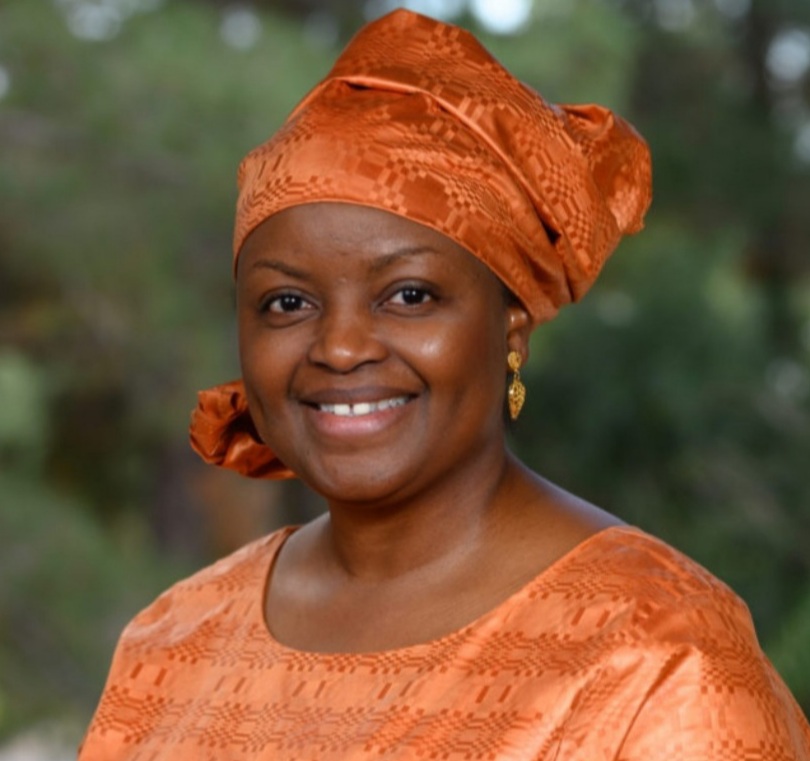
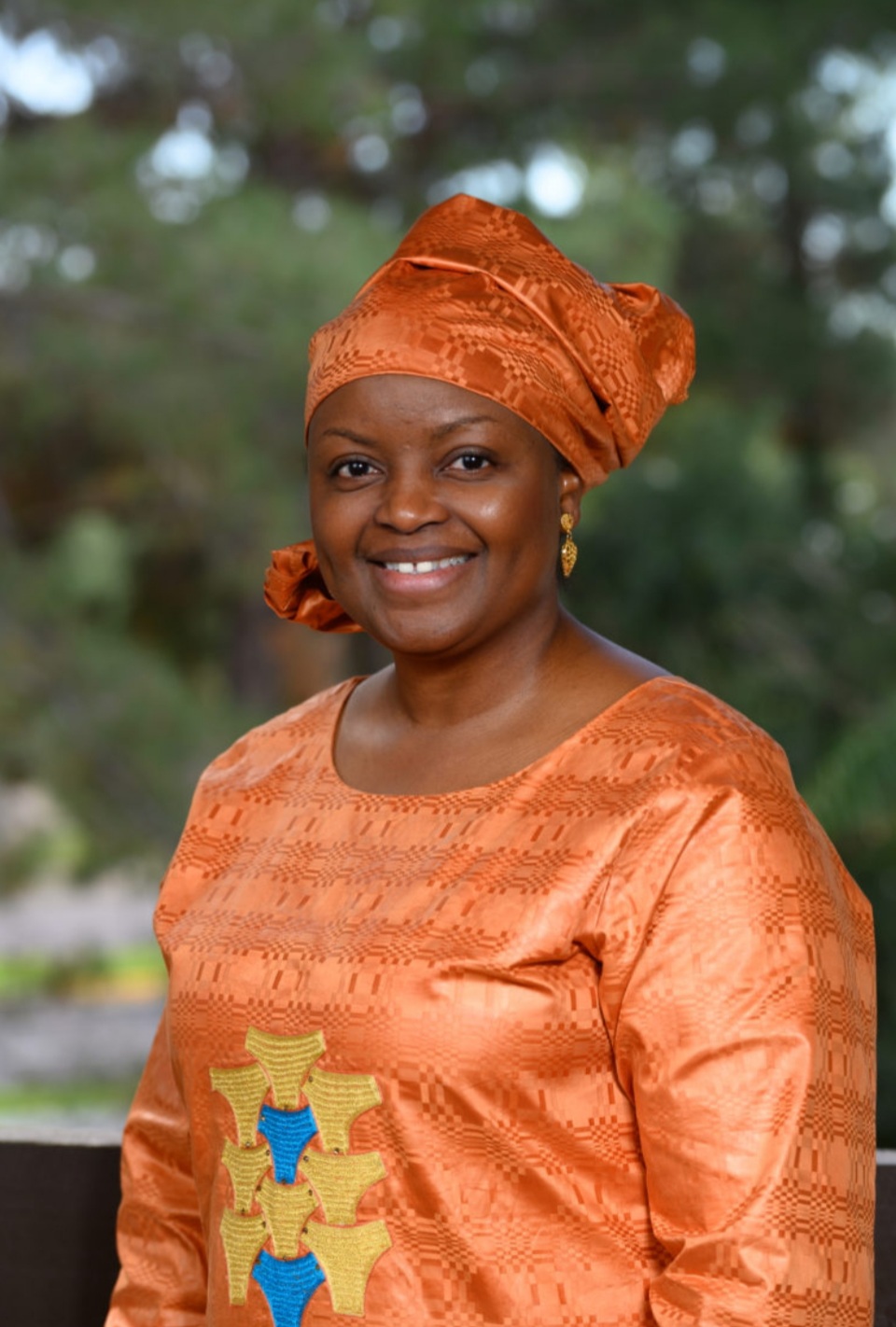
Honorable Isata Kabia is a former Member of Parliament of Sierra Leone and was elected to represent constituency 050, in the district of Port Loko for the period 2012-2017. She has served her country since a very young age and continues to develop, motivate and train young girls and women to take up space and make their voices heard. She is very passionate about women empowerment and has made it her life’s mission to see that every girl can dream and strives to assist in providing platforms to make them independent, strong and resourceful.
This is Isata’s story …
In 1980, at the age of eight, I was reunited with my parents who had immigrated to England when I was three years old. During this period of separation from them, I lived with my maternal grandmother in Lunsar, Sierra Leone, which is situated about 2 hours away from my birthplace, Freetown. My maternal grandmother was my World and when my little brother and I were summoned to join our parents in England, I was very sad at the prospect of leaving her in Lunsar.
When I arrived in England, along with my little brother, I was very miserable and did not adjust well to my new surroundings. Everything was so different from back home and I missed my grandmother dearly. As I grew older and became more settled in England, my longing for Sierra Leone grew deeper and I wanted to return home, to see my grandmother. My parents then paid my return ticket to see my grandmother and it was on this vacation that I had my first encounter with my calling.
During my vacation in Sierra Leone, as a more matured version of myself, I saw the magnanimity of people who had less than me. They had so little compared to the life that I was living back in England, and yet they gave so much of themselves to others. The experience with these women, and people, my people, stirred within me a desire so strong to give back, that for many years since then, their stories became my stories and their stories energized me to make a difference in their lives.
Even though I was still attending school in England, I started supporting the education of girls of my former primary school back home, by sending school materials and even tried establishing a library in my home town of Lunsar. I spent the next several years, before the start of the Civil War, in 1991, choosing to vacation only in Sierra Leone to volunteer at schools or to distribute toys and books to small children or to donate shipped items to hospitals. Every return ticket I paid, since the first, was earned through working holiday jobs back in England; that was how determined I was to keep visiting Sierra Leone and making a difference.
During my years in England, I managed to earn my BSc in Biochemistry and then moved to the United States of America for working purposes. It was here in the USA, in 1998, that I established an organization called African Women of Substance. We protested in front of the White House and raised funds through our brand of beauty pageants by educating people about Sierra Leone and the plight of our children during the Civil War. Through these funds we were able to support two orphanages back home in Freetown.
My passion for my home country led me to become the first president of the Sierra Leone Network in 2003. Under my leadership and after the end of the Civil War, our group of Sierra Leoneans visited Sierra Leone and engaged in the USA to advocate for healthcare services, the provision of education, investments and other services for the people of Sierra Leone.
My passion for Sierra Leone had only intensified since the seeds of service were sown at the age of sixteen years and while I always planned to return home. The death of my mother, in England in 2006, led to my official return to Sierra Leone. Her death hit me hard and it was a period where my grandmother and I needed each other the most. In this time of personal struggles and the impact it had on my grandmother, I finally made the decision to return home.
Having lived a minority existence based on color, it was fascinating to move back home and experience a minority identity based on gender. Being a woman in Sierra Leone is difficult, but having grown up with the discomfort of being ‘less than’, my default mode has been to challenge the patriarchy here at home just as I have stood up to racism in England and the USA.
I have chosen to focus specifically on the leadership of women to ensure we are at the table when decisions are being made about us. My organization, Voice of Women Africa is designed to have branches all over Africa, but I have started small, at home, with the Voice of Women Sierra Leone (VoWS) branch. We aim to build a cadre of women who believe in themselves and in other women, to train and encourage 1000 women seeking elected office in our next local and national elections. Our Pathway to Politics programme is carved out to provide knowledge in running a campaign as well as general leadership skills. Our online videos and podcasts will also amplify unheard voices advocating for rights, in service of inspiring similar actions. Our mentoring scheme bridges the generational gap by creating exchanges between our mentees from secondary schools and universities with older women activists. Our podcasts, currently under development, aim to amplify African women’s voices in order to inspire women and girls everywhere.
My social enterprise Afrilosophy, which was established in 2015, provides training in manufacturing and financial management to women and their small businesses. Our training and manufacturing centre was built and became operational in 2017. To date, we have trained 50 youth and women in manufacturing skills, 120 in ceramics and clay works and 250 women in our Village Savings and Loans scheme (VSL) initiative. Through the Village Savings and Loans scheme (VSL) initiative, we support women owned businesses with access to finance, as well as providing an informal health insurance scheme, and an interest free loan for home emergencies. Ten percent of our Afrilosophy trainees have been employed by other companies and twenty five percent of them have their own businesses or are employed by us. We have struggled for five years without support but have been able to impact 500 lives. It is a small number compared to the national scourge we are trying to address but slow progress is better than no progress and we plan to forge ahead irrespective of the circumstances.
I have also designed a programme called WAAW (Working for the Advancement of African Women) which means ‘yes’ in the Senegalese Wolof language. It specifically targets the West African region, with the hopes of starting this year. It is where our expertise through Afrilosophy will be leveraged to support women’s groups in skills training, entrepreneurship, financial inclusion and support in advocacy and creating safe spaces for women.
I want to spend the next five years building a tribe of women to harness that collective power so we can stand together, as women. I am committing this period to building the future we want by investing in women and girls, now. Our organization’s work should create expertise and capacity leadership, so that we can have the critical mass to advocate for affirmative quotas simultaneously as we show courage and seek elected seats.
Storytelling for change is something I have purposefully embarked on through the Voice of Women Sierra Leone, based on the impact that other women’s stories have had on me. Learning about initiatives inspires me to take similar action and contribute to the scaling of those efforts. My story is very much attached to the efforts made by the women and girls I work with, and I want the world to know about them. Telling my story is in service of their empowerment. I cannot empower them but by accompanying them, I am able to amplify their voices, bring attention to their challenges and provide an opportunity for greater support to our small efforts.
I am who I am because of them.
If you are interested in learning more about Isata or would like to get in contact with her, please follow her on her LinkedIn page, http://linkedin.com/in/isata-kabia-41527b29 or email her at hon.kabia@gmail.com
 JOURNEYS OF HER
This piece reveals compassion. She is very compassionate, intelligent and very nice.
African women and women all around the world adore her for her great impact on the lives of vulnerable women.
LikeLike
Her heart is Exquisite! She’s genuine, loving, kind, compassionate, and generous. An awe-inspiring soul is what she is! She is joy, she is light, she is LOVE.
Virtuous woman God bless you.
LikeLike