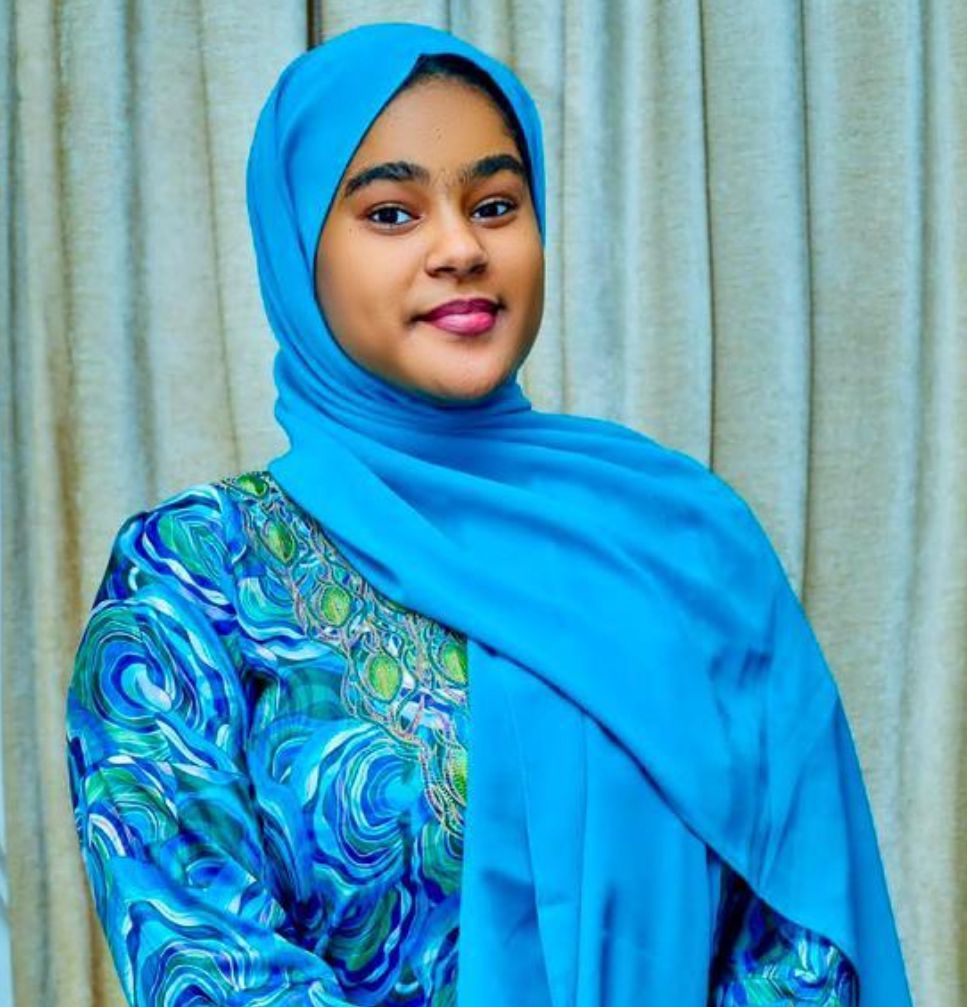
Nicolette Ripepi

Nicolette Ripepi, founder of Autism Connect

Nicolette Ripepi, the founder of Autism Connect, and a certified neuroscience and cognitive coach, specializing in autism-specific education, has been strongly advocating for children with autism since the early 2000s. She is a mother, a champion, and an advocate for voices that are often sidelined and overlooked in most societies around the world. Through her lived experience, she has encountered innumerable challenges but has continuously defied the odds. Her story shows us that resilience is the ability to pull through any hardship, and oftentimes, the changes we want to see in the world around us need to be trailblazed by the actions of our own hands.   

This is Nicolette’s story …

As the youngest of my family, I grew up in a household surrounded by love, support, and a sense of belonging, but when I was six years old, my father died of lung cancer, leaving my mother single-handedly struggling to raise six children, which included my intellectually challenged brother, Kevin. Watching my mother struggle has vividly informed my perspective that nothing in life comes easy, but that through faith in God and family togetherness, you can overcome any difficulty.

As a family, we grew closer during the emotionally challenging times, such as dealing with the grief of losing my father, taking turns to tend to Kevin, who was shunned by the schooling system as he was labelled “retarded,” and dealing with the socioeconomic challenges that automatically came with living during the Apartheid era. Life went on and we adjusted to our new normal. Through it all, I managed to graduate from secondary school and went straight into the workforce. It was here that I met my future husband, Jeremy. We fell in love and dated for a good four years before I fell pregnant with our first child. We got married that same year, filled with so many dreams and so much hope for our future together.

During our first year of marriage, after the birth of our daughter, Tammy, Jeremy was diagnosed with a hereditary condition, diabetes. Although it was hard, we managed with regular medical appointments, changes in diet, medication, and the daily adjustments that came with a diagnosis of such a nature. Four years after we had our daughter, I fell pregnant with our son, Tyler, and we were all over the moon, especially Jeremy. Being the rugby fanatic that he was, becoming a father to a son really excited him as he had all these dreams for his little boy, the way fathers do for their sons. But what was supposed to be an exciting time for everyone soon turned into heartache for us because the dreams we had had to die to give birth to God’s Plan for our lives.

In 2004, Tyler was born and the household was abuzz with excitement and life felt like it came full circle with our pigeon pair. Tyler, like our daughter, Tammy, was an adorable baby, filling our lives with so much love and warmth but as the days stretched into months and the months were heading into two years, I started noticing that Tyler wasn’t progressing as he should for his age. He would display frustration by biting his knuckles, banging his head against the walls, and didn’t respond to his name, or would stare long into space. Everyone around me said, “Ag, he’s a boy, boys take longer to develop” or “Don’t worry, he’ll be fine” and even the doctor had his own theories about what was wrong with Tyler but my maternal instinct knew something was amiss. I eventually went back to the doctor and pushed for a second opinion. Eventually, at 2 years and 10 months old, Tyler was diagnosed with Level 3 Non-Verbal Autism Spectrum Disorder which meant he required substantial daily support.

I felt relieved. Relieved that finally I had an answer, and could work with what we knew because not knowing is far worse than knowing. It did not make the road ahead any easier, but it gave me a place to begin. With this, I went to autism specialists, as help for autistic children in the early 2000s was not readily available to the general public. Either you had money to consult a specialist or you did not. Seeing these experts, however, was proving to be financially draining for our family, compounded by Jeremy’s trouble with accepting the diagnosis. It pained him deeply that he turned to substance abuse to cope with Tyler’s diagnosis. Meanwhile, I did not have the liberty of time to sit in my grief as I eventually became the sole breadwinner, took care of Tammy, Jeremy, and had to attend to Tyler.

It got to the point where crèches were not accepting Tyler due to his autism. Like my brother, Kevin, the same reality was now becoming Tyler’s. Shunned by the schooling system, I had to find a way and this was when an idea struck me. I asked Jeremy’s aunt to take care of Tyler while I still worked in the corporate sector. We bought a small table, housed it at my home and she babysat Tyler and two other autistic children. God bless her soul, she taught them shapes, and colours, and anything they could learn at foundational level because learning for an autistic child is very different from that of a child who does not view the world through an autistic lens.

With time I came to realise that if this was the reality of my situation, how many more families were out there struggling with a lack of support, from financial to moral, and just needed a space where they could be welcomed and have a sense of belonging in a world that often excludes children and families with autistic children. But by then, my marriage had reached breaking point and sadly ended in 2011. Although our marriage had ended, I continued to care for Jeremy while focusing my energy on being a champion for our son and children on the autism spectrum. Those difficult years strengthened my resolve to ensure that other families would not have to walk the same journey alone. With this, and Jeremy’s moral support, I formally established Autism Connect in 2013 and left the corporate sector to manage my organisation full-time.

Autism Connect was established in our hometown, Mitchell’s Plain, with the belief that no neurodivergent child should ever be left behind. What began as a deeply personal journey has grown into an organisation dedicated to providing specialised education, skills development, and support for autistic children, young adults, and their families. At Autism Connect, we recognise that every autistic individual is unique. Rather than expecting learners to fit into a conventional education system, we tailor our programmes to meet each learner’s individual needs, strengths, and interests. Through this learner-centred approach, we strive to foster independence, communication, confidence, and social development while creating an environment where every learner is valued and supported.

Our Early Learning Centre caters to children aged 3 to 16 through structured, individualised educational programmes. Using the internationally recognised TEACCH approach, each learner follows an Individualised Educational Development Plan that incorporates visual supports, sensory routines, and integrated speech and occupational therapy to maximise their developmental potential. Recognising that learning does not end in childhood, we expanded our services to include a Skills and Coaching Centre for young adults aged 18 to 25. The programme focuses on preparing learners for greater independence through life skills development, pre-employment preparation, physical development, and vocational training in areas such as information technology, hospitality, and woodworking.

Beyond education, Autism Connect is committed to building a community of inclusion, understanding, and belonging. We work closely with families, recognising that supporting an autistic individual also means supporting those who walk the journey alongside them. By partnering with parents, caregivers, therapists, educators, and the wider community, we continue to advocate for greater awareness and acceptance of autism. More than a decade after opening our doors, Autism Connect continues to remain true to its founding vision: unlocking the greatness within every learner by providing opportunities that empower autistic children and young adults to develop their abilities, realise their potential, and participate meaningfully in society.

Looking back at my journey, and seeing the impact of Autism Connect on our children and their families, I can say all the challenges and insights from my early years, to growing up with our older brother Kevin, to dealing with the hardships that came with my path, to eventually losing Kevin in 2014 and Jeremy in 2016, all these experiences have enabled me to build the support we now offer to other families.

I won’t lie by saying it is easy. It has never been easy, and it still is not easy. There are days I wish I could just have breathing space, just shut down, relax and unwind, but I can’t. There are many hurdles we face as an organisation with limited resources in light of the greater need for the type of work we do, but that was how I started this organisation. Jeremy and I did our research and started off with the little we knew, and had, but see how it has grown into what it is today. If you had asked me when I bought that table for those three autistic children sitting around it if it would prosper to this, it would have seemed unattainable. But it was through God’s Grace that we are all here today, as part of an inclusive community for autistic children, and it is my hope that going forward, it will continue to bring hope, support, grace, and compassion to families of autistic children in a society that often does not understand the joy that these pure hearts bring us.

If you are interested in learning more about Nicolette or would like to get in contact with her, please reach out via the website https://autismconnect.org.za/, her Facebook page, Autism Connect, or email her at director@autismconnect.org.za.

Rahma Abdulmannan

Rahma Abdulmannan, co-founder of Creating Happiness and Assistance Foundation (CHAF)

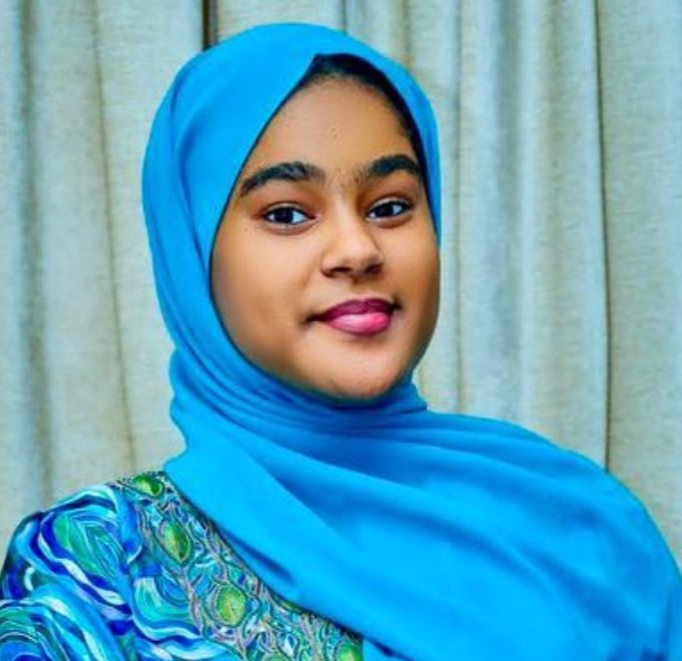
Rahma Abdulmannan, the co-founder of Creating Happiness and Assistance Foundation (CHAF), and a nurse by profession, is driven by her passion for making a difference in the lives of those less fortunate than her. As a humanitarian and a lifelong volunteer, her area of interest has always been focused on the empowerment of the girl-child and on orphans. Her story shows us that the privileges we may take for granted are not necessarily the reality of those around us and that oftentimes, it takes one person to make the difference in the trajectory of the lives of others and that we should never underestimate the power of the impact that we each hold within our hands.

This is Rahma’s story …

Being born in rural Kano State, Nigeria, a society in which cultural perceptions often dictate the lived reality of girls and women around me, stands in stark contrast to the home environment in which I was nurtured. As a little girl, the third child of five siblings born to a Yemeni mother and a Nigerian father, I have had the privilege of being raised by open-minded parents who were driven by an ethos of religion and not cultural beliefs steeped in ignorance.

Growing up, I always thought that the egalitarian values of my home environment extended to those around me, to relatives, close associates and family friends. I always felt that the treatment of girls and women as second-class citizens was the further reality, the reality of others, confined only to certain spaces within our society even though I was an active part of it as I was volunteering throughout secondary school at various organizations and orphanages. However, the veil of naivety fell from my eyes, when years later, I was preparing to attend university and my father sought out counsel, with his kinsmen, if he should send me to join my elder sister, to study in Cairo, at The British University of Egypt. I was of the former belief that our fellow kinsmen, males I regarded as second fathers, would be supportive of his intentions but alas! Instead, my father was met with disdain, mockery and patriarchal mindsets. They all laughed at my father, discouraging him, and saying that it would be a waste of his resources to continue spending money on me or any of his four daughters. They were clear in their worldview that the purpose of the girl-child is to be married off, to raise a family and to not have the liberty of a career. To their dismay, my father believed that all five of his children, both his only son and all of his daughters, should receive the same privileges and that just because men may have a degree of responsibility over women, in looking after them, did not mean that women should be deprived of their rights. Through the Grace Of God, my parents – both businesspeople – sent me to join my sister in Cairo, Egypt where she was already studying pharmacy and where I was to embark on a BSc Degree in Nursing.

From 2019 to 2024, I studied in Cairo and during semester vacations, I returned home, continuing with tuition classes and my volunteerism. In 2022, during one of these semester breaks, I stumbled upon a fifteen-year-old girl. It was one late evening, while returning home from lectures, when I saw her. Her face was swollen, and she was unkempt. I saw from a distance that she was sobbing but despite being by the roadside in a heavy downpour, everyone looked her way, saw her state, but no one did anything to assist her. After half an hour of keenly observing, I went up to her, saddened by the lack of sympathy towards her and driven by curiosity to assist her. I introduced myself, and asked her to follow me to the nearest possible shelter, since there were no shelters within walking distance, but she refused. After much placating and reassurance, I convinced her that she is safe with me. She eventually relented and we went to the nearest restaurant, where she washed her face and was served food. Upon finishing our meals, I encouraged her to share her story with me and her story was a tale I have heard all too often throughout my years of volunteering. Her story was one of maltreatment, physical abuse and violence at the hands of her own blood, her aunt. Six months prior to our encounter, she lost her parents to a land dispute and since she was the only child of her late parents, she was made to go stay with her mother’s elder sister. Escaping abuse, she ended up on the streets that night where our paths crossed. With all the details on hand, I then took her to the community leader, the next day, where arrangements were made for her better welfare. Fast forward to 2025, she is happier and is in the first year at university. However, not many of these girls have happy endings. There are many girls and women in the rural parts of Nigeria that face innumerable barriers with zero to minimal opportunities to education, employment and healthcare services while having to contend with social issues such as early marriages, domestic violence, rape and unwanted pregnancies.

Coming from a privileged upbringing and with my passion for humanitarian work, I was geared to wanting to be an agent of change within my society. One year prior to meeting the fifteen-year-old girl, I officially became a volunteer at Creating Happiness and Assistance Foundation (CHAF), a non-profit organization that was established in 2019, while I was in Egypt. I would return home and actively volunteered in the organization until the principal founder, Mr. Aliyu Bello, proposed that I become a co-founder of CHAF as the team was looking to partner with someone with a medical background.

In 2023, I officially joined as the co-founder of CHAF and since then, we have expanded our networks and programmes with a primary focus on widows and orphans. As an organization, we work across four spectrums: personal development, healthcare and medicine, education, and empowerment. Through fundraising campaigns, we strive to create activities that are both educative and entertaining to foster the personal development of orphans, render quality medical assistance to widows and orphans by paying their hospital bills and buying medicine for them, create supportive learning environments, empower young minds for a brighter future and establish sustainable businesses for widows, with orphans under their care, by training and supervising them to be able to independently raise their own children.

Across the country of Nigeria, there is a high rate of orphans due to abandonment relating to poverty and because of children that are born out of wedlock, not because of the death of their parents. Many cases, both reported and unreported, are incidences of babies abandoned at the doorsteps of many residences, found in trashcans and across public places. In the case of reported incidences, these abandoned babies are brought in by the public to organizations, such as CHAF, who then report such incidences to the police and place these vulnerable children in orphanages. While our current focus is on orphans and widows with projects such as Our Kids to the World and Widow Empowerment and Ramadan Feeding, going forward we hope to expand even further by focusing on Back-to-School Drives, Menstrual Hygiene Practices for Girls and Health for All.

Besides my involvement as a co-founder, and being a professional nurse, I am also involved in creating public awareness through radio presentations and offer discounted prices on my products, bought for orphans, under my shoe enterprise, Sparklee Shoeroom. Everything in my life is driven by the question: how can I make life better for those less fortunate than me? Sometimes, I question why I have been given the opportunities that others may not have been granted but then I realize that better opportunities do not mean that I have to improve my lifestyle, it simply means that God is using me as a tool to help others. While I may not be able to change the world, I believe in the power of one person. It takes one person to make the difference in the life of another person and it takes one person to change the outcome of another person. If I am that one person that can make the difference in the life of another person, then I am not just changing that person’s life but also the lives of their coming generation and I would want to be that person.  

If you are interested in learning more about Rahma or would like to get in contact with her, please reach out via the website https://www.chafoundation.com/, their Facebook page, Creating Happiness Foundation – CHAF, or email her at agadrahma@gmail.com.
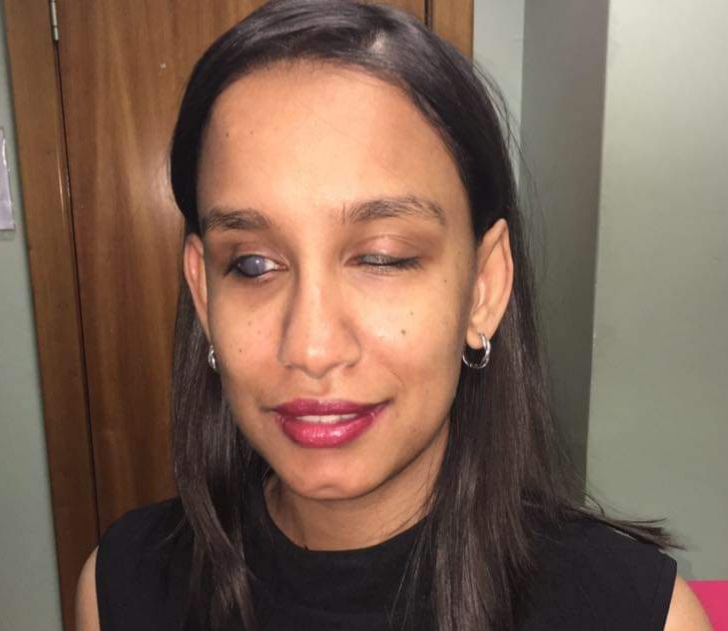
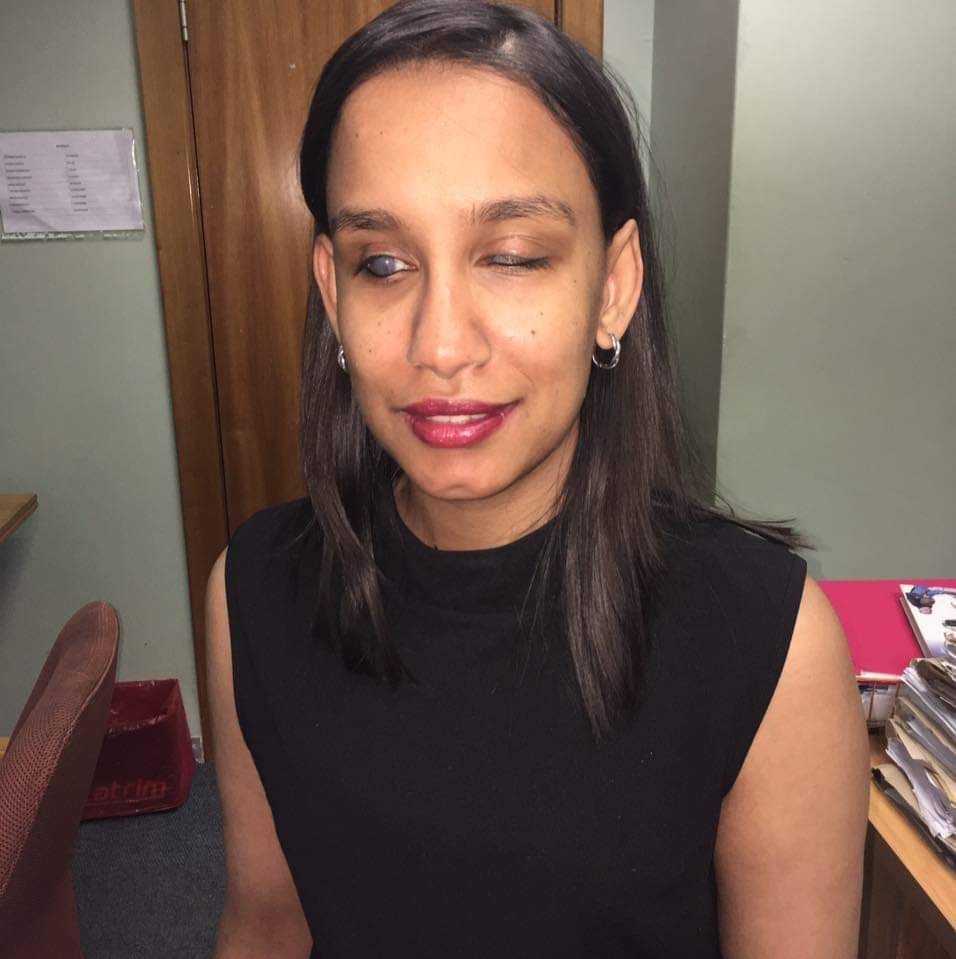
Maymoona Chouglay

Maymoona Chouglay, founder of Infinite Abilities

Maymoona Chouglay, the founder of Infinite Abilities, is a social worker both in her professional capacity and as a volunteer. She is deeply involved in trying to alleviate the societal challenges of the disabled community. Her journey to finding her own path has driven her to facilitate the lives of the visually impaired. Her story shows us that it is important to always find the silver lining in the cloud, irrespective of the challenges, and that we all have the power to turn our pain into purpose.

This is Maymoona’s story …

I am sitting in the classroom and all I see is a colourful blurriness, but I cannot see the distinct features on the faces of my fellow classmates nor the letters on the dark green board a few feet away from me. It feels like a cloud hovering in front of me, through which I need to see, but I find comfort in the presence of my mother, my pillar, and my strength. She is seated alongside me, to make the lines in the book darker, to read to me from the board and to help me with learning to write, between the lines, and on the days that she is not present in class with me, my teacher tries her best to include me in all the activities.

When I reflect on my first two years of mainstream schooling, in Johannesburg, South Africa, I can remember clearly how challenging it was trying to immerse myself in a classroom designed for and filled with learners without disabilities. The struggle to immerse myself in my new surroundings was not due to a lack of care but due to a lack of special-needs resources and infrastructure, which is predominant in most mainstream schools within South Africa. 

In 1987, I was born six months prematurely, in Kimberley, South Africa, weighing 680 grams. While being incubated, I was given too much oxygen which resulted in my retinas becoming detached. Despite having undergone several operations, and receiving the best ophthalmologic care, nothing could be done to reverse the damage, thereby causing me to become visually impaired. With the need to search for better working opportunities, my parents returned to my father’s hometown, in Johannesburg, a city situated five hours away from Kimberley.

It was while I was in Johannesburg, that I entered mainstream schooling. However, the respective school was not equipped to accommodate my condition and we were referred to Prinshof School, for the visually impaired, in Pretoria, South Africa. After we went for our first appointment at Prinshof, to ascertain if it would work for me, my mother assured me that I would manage at the special school, and that she would continue to assist me.

When I was eight years old, we relocated from Johannesburg to Pretoria to enable me to start my new journey. I went from having to sit in front of the board in my former mainstream school, to be able to read the letters, to being able to immerse myself in an accommodating world with learners who endured similar challenges as me. Prinshof was truly the game changer in my development as an individual. It set me on a path of healing and growth by creating a space of belonging. Before Prinshof, I did not have a strong sense of self but through Prinshof, I became very confident and found my sense of self.

I became active and partook in many school activities including athletics, swimming, piano lessons, and the school choir. I completed Grades 1, 2 and 3 within 6 months of commencement. The rate of my development was outstanding to the extent that Prinshof wanted to promote me to Grade 4 within my first year. However, my mother refused the suggestion with the reason of wanting me to focus on learning braille and to become more well-rounded by acquiring skills in other areas, not just academics.

For the next three years, I was thriving at Prinshof but then, in Grade 6, at age 11, my World got shaken to the core by the sudden loss of my mother to lupus. It really stunned me that my biggest supporter was no longer there to cheer me on and to guide me on my path of becoming … There are days that I still miss my mother. I miss her tender touch, her comforting hugs, and her unconditional love but as a child, it was harder to navigate the World, without her, because she was my voice, and as a child, I was still finding my voice. In the midst of the darkness, my father and I held on to each other, and even if I never got over the loss of my mother, I appreciate and have the greatest respect for my father, for always being there for me and for creating a sense of normalcy for me, when she left this World.  

One year after my mother’s passing, my father remarried, and I was blessed with a second mother. She became the mother I needed when my own mother was no longer, and our little family of three was later expanded with the arrival of my twin brothers. This sense of family has been my comfort and through the coming years, I continued to thrive at Prinshof until I completed my secondary education. When I started studying at university, interestingly, it felt like I was regressing into the real world where the mundaneness of university life was in fact, a blind person’s nightmare, all because of a lack of reasonable accommodation.

It was tough adjusting but fortunately, my mother accompanied me to campus as I embarked on my BA Degree in Social Work at the University of Pretoria. She was there for the first six months, assisting me with navigating classes and making notes, until we employed the services of an assistant that walked me to classes, typed my notes and books, where needed, and executed any other tasks that were required. Although I used a white cane, it was very difficult navigating campus with it because university buildings are not always streamlined and flat-surfaced to facilitate walking unaided or even, with a cane.

During my second year of university, I was further diagnosed with glaucoma, which caused me to lose my eyesight completely. I nearly threw in the towel and quit university because my condition got progressively worse, and the daily challenges were just mounting. It was tough but as a believer, I was reminded of one of the most enlightening verses in The Qur’an, “Allah does not burden any soul greater than it can bear” (Chapter 2, Verse 286) and I soldiered on. Six years after I started university, not only did I complete my BA Degree in Social Work, in 2012, but I also graduated, in 2013, with a BA Honours in Social Work.

I have worked and continue to work both within the governmental and non-governmental sectors, from Gauteng North Services to the Department of Social Development and am currently busy with my Masters in Disability Studies. Being a person that is living with a disability, has augmented, and aligned me to assist people with disabilities, in addition to my other social work responsibilities. I am involved in extensive voluntary community work, with other organizations, including the supervision of a home for blind children, from ensuring their well-being to their accessibility to an education, and an empowerment center under the auspices of a non-governmental organization, Garden Social Services. I was previously involved in consulting work with the braille packaging of skincare product ranges with L’Occitane, for a two-year period (2018-2019), and currently participate in public speaking engagements, disability awareness training and campaigns and have also established my own organization.

In 2019, Infinite Abilities was established as a consulting firm to serve persons with disabilities, and their families, with therapeutic to general support and empowerment services. The organization offers educational and disability awareness training to businesses and organizations and supervises social workers and social auxiliary workers in their respective roles in accordance with the Social Work Supervision Policy Framework but with a special focus on dealing with persons with disabilities. The vision of Infinite Abilities is that through its services, every professional will become aware of and be educated and equipped with the skills, tools, and guidelines to assist persons with disabilities that they may encounter in the workplace or in their everyday lives.

For the past four years, since its inception, Infinite Abilities has been a one-woman show. Hence, with the aim of expanding and bringing members on to the executive board, the organization hopes to reach more individuals, living with disabilities, by providing resources to aid in their medical care and counselling services, their educational aspirations and to enable the disabled community to live empowered lives. Furthermore, Infinite Abilities aspire to assist social workers to establish their own private practices with the aim of accommodating more persons with disabilities that are unable to reach the government’s social work services due to geographical locations or being under-capacitated.

There are numerous daily challenges that I encounter in my interactions with people that are not attuned to my visual impairment, from a personal assistant that may not read the instructions clearly, to me, to a driver that does not drop me off at a precise location and it is frustrating, and it can be depressing but I refuse to live in those moments of darkness. I am a firm believer that this condition has been bestowed upon me, to be of service to humanity, to aid me in understanding the nuances of living with a visual impairment and to use my voice to be a voice for other visually impaired children and adults.  No matter where my journey may lead to next, I will continue to strive and empower myself, to the best of my ability, to use those skills to help the disabled community but my deepest desire, in all of this, is that society learn to pass the baton, to persons living with disabilities too. We are more than just being disabled.

If you are interested in learning more about Maymoona or would like to get in contact with her, please reach out via her Facebook page, Infinite Abilities, or email her at info@infiniteabilities.co.za.

Rachel Affiong Umoh

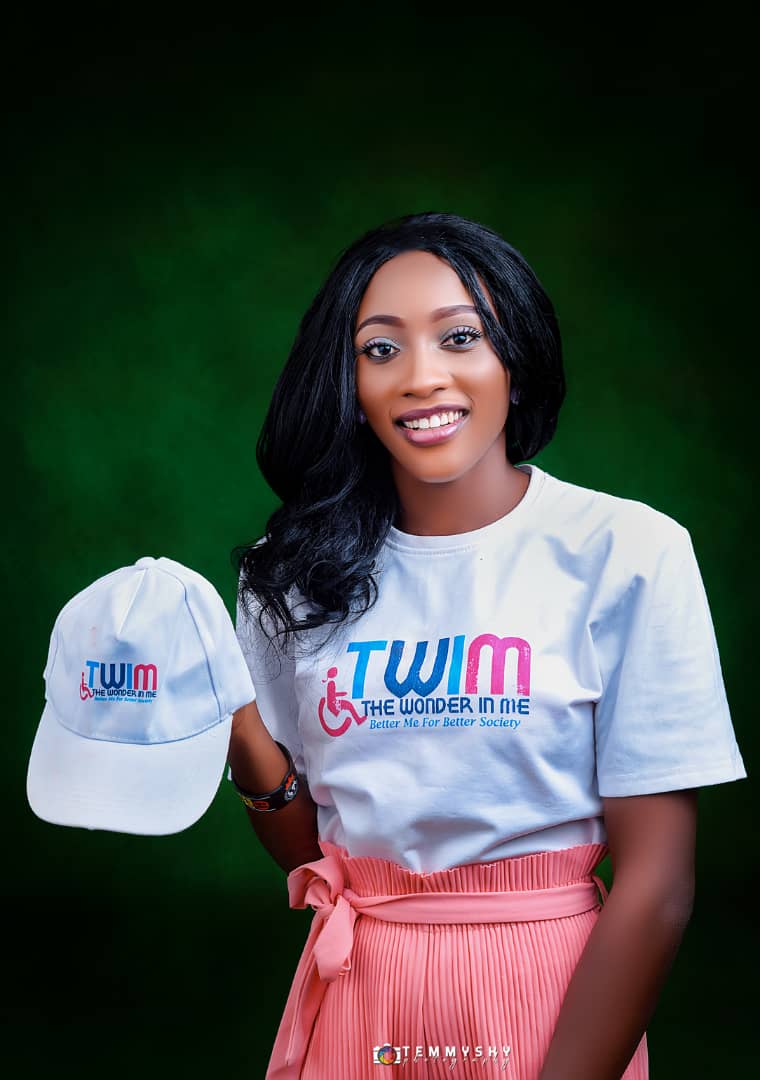
Rachel Affiong Umoh, founder of The Wonder In Me (TWIM)

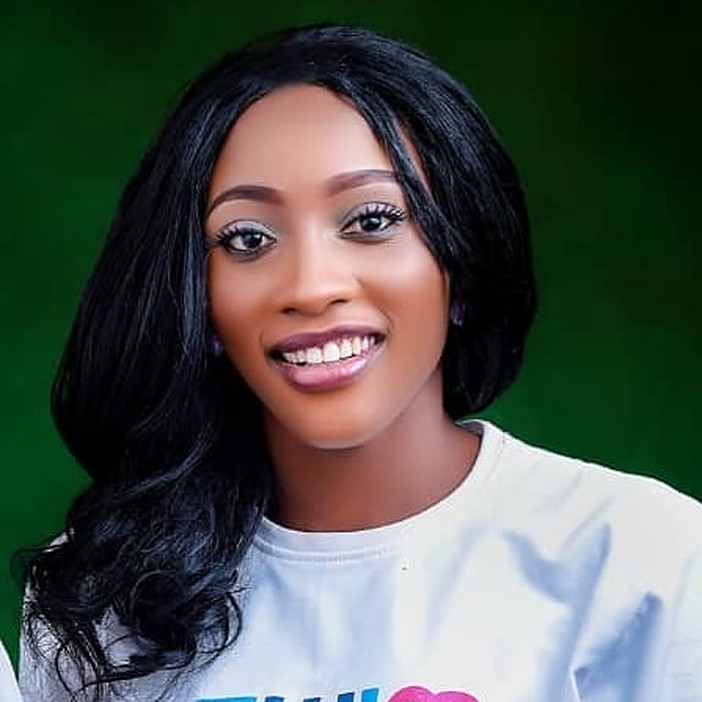
Rachel Affiong Umoh is a driven and ambitious young woman. She is a compere, has her own West African pidgin YouTube Channel called Psyche Special TV, which focuses on mental health wellness and special needs, and is a qualified psychologist with a passion to help the most vulnerable within her society.  Her story shows us that the dreams we have may not always evolve as we anticipated but that we need to rise to the challenge that is presented to us because oftentimes, the challenge is the key to achieving our dreams.

This is Rachel’s story … 

Prior to my birth in Kaduna State, Nigeria, my parents both emigrated separately from their respective Yoruba and Ibibio states in the South of Nigeria before meeting, marrying, and raising their three daughters, of whom I am the eldest, in the North. We grew up culturally aware of the different tribes in our families, switching easily between speaking Ibibio in Akwalbom State and Yoruba in Ogun State, when visiting our extended families. Being born into an intertribal family has been, and still is, both a source of pride and honour for me but it has also made me attuned to and impacted by the tribalism that is rife in Nigeria.

As a minority tribe in the community where I grew up in, certain access and privileges were denied not just to my family but also to certain other tribes. We were deprived of free mosquito nets and COVID-19 pandemic palliatives, denied applying for vocational training programmes and poverty alleviation incentives, such as agricultural loans and business grants, that were provided for by the government, but which were locally administered. Through the local management of such programmes, we were never timeously informed or even allowed to participate in such incentives. Recurring stigmatization and discrimination, both historically and presently, of tribes over the hierarchical access to privileges, at grassroots level, often causes rising tensions which leads to communal and tribal clashes and inter-religious conflicts in both Northern and other parts of Nigeria.

Growing up and witnessing such forms of oppression, injustices, and corruption within my region and across Nigeria and having seen, first-hand, the adverse effects it often has on the most vulnerable groups within our society, moulded my perception of the unfairness of the World surrounding me. It motivated me to want to become a lawyer and solicit for the rights of the vulnerable and the violated, to be able to provide them with the adequate support to live independent and self-fulfilling lives

As a top achiever and having been elected as the president of the press club and debate club at secondary school, I applied to study law at my chosen university in the hopes of fulfilling my childhood dream. However, despite my excellent academic record, I was denied admission because my parents did not hold high-powered positions in the country. My mother is a teacher, by profession, and a serial entrepreneur, while my father is a civil servant, but they were not connected to the crème da la crème of society, and this affected my prospects of becoming a lawyer. It felt like a gross injustice but an accepting reality and with this in mind, I proceeded to change university and course with the aim of studying mass communication because I felt that I can still advocate for the rights of the most vulnerable but using a different tactic, mass media.

However, while I was accepted to study at the next chosen university and passed the qualifying exam to be admitted into the mass communication programme, when I received notification of acceptance, I discovered that instead of being admitted into the chosen programme, I was assigned to study psycho-social rehabilitation. While this may sound confusing to others, this is the norm across Nigerian society; you may apply for one course but might end up getting admitted to another course (that you never even chose as a second option!) but we take this either with a sense of humour or a pinch of salt.

Hence, my parents encouraged me to accept studying psycho-social rehabilitation, which would certify me as a psychologist, as God’s Will for my life and with this in mind, I made the intention to commit myself to this course chosen for me although I was, at the time, not happy with the choice as psychology was all new to me. However, I was pleasantly surprised because as I learnt more about psychology in the first few weeks after the commencement of the programme, I realized the level of impact I can leave in my wake with the exposure, skills and training I would receive during my studies. It made me realize that my childhood dream of advocating for women, displaced persons and the special-needs can still come to fruition through the tools of psycho-social rehabilitation. I took to learning with zest and learnt as much as I possibly could on rehabilitation, social violation cases, HIV testing and counselling and volunteered at relevant non-governmental organizations including a 6-month working stint at Kaduna State Rehabilitation Centre and a one-year compulsory internship at the Department of Social Welfare at a general hospital in Kaduna State. The theoretical and practical exposure has been tremendous, and I eventually qualified as a psychologist in 2020.  

It was during my final year of studies that I reached out to individuals within the rehabilitation and counselling sector to form a team and established a non-governmental organization, The Wonders In Me (TWIM). TWIM is a state-registered advocacy organization driven by the mission of a “Better Me For Better Society” and the belief that mental health wellness and inclusiveness is integral to a well-balanced and functioning society. While we advocate against the stigmatization and discrimination of persons with special needs, we have also ensured that 50% of our organization’s executive members and 50% of our volunteers constitutes persons with special needs. Thus, with the current 20 executive members, on board, and 100 volunteers, half of this number represents persons with special needs.

We advocate in communities, at schools, rehabilitation centres, internally displaced (IDP) camps, prisons, and other relevant organizations. The organization’s activities includes both social media campaigns and event hosting. For the past two years, we have launched mental health clubs in 20 secondary schools across Kaduna State, provided relief support to IDP camps, orphanages and rehabilitation centres and donated wheelchairs, crutches and braces, special education training materials and other rehabilitation aids to rehabilitation centres and special education schools. We also organize training programmes for staff on the proper use of modern-day rehabilitation services for children with sensory impairments and learning difficulties and host outreach awareness programmes, which includes guest speakers and key stakeholders. The long-term vision and current challenge are to get TWIM nationally registered and to establish our offices so that we can offer counselling and rehabilitation services to more individuals and expand on the current work that we do.

I am often asked what triggered my interest in advocating for special-needs as I am not a special-needs individual, but the truth is I am part of a minority tribe within my community, and this has deepened my insights into their sense and reality of not being included and having access to an active society. Thus, I would never want any special-needs individual to ever feel like they do not belong or cannot participate. Furthermore, the beauty of having grown up in an intertribal family is that it has granted me the understanding into different worlds that may, in other instances, view each with disdain or hostility and the truth is the spheres within which special-needs and able-bodied individuals navigate tend to be two different worlds. It is important to realize that irrespective of our tribal and religious affiliations, our nationalities, our abilities, or limitations, we are all the same. We are all human and it is important that we represent or provide the vulnerable and the violated with opportunities and platforms to be represented not because of their weaknesses but because they are capable, strong, and willing to participate in society that sadly, often, forgets them. It is important that we reach within ourselves and find our humanity and work together towards a world that can represent all of us and not one at the expense of another.  It is this passion that drives me, despite all my personal and professional challenges, and no matter the hurdles, my story is proof to every African woman that giving up on your dreams is not an option. Keep on striving for your dreams and utilize every opportunity that presents itself to you because all the small steps you take in your journey will lead to greater strides.

If you are interested in learning more about Rachel or would like to get in contact with her, please reach out via her Facebook page, TWIM “The Wonder In Me”, or email her at rachelumoh3@gmail.com or thewonderinme262@gmail.com