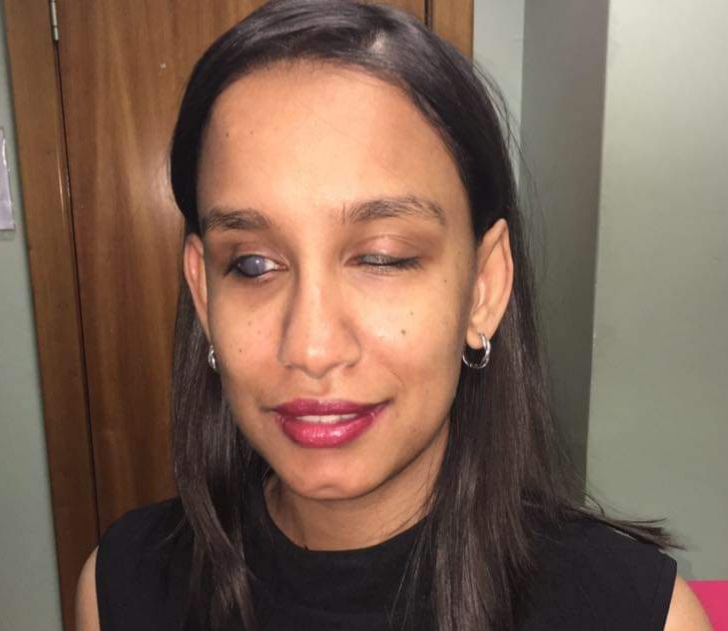
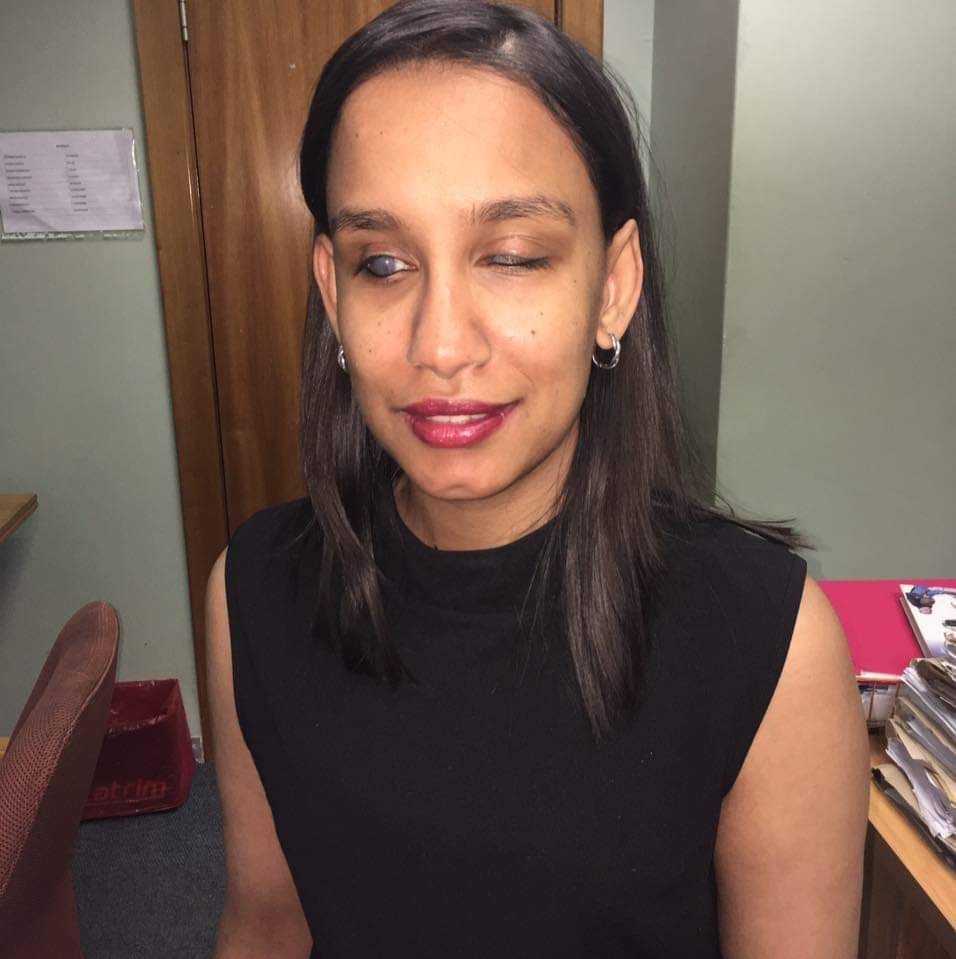
Maymoona Chouglay

Maymoona Chouglay, founder of Infinite Abilities

Maymoona Chouglay, the founder of Infinite Abilities, is a social worker both in her professional capacity and as a volunteer. She is deeply involved in trying to alleviate the societal challenges of the disabled community. Her journey to finding her own path has driven her to facilitate the lives of the visually impaired. Her story shows us that it is important to always find the silver lining in the cloud, irrespective of the challenges, and that we all have the power to turn our pain into purpose.

This is Maymoona’s story …

I am sitting in the classroom and all I see is a colourful blurriness, but I cannot see the distinct features on the faces of my fellow classmates nor the letters on the dark green board a few feet away from me. It feels like a cloud hovering in front of me, through which I need to see, but I find comfort in the presence of my mother, my pillar, and my strength. She is seated alongside me, to make the lines in the book darker, to read to me from the board and to help me with learning to write, between the lines, and on the days that she is not present in class with me, my teacher tries her best to include me in all the activities.

When I reflect on my first two years of mainstream schooling, in Johannesburg, South Africa, I can remember clearly how challenging it was trying to immerse myself in a classroom designed for and filled with learners without disabilities. The struggle to immerse myself in my new surroundings was not due to a lack of care but due to a lack of special-needs resources and infrastructure, which is predominant in most mainstream schools within South Africa. 

In 1987, I was born six months prematurely, in Kimberley, South Africa, weighing 680 grams. While being incubated, I was given too much oxygen which resulted in my retinas becoming detached. Despite having undergone several operations, and receiving the best ophthalmologic care, nothing could be done to reverse the damage, thereby causing me to become visually impaired. With the need to search for better working opportunities, my parents returned to my father’s hometown, in Johannesburg, a city situated five hours away from Kimberley.

It was while I was in Johannesburg, that I entered mainstream schooling. However, the respective school was not equipped to accommodate my condition and we were referred to Prinshof School, for the visually impaired, in Pretoria, South Africa. After we went for our first appointment at Prinshof, to ascertain if it would work for me, my mother assured me that I would manage at the special school, and that she would continue to assist me.

When I was eight years old, we relocated from Johannesburg to Pretoria to enable me to start my new journey. I went from having to sit in front of the board in my former mainstream school, to be able to read the letters, to being able to immerse myself in an accommodating world with learners who endured similar challenges as me. Prinshof was truly the game changer in my development as an individual. It set me on a path of healing and growth by creating a space of belonging. Before Prinshof, I did not have a strong sense of self but through Prinshof, I became very confident and found my sense of self.

I became active and partook in many school activities including athletics, swimming, piano lessons, and the school choir. I completed Grades 1, 2 and 3 within 6 months of commencement. The rate of my development was outstanding to the extent that Prinshof wanted to promote me to Grade 4 within my first year. However, my mother refused the suggestion with the reason of wanting me to focus on learning braille and to become more well-rounded by acquiring skills in other areas, not just academics.

For the next three years, I was thriving at Prinshof but then, in Grade 6, at age 11, my World got shaken to the core by the sudden loss of my mother to lupus. It really stunned me that my biggest supporter was no longer there to cheer me on and to guide me on my path of becoming … There are days that I still miss my mother. I miss her tender touch, her comforting hugs, and her unconditional love but as a child, it was harder to navigate the World, without her, because she was my voice, and as a child, I was still finding my voice. In the midst of the darkness, my father and I held on to each other, and even if I never got over the loss of my mother, I appreciate and have the greatest respect for my father, for always being there for me and for creating a sense of normalcy for me, when she left this World.  

One year after my mother’s passing, my father remarried, and I was blessed with a second mother. She became the mother I needed when my own mother was no longer, and our little family of three was later expanded with the arrival of my twin brothers. This sense of family has been my comfort and through the coming years, I continued to thrive at Prinshof until I completed my secondary education. When I started studying at university, interestingly, it felt like I was regressing into the real world where the mundaneness of university life was in fact, a blind person’s nightmare, all because of a lack of reasonable accommodation.

It was tough adjusting but fortunately, my mother accompanied me to campus as I embarked on my BA Degree in Social Work at the University of Pretoria. She was there for the first six months, assisting me with navigating classes and making notes, until we employed the services of an assistant that walked me to classes, typed my notes and books, where needed, and executed any other tasks that were required. Although I used a white cane, it was very difficult navigating campus with it because university buildings are not always streamlined and flat-surfaced to facilitate walking unaided or even, with a cane.

During my second year of university, I was further diagnosed with glaucoma, which caused me to lose my eyesight completely. I nearly threw in the towel and quit university because my condition got progressively worse, and the daily challenges were just mounting. It was tough but as a believer, I was reminded of one of the most enlightening verses in The Qur’an, “Allah does not burden any soul greater than it can bear” (Chapter 2, Verse 286) and I soldiered on. Six years after I started university, not only did I complete my BA Degree in Social Work, in 2012, but I also graduated, in 2013, with a BA Honours in Social Work.

I have worked and continue to work both within the governmental and non-governmental sectors, from Gauteng North Services to the Department of Social Development and am currently busy with my Masters in Disability Studies. Being a person that is living with a disability, has augmented, and aligned me to assist people with disabilities, in addition to my other social work responsibilities. I am involved in extensive voluntary community work, with other organizations, including the supervision of a home for blind children, from ensuring their well-being to their accessibility to an education, and an empowerment center under the auspices of a non-governmental organization, Garden Social Services. I was previously involved in consulting work with the braille packaging of skincare product ranges with L’Occitane, for a two-year period (2018-2019), and currently participate in public speaking engagements, disability awareness training and campaigns and have also established my own organization.

In 2019, Infinite Abilities was established as a consulting firm to serve persons with disabilities, and their families, with therapeutic to general support and empowerment services. The organization offers educational and disability awareness training to businesses and organizations and supervises social workers and social auxiliary workers in their respective roles in accordance with the Social Work Supervision Policy Framework but with a special focus on dealing with persons with disabilities. The vision of Infinite Abilities is that through its services, every professional will become aware of and be educated and equipped with the skills, tools, and guidelines to assist persons with disabilities that they may encounter in the workplace or in their everyday lives.

For the past four years, since its inception, Infinite Abilities has been a one-woman show. Hence, with the aim of expanding and bringing members on to the executive board, the organization hopes to reach more individuals, living with disabilities, by providing resources to aid in their medical care and counselling services, their educational aspirations and to enable the disabled community to live empowered lives. Furthermore, Infinite Abilities aspire to assist social workers to establish their own private practices with the aim of accommodating more persons with disabilities that are unable to reach the government’s social work services due to geographical locations or being under-capacitated.

There are numerous daily challenges that I encounter in my interactions with people that are not attuned to my visual impairment, from a personal assistant that may not read the instructions clearly, to me, to a driver that does not drop me off at a precise location and it is frustrating, and it can be depressing but I refuse to live in those moments of darkness. I am a firm believer that this condition has been bestowed upon me, to be of service to humanity, to aid me in understanding the nuances of living with a visual impairment and to use my voice to be a voice for other visually impaired children and adults.  No matter where my journey may lead to next, I will continue to strive and empower myself, to the best of my ability, to use those skills to help the disabled community but my deepest desire, in all of this, is that society learn to pass the baton, to persons living with disabilities too. We are more than just being disabled.

If you are interested in learning more about Maymoona or would like to get in contact with her, please reach out via her Facebook page, Infinite Abilities, or email her at info@infiniteabilities.co.za.
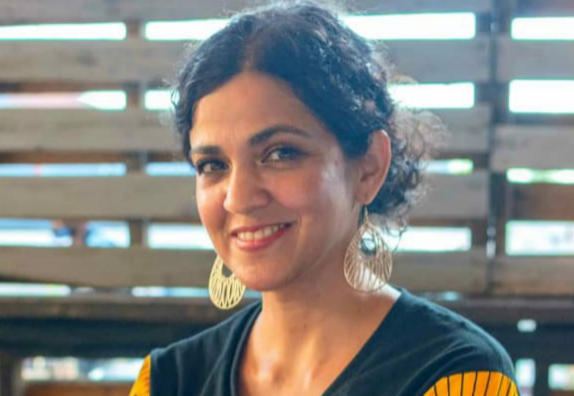
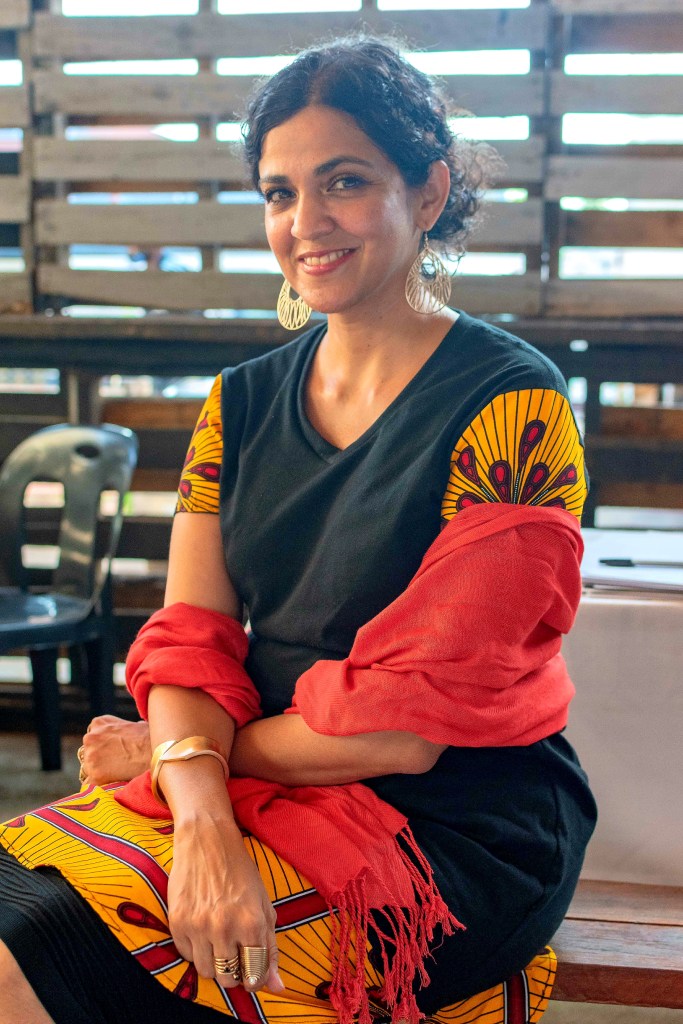
Suraiya Essof

Suraiya Essof, founder of Kites for Peace

Suraiya Essof was named one of the 20 Most Outstanding Zimbabwean Women by The Guardian UK in 2020. She is a tenacious woman who, in spite of her health challenges, has become very influential in bringing together communities, businesses and social networks. Her knack for networking and the ability to create opportunities has seen her social innovative work being recognised and awarded, both locally and internationally. Social entrepreneur, mother, wife and businesswoman are of the many ways in which one can describe her but most importantly, she is proof that to create change, we need to turn inwards before we can power outwards.

This is Suraiya’s story…

I was born in a small mining town, Kwekwe, in the middle of Zimbabwe to a second-generation Zimbabwean father and a South African mother; the youngest of four girls. At the age of 10, I was diagnosed with Type 1 Diabetes. It rocked my family and, in the 90s, with very little access to information, it was indeed a very confusing time. Stories that I would be blind by 30 and an amputee a few years thereafter really got me into a mindset where I felt that time was limited. Likewise, my parents were amazingly proactive; they subscribed to foreign publications of Diabetes magazines and wrote letters and ordered books, just to educate themselves, my siblings and me. Their efforts brought light to my situation and with it the hope that I was not doomed to die a painful, undignified death that had been described by well-meaning yet fearmongering people.

Still, it was difficult. Diabetes is a tight rope of managing your blood sugar levels by finger prick testing several times a day, four insulin injections daily, monitoring what you eat and in what quantities, and making sure you stay active, but also not too active. Managing stress is also a huge part of diabetic care. As a preteen and then a teen at boarding school, I had to contend with stress and anxiety levels that came with trying to negotiate studies, relationships, teen angst, boarding school, autocratic matrons, bullies and a life-threatening condition. Three months before my O level exams, I slipped into a coma due to diabetic ketoacidosis. However, I did well in my exams, but not “well enough” to qualify for a white blazer (a status in Zimbabwean schools associated with being a straight A student) and to fill the big shoes that had been left for me.

I was perceived as an underachiever and with low expectations of myself, academically; I faded into myself, but started to spark socially. Once I reached university level, I shook off the negativity that came with being bullied, was more independent and the world became my oyster.

With internet access and Google, I could get any information I wanted. I started networking, at university and online, to get information I needed for my studies and to help myself and others in various areas. I became a go-to source of information for friends and residence mates. I joined advocacy groups for various causes, co-led fundraisers and through my activism; it expanded my awareness to the plight of others.

The suffering of others can be tremendously sobering, especially when one is self-pitying and is constantly being pitied by one’s own circle. From an oblivious young person, wallowing in my own misfortunes and self-imposed limitations, I awoke to the social injustices that others faced. It seemed futile to feel guilty of my own privilege and of the opportunities and care afforded to me, so I took the initiative and added my name, voice and feet to meaningful causes.

I graduated with distinction, from the University of Johannesburg, with a Bachelor of Commerce degree in Industrial Psychology. On my return to Zimbabwe, I got my first job at a school, where I volunteered to teach a few substitute classes and fell in love with the teaching profession. A few years later, I got married to my soulmate and moved to Harare. I then pursued distance learning and graduated with a Postgraduate Certificate in Education (PGCE) from the University of South Africa while working at a Jewish school for 7 years. As a Muslim who attended Christian schools, being a teacher at the Jewish institution offered yet another perspective to my inherent belief that we are more alike than we are different.

After the completion of my PGCE, my two sons were born, and this again shifted my perspective on the meaning of life and my purpose. As my children grew and my furniture retailing business settled into a rhythm, things came more into focus for me on my path. I decided to follow my dream of uniting communities, teaching peace and spreading the message of kindness, brotherhood and compassion.

In 2014, the year that I embarked on a new journey, I also experienced the sudden loss of my amazing, dynamic mother. There are few words to describe how the death of a loved one impacts your perspective on life. Again, I was more aware of my own mortality and suddenly overwhelmed with the huge responsibility of being a parent myself. Legacy became ever more important to me. What would I leave behind for my children? Had I lived a meaningful life? Have I served others? Did I share? Was I authentic? Would I be a good example? Were the lessons I had left behind be good enough? These questions shaped how I chose to continue my journey.

In the same year, I came across an independent project on Facebook inviting participants to break the world record for the number of kites flown simultaneously. I hosted the event and forty-eight kites were flown in Zimbabwe that year as a part of this initiative. Friends and family picnicked and flew kites. The message was well received; find your joy to find your peace. The world record was broken unofficially the following year, in 2015. That same year, in Zimbabwe, there were calls from the attendees of the previous event to fly kites again; not to break a world record but to celebrate our beautiful environment and to come together in peace on International Day of Peace, 21 September. They scaled the heights of the granite rocks of Ngomokurira and flew bright kites against a stunning backdrop of blue skies and spectacular rock mountains.

With news coverage of the previous year’s festival and increasing interest, 2016 brought a new energy to Kites for Peace. I invited 25 individuals from a WhatsApp group called the Do Gooders to participate in the event. The kite festival had 1000 attendees that year and the following year, in 2017, the number of attendees doubled to 2000! While the initial event was to simply and unofficially break the world record, the subsequent events became a tool of social change.

The Kites for Peace event became a movement that sought to strengthen the ideals that lead to peace. We are committed to the United Nation’s Sustainable Development Goals (SDGs) which we believe are building blocks for peace. In this spirit, and under the Kites for Peace movement, we have engaged over 150 local community charitable organisations to create the Zimbabwe Cares Network. Starting with only 25 at our 2016 event, the Zimbabwe Cares Network is a philanthropic collective of an all-encompassing, community-based and goodwill initiative driven by a shared humanity, compassion, shared vision and a passion to help others. We believe that these organizations are integral to driving social change and use various platforms to network, collaborate and support each other. They meet annually at the Kites for Peace event and use the respective platform to fundraise and raise awareness of their causes. There are currently over 7000 members interacting on our platforms and the impact of this network is immeasurable. Membership for organisations is free and only requires proof of registration. It is coordinated by me and an enthusiastic group of volunteers and is the main project of the Kites for Peace movement.

With increasingly difficult conditions in the country and subsequent increased despair, the need for peace is ever more pressing, and thus the movement for peace has grown in impact, with more people engaging and valuing the need for mental strength, hope and resilience. The 2019 event was held in the jewelled lungs of the city at the Harare Botanical Gardens with a record number of participants and attendees, and in partnership with United Nations Development Programme Zimbabwe. Our 7th event was in 2020. It was an online event which saw more than 20 countries participating, with Kites for Peace festivals held in Tunisia, Nigeria, India, Reunion Island and Zimbabwe.

Through the Kites for Peace platforms, I continue to spread the message of peace and hope and to inspire compassion by highlighting the efforts of the organisations of the Zimbabwe Cares Network all year round. Kites for Peace is a registered organization in Zimbabwe and a registered International Day Of Peace event. It is part of Peace One Day Peace Coalition, a network of global organizations all working towards peace. It continues to grow as a movement for global peace, starting with the individual and inspiring communities to create healthy spaces for recreation and social change. Kites for Peace pledges respect for all life, rejects violence, promotes forgiveness for self and others, promotes goodwill, encourages to uplifts others and help them, to listen to understand and to preserve the planet.

I am driven by my commitment to helping others with support and upliftment through networking and education. I seek to solve the systemic challenges of finding peace in an ever-changing world where economics, politics, climate change issues and the media affects our state of mind.  By promoting inner peace and unity/ubuntu, and through community activism, I aim to change perceptions to drive social change and make us, our communities and the world more productive, purposeful and fulfilled.

I use recreation as a non-intimidating way to approach sensitive issues and to especially encourage children, who are our future policy makers, to become involved in issues that affect individuals, the communities that they live in and the world at large.

I hope that my story will encourage others to have faith in their path, trust their instincts and to truly follow their purpose, even if their purpose is ever changing and their situation is currently not ideal. I believe that no experience is ever wasted and that your path will lead you to your purpose, and ultimately to contentment, fulfilment and perhaps even happiness!

If you are interested in learning more about Suraiya or would like to get in contact with her, please reach out via the Kites for Peace website www.flykitesforpeace.com or email her at suraiya@flykitesforpeace.com