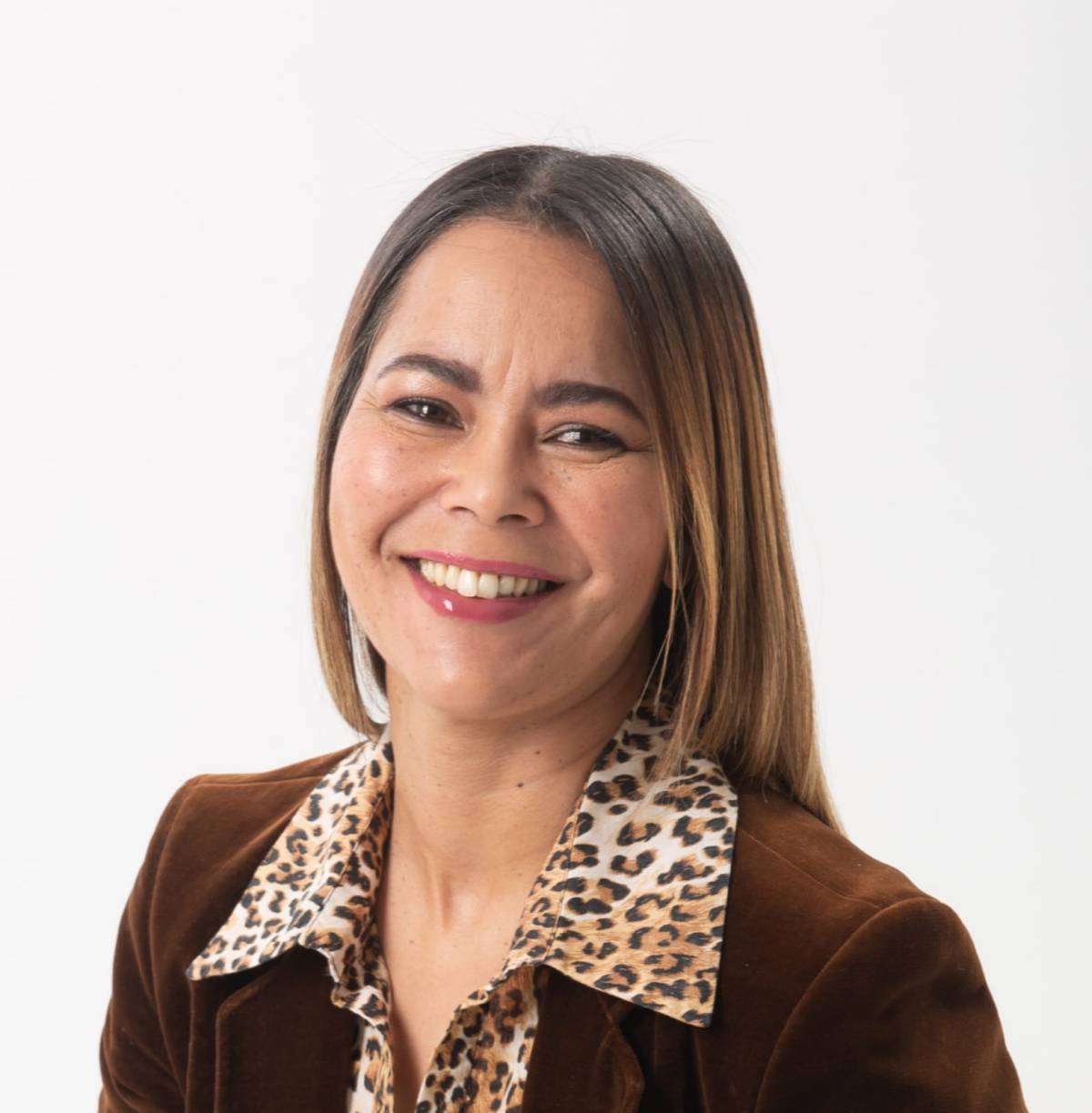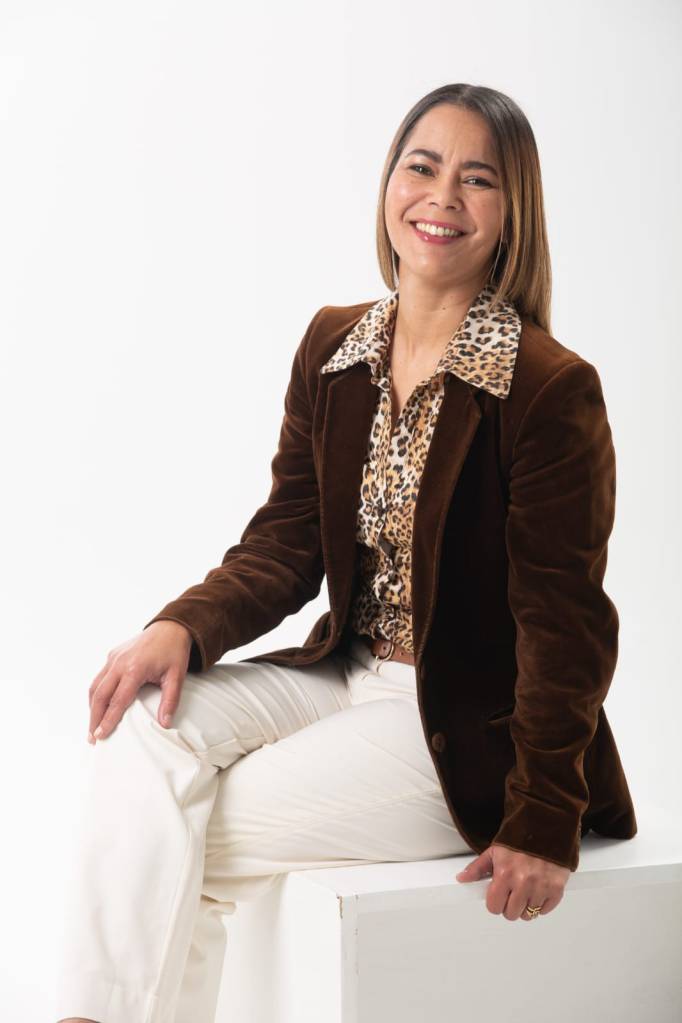
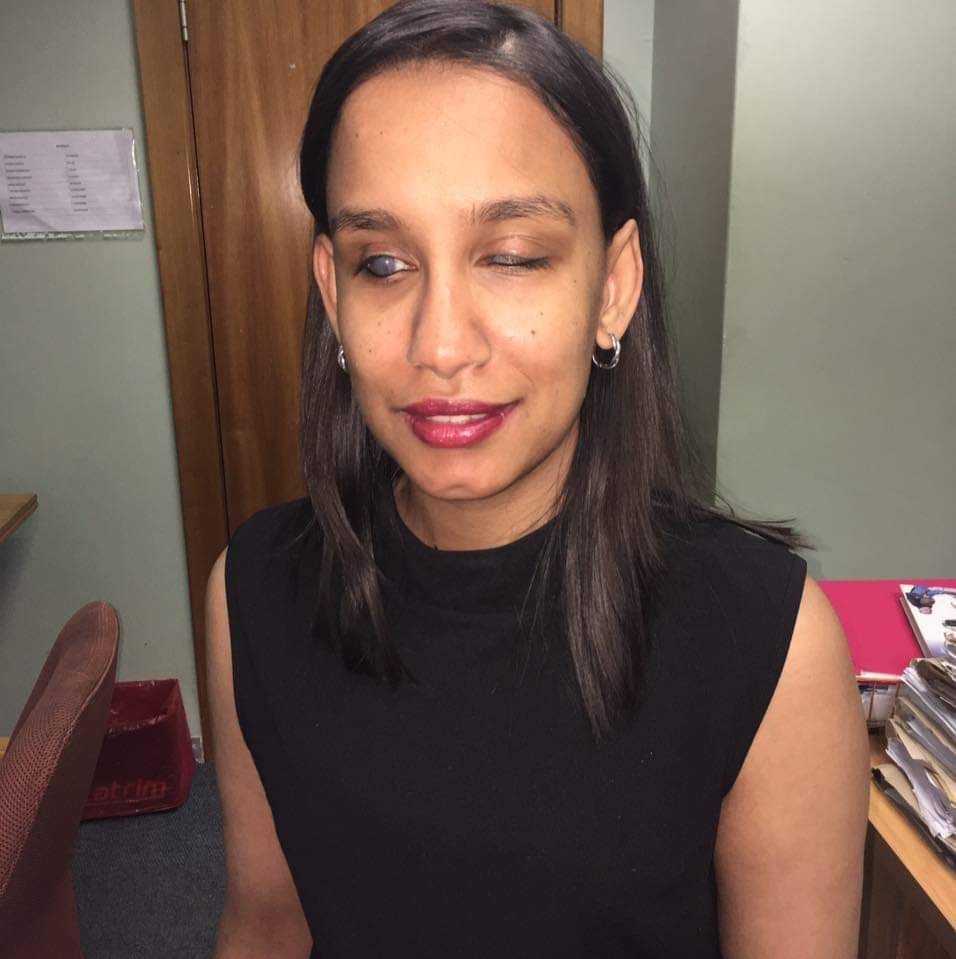
Maymoona Chouglay

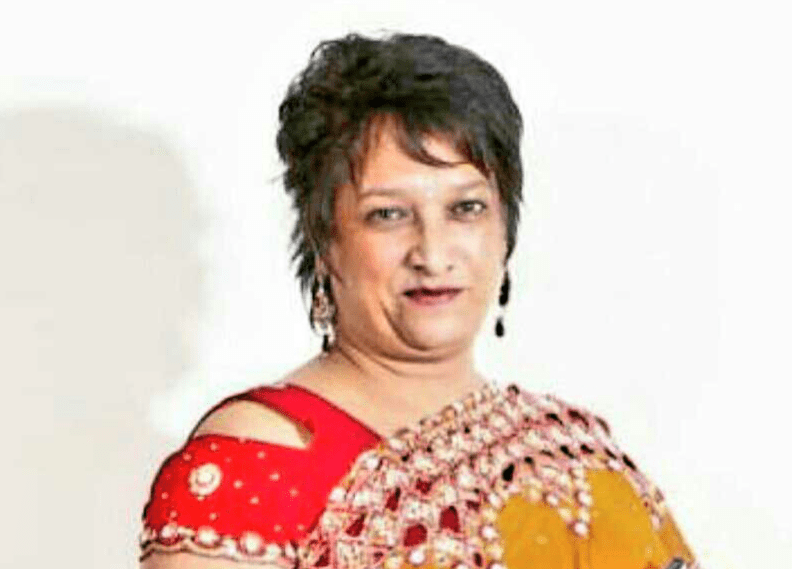
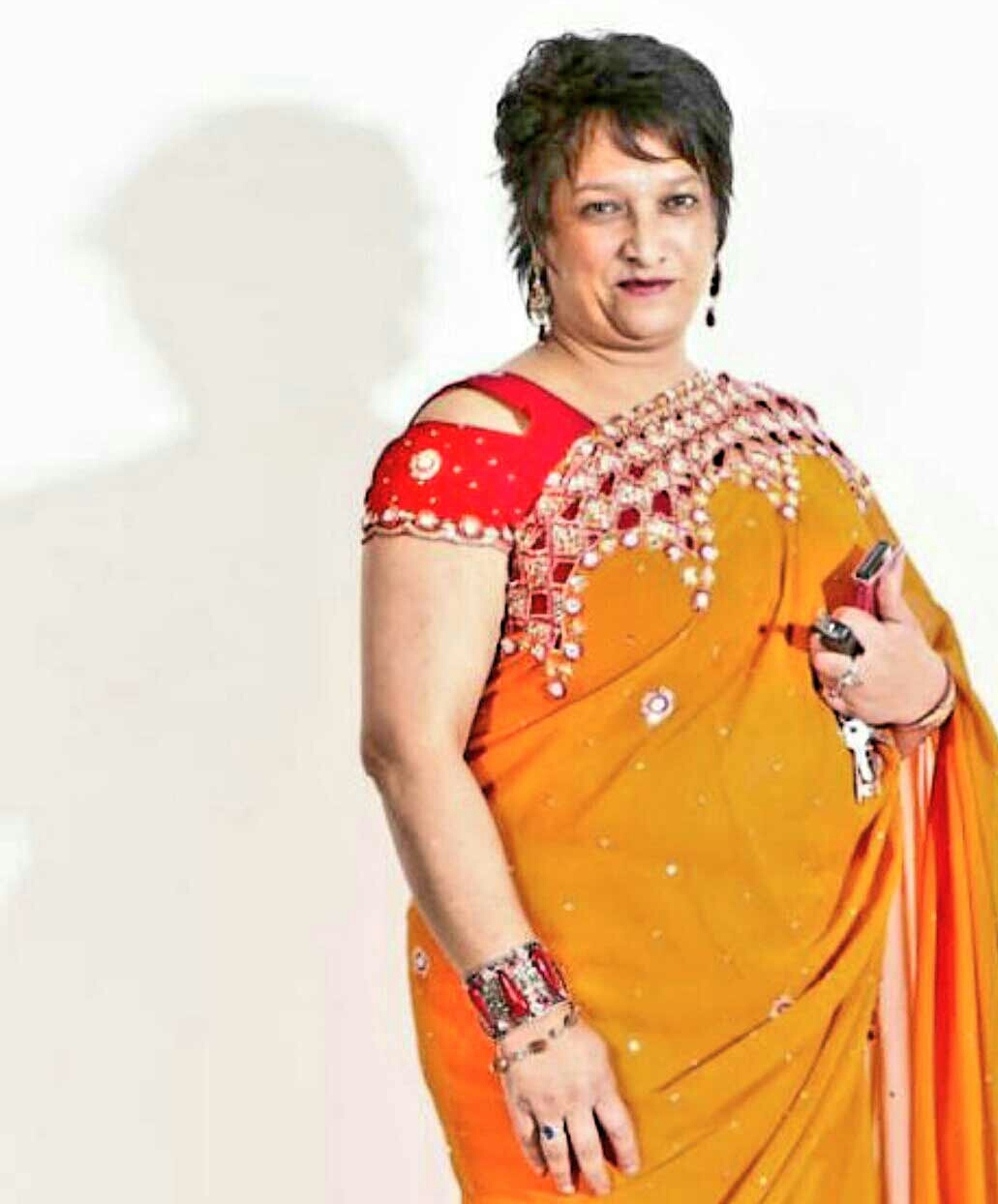
Maymoona Chouglay, founder of Infinite Abilities

Maymoona Chouglay, the founder of Infinite Abilities, is a social worker both in her professional capacity and as a volunteer. She is deeply involved in trying to alleviate the societal challenges of the disabled community. Her journey to finding her own path has driven her to facilitate the lives of the visually impaired. Her story shows us that it is important to always find the silver lining in the cloud, irrespective of the challenges, and that we all have the power to turn our pain into purpose.

This is Maymoona’s story …

I am sitting in the classroom and all I see is a colourful blurriness, but I cannot see the distinct features on the faces of my fellow classmates nor the letters on the dark green board a few feet away from me. It feels like a cloud hovering in front of me, through which I need to see, but I find comfort in the presence of my mother, my pillar, and my strength. She is seated alongside me, to make the lines in the book darker, to read to me from the board and to help me with learning to write, between the lines, and on the days that she is not present in class with me, my teacher tries her best to include me in all the activities.

When I reflect on my first two years of mainstream schooling, in Johannesburg, South Africa, I can remember clearly how challenging it was trying to immerse myself in a classroom designed for and filled with learners without disabilities. The struggle to immerse myself in my new surroundings was not due to a lack of care but due to a lack of special-needs resources and infrastructure, which is predominant in most mainstream schools within South Africa. 

In 1987, I was born six months prematurely, in Kimberley, South Africa, weighing 680 grams. While being incubated, I was given too much oxygen which resulted in my retinas becoming detached. Despite having undergone several operations, and receiving the best ophthalmologic care, nothing could be done to reverse the damage, thereby causing me to become visually impaired. With the need to search for better working opportunities, my parents returned to my father’s hometown, in Johannesburg, a city situated five hours away from Kimberley.

It was while I was in Johannesburg, that I entered mainstream schooling. However, the respective school was not equipped to accommodate my condition and we were referred to Prinshof School, for the visually impaired, in Pretoria, South Africa. After we went for our first appointment at Prinshof, to ascertain if it would work for me, my mother assured me that I would manage at the special school, and that she would continue to assist me.

When I was eight years old, we relocated from Johannesburg to Pretoria to enable me to start my new journey. I went from having to sit in front of the board in my former mainstream school, to be able to read the letters, to being able to immerse myself in an accommodating world with learners who endured similar challenges as me. Prinshof was truly the game changer in my development as an individual. It set me on a path of healing and growth by creating a space of belonging. Before Prinshof, I did not have a strong sense of self but through Prinshof, I became very confident and found my sense of self.

I became active and partook in many school activities including athletics, swimming, piano lessons, and the school choir. I completed Grades 1, 2 and 3 within 6 months of commencement. The rate of my development was outstanding to the extent that Prinshof wanted to promote me to Grade 4 within my first year. However, my mother refused the suggestion with the reason of wanting me to focus on learning braille and to become more well-rounded by acquiring skills in other areas, not just academics.

For the next three years, I was thriving at Prinshof but then, in Grade 6, at age 11, my World got shaken to the core by the sudden loss of my mother to lupus. It really stunned me that my biggest supporter was no longer there to cheer me on and to guide me on my path of becoming … There are days that I still miss my mother. I miss her tender touch, her comforting hugs, and her unconditional love but as a child, it was harder to navigate the World, without her, because she was my voice, and as a child, I was still finding my voice. In the midst of the darkness, my father and I held on to each other, and even if I never got over the loss of my mother, I appreciate and have the greatest respect for my father, for always being there for me and for creating a sense of normalcy for me, when she left this World.  

One year after my mother’s passing, my father remarried, and I was blessed with a second mother. She became the mother I needed when my own mother was no longer, and our little family of three was later expanded with the arrival of my twin brothers. This sense of family has been my comfort and through the coming years, I continued to thrive at Prinshof until I completed my secondary education. When I started studying at university, interestingly, it felt like I was regressing into the real world where the mundaneness of university life was in fact, a blind person’s nightmare, all because of a lack of reasonable accommodation.

It was tough adjusting but fortunately, my mother accompanied me to campus as I embarked on my BA Degree in Social Work at the University of Pretoria. She was there for the first six months, assisting me with navigating classes and making notes, until we employed the services of an assistant that walked me to classes, typed my notes and books, where needed, and executed any other tasks that were required. Although I used a white cane, it was very difficult navigating campus with it because university buildings are not always streamlined and flat-surfaced to facilitate walking unaided or even, with a cane.

During my second year of university, I was further diagnosed with glaucoma, which caused me to lose my eyesight completely. I nearly threw in the towel and quit university because my condition got progressively worse, and the daily challenges were just mounting. It was tough but as a believer, I was reminded of one of the most enlightening verses in The Qur’an, “Allah does not burden any soul greater than it can bear” (Chapter 2, Verse 286) and I soldiered on. Six years after I started university, not only did I complete my BA Degree in Social Work, in 2012, but I also graduated, in 2013, with a BA Honours in Social Work.

I have worked and continue to work both within the governmental and non-governmental sectors, from Gauteng North Services to the Department of Social Development and am currently busy with my Masters in Disability Studies. Being a person that is living with a disability, has augmented, and aligned me to assist people with disabilities, in addition to my other social work responsibilities. I am involved in extensive voluntary community work, with other organizations, including the supervision of a home for blind children, from ensuring their well-being to their accessibility to an education, and an empowerment center under the auspices of a non-governmental organization, Garden Social Services. I was previously involved in consulting work with the braille packaging of skincare product ranges with L’Occitane, for a two-year period (2018-2019), and currently participate in public speaking engagements, disability awareness training and campaigns and have also established my own organization.

In 2019, Infinite Abilities was established as a consulting firm to serve persons with disabilities, and their families, with therapeutic to general support and empowerment services. The organization offers educational and disability awareness training to businesses and organizations and supervises social workers and social auxiliary workers in their respective roles in accordance with the Social Work Supervision Policy Framework but with a special focus on dealing with persons with disabilities. The vision of Infinite Abilities is that through its services, every professional will become aware of and be educated and equipped with the skills, tools, and guidelines to assist persons with disabilities that they may encounter in the workplace or in their everyday lives.

For the past four years, since its inception, Infinite Abilities has been a one-woman show. Hence, with the aim of expanding and bringing members on to the executive board, the organization hopes to reach more individuals, living with disabilities, by providing resources to aid in their medical care and counselling services, their educational aspirations and to enable the disabled community to live empowered lives. Furthermore, Infinite Abilities aspire to assist social workers to establish their own private practices with the aim of accommodating more persons with disabilities that are unable to reach the government’s social work services due to geographical locations or being under-capacitated.

There are numerous daily challenges that I encounter in my interactions with people that are not attuned to my visual impairment, from a personal assistant that may not read the instructions clearly, to me, to a driver that does not drop me off at a precise location and it is frustrating, and it can be depressing but I refuse to live in those moments of darkness. I am a firm believer that this condition has been bestowed upon me, to be of service to humanity, to aid me in understanding the nuances of living with a visual impairment and to use my voice to be a voice for other visually impaired children and adults.  No matter where my journey may lead to next, I will continue to strive and empower myself, to the best of my ability, to use those skills to help the disabled community but my deepest desire, in all of this, is that society learn to pass the baton, to persons living with disabilities too. We are more than just being disabled.

If you are interested in learning more about Maymoona or would like to get in contact with her, please reach out via her Facebook page, Infinite Abilities, or email her at info@infiniteabilities.co.za.
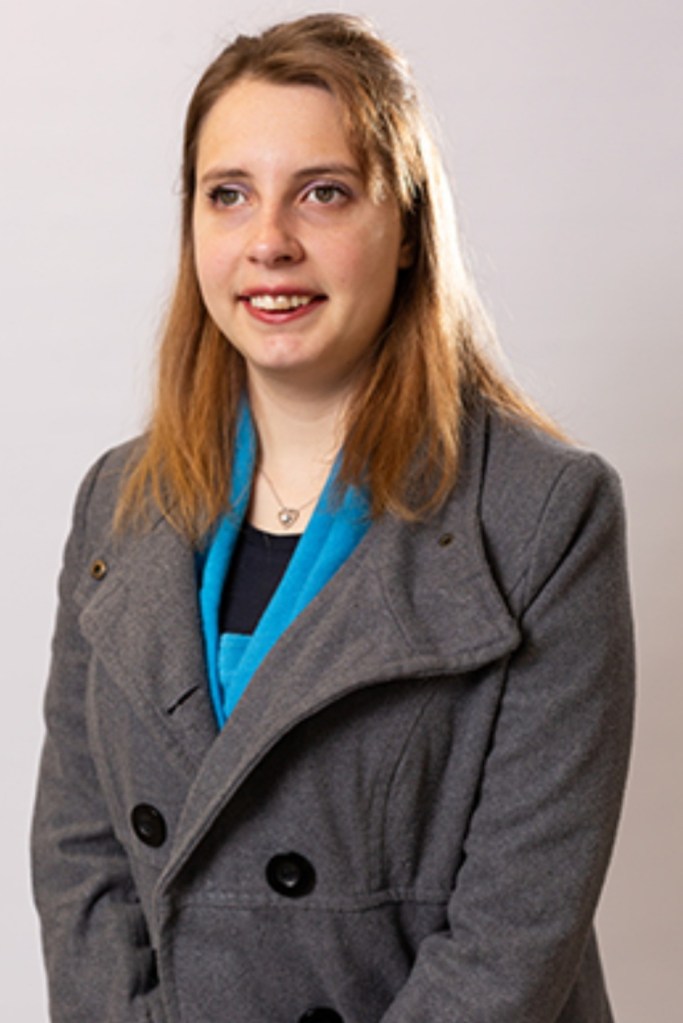
Anel Coetzee

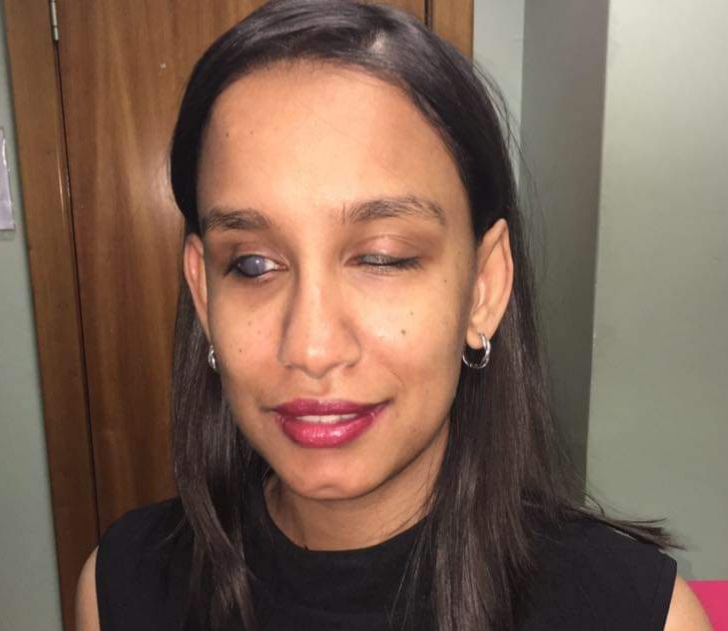
Anel Coetzee, founder of the South African Visually Impaired Community (SAVIC)

Anel Coetzee, the founder of SAVIC, is a legal advisor and a former attorney. Her journey to finding her niche has been no easy feat and was fraught with tremendous challenges because of the unbending nature of society to reject that which is deemed different. Her story shows us that with the right support, we can all become contributing citizens of the World and that we should never underestimate the power of the slightest gesture of support as it can facilitate and alleviate the struggles of others as they go about their daily lives.

This is  Anel’s story …

I can feel the cool metal of the railing surrounding my balcony, with my fingertips. I can hear the sounds of moving vehicles and people going about their daily lives, eight floors beneath me. It smells like rain, but for the moment, the sun warms my face, and it is a beautiful day. I know what beauty feels like, I know what it sounds like, and I know it is something that can be experienced by all of our senses, but I do not know what it looks like. In fact, I do not know what anything looks like. In my world, there are only shapes and shadows in which days are either blurred or too bright, with many moving objects and no colours. 

In 1992, I was born in Johannesburg, South Africa with a condition known as Congenital Rubella Syndrome (CRS). It is a condition that occurs when the rubella virus, German measles, in the mother affects the developing baby. There are a myriad of complications associated with CRS but in my case, it affected my retinas.  With damaged retinas and no available cure, I have had to navigate the world depending largely on my other senses.  

Growing up, my childhood was, by all accounts, normal. Apart from some minor adjustments like teaching me to use my remaining senses to accomplish certain tasks, my father, a businessman, and my mother, a teacher, ensured that I, just like my sighted siblings, live an active life. I learnt to ride a bicycle, played hide-and-seek with the neighbourhood children, made my own bed (when I was reminded to), and spent my school holidays climbing trees and swimming in my grandparents’ dam.

Since I could not attend mainstream school with my sisters, I was sent to Prinshof School, a school for visually impaired children. While completing my formative education, I met other children with disabilities who became my friends, for life. However, this educational system, where disabled children are isolated from society and their families, would ultimately become one of the greatest challenges later in my life, because it did not prepare me for life outside the carefully designed and adapted world in which I grew up in.

Through Prinshof, I received a good education, learnt braille and participated in other curricular activities such as the school choir and piano lessons. However, the school did not offer a broad spectrum of sporting activities. With this in mind, my parents decided to enrol me in acrobatic gymnastics after my eldest sister introduced me to it.

With my visual impairment and my love for Barbie’s, I first learnt acrobatic gymnastics through a gymnastic doll. The doll became the tool used to show me how to perform various acrobatic tricks, as I would feel where the doll’s arms and legs were positioned, and then copied those movements with my own body. I practiced this for hours on end and to my astonishment, realized that I was really good at it. I loved walking on my hands, doing back walkovers and challenging myself to what I could do. My introduction to acrobatic gymnastics was “love at first pointed toe” to the extent that I started to participate in competitions, outside of school grounds. Through this exposure. I was starting to become aware that the world was not designed for people with disabilities and that it was up to me to advocate for my individual needs since fellow competitors complained that I was given preferential treatment because the judges pitied me.  It was for the first time in my life that I learnt that perception matters and that it often matters far more than reality.

Consequently, my dance teacher would enrol me without disclosing my disability and the ramification of this was that I could not ask for reasonable accommodation. Thus, prior to the competition period, my parents would take me to the location of competitions to teach me the layout of the stage and to show me where the judges and the audience would be seated. Determined to prove my naysayers wrong, I put in a lot of effort and practice. Finally, in 2002, at the age of 10, I won the South African National Acrobatics Championships in my category, where I was one of approximately eighteen participants, but the only dancer with a disability.

In 2010, I matriculated and decided to pursue a career in law. I registered for a LLB degree at the University of the Free State and in January 2011, my mother and grandmother dropped me off at campus, a five-hours’ drive from home. I was super excited about the new adventures that lay ahead and was eager to start my university lectures.


At 18 years of age and having already experienced my fair share of discrimination and bullying, I thought if I left my white cane at home (which Mom later sent to me within my first month of arrival. What was I thinking right?) and pretended to not have a disability, I would have a better chance of blending in with the crowd and making new friends. But alas, 2011 was the year that I realized how dismally my country has failed me by not providing inclusive education. All of a sudden, I went from a classroom of five learners to a lecture hall of 500 students, with no reasonable accommodation.

Campus life was a challenge as both lecturers and fellow students had no idea how to accommodate or behave around a visually impaired person. Neither did I receive the appropriate orientation and mobility training to navigate the campus. There were also many other disabled students and a limited capacity to timeously convert my textbooks into braille. In most cases, I did not receive my books in time for test and exam preparations and had to write from knowledge acquired during lectures. I subsequently failed my first year and  when I started over, in my second year of university, I started to learn how to use a computer and screen reader and switched from braille study materials to electronic study materials (e-books), which were not very popular at that time.

For most of my able-bodied peers, living in residence with me, the prospect of attending university, was exciting, and their biggest concern was coping with an increased course load and not being awoken by the early morning calls of their parents. As a disabled person, I had to contend with a lack of accessible study materials, a lack of awareness, inaccessible lectures and having to learn to cook for myself and doing my own laundry. It was overwhelming, and the volume of work which included study guides, textbooks and case law was more reading than I have ever done but I pushed ahead.

During the period of my studies, I have acquired so much knowledge on legal subject matters  but the most valuable lessons I have learnt were about myself. On countless occasions, I have wandered unknowingly into male lavatories, approached store mannequins for assistance, walked into doors and knocked over spectacles from people’s faces trying to feel for a seat on trains. I am no stranger to embarrassment and the older I get, the less these incidents hurt my pride. Although I did not blend in and still experienced bullying and ignorance, I chose to not let the actions of others define me. I went on to graduate with an LLB from UFS and completed my articles of clerkship before becoming a practicing attorney.

Securing a job after the completion of my studies was extremely difficult because I was blind and without a driver’s licence. When some of the law firms realized I was visually impaired, I was instantly rejected after initial consideration. Eventually, I was employed by a law firm in Johannesburg and gained valuable experience, but the career path was very taxing as I constantly had to prove myself to clients. Most of my colleagues knew I was capable and competent, and with their guidance and mentorship, I was able to accomplish my tasks, attend meetings and prepare for and appear in court.   However, the unfortunate reality was that most of my working time were spent with strangers and because I am a disabled woman, I was deemed incapable and was treated with condescension.

As an attorney, is it integral to have a good clientele but as a blind attorney, it was difficult to build up a clientele. After five years in practice, and with the firm’s helpful transition from an archival filing system to a paperless system, I reached my personal goals through hard work and consistent effort and was, by society’s standards, successful. Successful, but not happy … I thought that after becoming an attorney, I would finally receive the respect that I have always yearned for as a human being, living with a visual impairment, but despite my accomplishments, that were recognized, I was never fully regarded as an equal. It was a mental health struggle, for me, and time for a change.

In due course, I found work as a legal advisor at a company that tremendously improved the quality of my life, because for the first time, my abilities mattered more than my disability. I am not a visually impaired legal advisor; I am a legal advisor that is competent, capable and hardworking. I am seen as an equal, functioning individual of the greater society. Fortunately for me, this is my current path, but not many disabled individuals can say the same. They continue to walk a path, in society, that praises them when they succeed in a world that is not designed for them yet fails to accommodate them with opportunities to integrate and contribute. Societal barriers are the greatest hurdle for disabled individuals to overcome and through first-hand experience, I can vouch that if disabled individuals are surrounded by people who actively remove these societal barriers, then their disability will not be an issue.

While I enjoy my career and the challenges it presents, my heart will always be with the disabled community. When I am not at work, I spend my time creating awareness, along with my canine companion, on  disabilities but particularly on visual impairments and guide dogs. I share my story in the hopes that it will encourage disabled people to step outside of their comfort zones and reach for their dreams. I also try to destigmatize the myths and misperceptions on disabilities.

For many years, I have felt that the visually impaired community is disconnected and that although we face similar obstacles and challenges, we tend to waste our time and resources by trying to solve our problems, individually. As a result, I started to research practical and accessible ways  that would unite the visual impaired community. 

Earlier this year, in 2022, I launched an online platform, called the South African Visually Impaired Community (SAVIC) on Discord. The purpose of SAVIC is to create a single platform and sense of community where visually impaired  South Africans can find all the resources available to discuss the different career paths chosen, to provide information on employment and bursary opportunities and to share insights on accessible living. SAVIC is a resourceful community, consisting of 41 members, with a lot of expertise. Currently, we host events on topics ranging from access to justice, accessible traveling and new technologies. Going forward, my vision for SAVIC, is that it can be used to identify and rally, as a collective, against instances of discrimination. We are looking to expand our networks and have created a Facebook group that is open to any interested visually impaired person, and their families.

I may be classified as disabled, but I am more than that. I am a sister, a friend, a partner, a professional and an animal lover. My lack of sight does not define me in these roles. My disability moulded me into a resilient and empathetic person, it taught me patience and to find the humour in every situation, but it will never prevent me from living a fulfilling life.

If you are interested in learning more about Anel or would like to get in contact with her, please reach out via her Facebook page, Life after blindness or email her at coetzee.anel@gmail.com. If you are visually impaired and would like to know more about SAVIC, you can join her Facebook Group, SAVI Community.

Suraya Williams

Suraya Williams, founder of Design26 Foundation

Suraya Williams, the founder of the Design26 Foundation, has been featured in several local South African newspapers, media campaigns and has been awarded recognition for her contribution to the young women of the Cape Flats, through her skills empowerment programme. Her story shows us that the key to our destiny is often right in front of us and that no matter what path we choose to follow, it will keep bringing us back to what we need to do and when we persevere to answer that call, the level of impact and influence we leave in our wake, is momentous.

This is Suraya’s story…

I was born in Bonteheuwel, a suburb within the larger Cape Flats region of Cape Town, South Africa, that is often only associated with gangsterism, poverty and crime. My parents, with their growing family, lived in a backyard shack and the struggle to make ends meet, within a segregated coloured community, under the Apartheid regime, were both common but also our norm.

When I was 2 years of age, in 1979, my parents moved into their own home, in Rocklands, Mitchell’s Plain; another area within the segregated Cape Flats. My father was a paint contractor and my mother was a clothing factory worker, with both of them having obtained a primary school education.  

In 1984, my mother was retrenched, when most clothing manufacturing companies, in Cape Town, were closed down. Subsequently, she made the decision to use her seamstress skills and worked from home.  However, due to the lack of a formal education, she worked from hand to mouth, barely making a minimum wage.

As a little girl, growing up, I remember always standing alongside her while she did her sewing and cut-make and trim (CMT) work. She would always tell me, in these shared moments, that she wants me to continue in her footsteps when she passes on. I secretly scoffed at the idea of taking over from her, as I believed it was a dying industry flooded with low-paid labourers destined for a life of continued poverty and destitution. I wanted better for my own life and sewing was not what I associated with having or doing better.

Determined to do better, and to help our parents in our own small way, my older sister and I, aged 14 years, would work for a salon on weekends and earned R30 (US$2) and a plate of food. In 1992, aged 15, during Grade 10, I started working for Kentucky Fried Chicken (KFC) after school hours and during weekends, earning R450 (US$29) every second weekend. In 1996, I finally graduated from secondary school, after failing Grade 10, at first attempt, but through sheer persistence and focus, I finished school, at aged 19.

Upon completion of secondary school, I did a one year secretarial course that enabled me to get my first formal job as a receptionist, at a community newspaper house, Cape Flats Mirror and Muslim Views. After a one year stint, I saw an opportunity to progress as a secretary at a much bigger company and in 1999, secured the job. However, a few years later, I got retrenched, in 2004, but soon thereafter, I became employed as an administrator at a well-known accounting and auditing firm, Mazars. Within two years of being employed, I progressed from being an administrator to becoming a personal assistant to two directors at the firm.

I have had to hustle all my life to get to this level of ease, from being a child of menial workers to working in the corporate sector but just when things seemed to be falling into place, my life was, unknowingly at the time, starting to shift gears, and steered me onto a pathway that was always meant to be my destiny.

In 2006, my mother passed away of yellow jaundice. Her death was sudden and shocking. Two weeks after she was diagnosed, all her organs failed and sadly she passed away, on my birthday, the 26th of January. She bequeathed her sewing machines and all her dressmaking equipment and fabrics to me; the middle child of her five children, but I was just as disinterested in sewing then as I was while growing up. I was not prepared though to dispose of it just yet, as it held sentimental value, and instead stored the sewing machines in the garage, until I found a suitable candidate to give them to.  

Three months after my mother’s passing, my brother was murdered as he was a state witness to another murder. It was hard losing two family members in quick succession. I then decided to have another child, who was unfortunately born with a weak immune system. With a sickly baby and being in and out of hospitals, while shouldering other responsibilities, compounded by increasing responsibilities at work, this subsequently interfered with my career. I was not in an emotionally good space to deal with the trauma and hardships but I somehow soldiered on because I was afraid of losing my financial independence.

During one incident of having to be home to tend to a sick baby, I was approached by my cousin who insisted that I make her child a 21st birthday dress. I flatly refused but she was persistent saying that I have the machinery, left her fabric with me and stated that my mother used to be the one making dresses for the family and I should give it a try.

Weeks passed by and her fabric started to haunt me. as her child’s 21st birthday party drew closer. Eventually, one Saturday morning, I thought let me just give this a try and if I mess up, she is well aware of me never having sewed in my life. I called her up to bring her daughter over for measurements and then the magic started to happen. Everything I thought I did not know, I knew. I made that dress from the memories of seeing my mother making dresses. It was a complete out of body experience. It felt as if my mother was with me in spirit guiding my hands, in every cut, every trim, and every measurement. I never knew I was capable of this. Needless to say, my first beautifully made pumpkin-styled dress and bolero jacket were a success. To have created it from scratch and to see the kind of joy I brought to my family changed me internally and a dream within me, my mother’s dream, was born.

I went about my normal, daily life, striving to keep my financial independence, but the dream kept growing within me and presented me with mixed emotions and potential challenges. Do I leave my job to pursue something that I did not know anything about or do I stay in my comfort zone and sacrifice my soul’s desire? What do I do?  

After opening up to my husband about wanting to start my own clothing line, and with his full support, I handed in my resignation letter in September 2012. Instead of accepting the resignation letter, my directors made a counter-offer, offering me more money, which I accepted. I thought maybe more money is what I needed for the extra responsibilities that I had to take on but the feeling of wanting to make dresses and making women smile did not leave me. Two months later, after 14 years in the corporate world, I resolutely handed in my final resignation letter and embarked on my destined path.  

With no knowledge nor qualification of how to manage a business, I established Design26 (Pty) Ltd, a public company, in February 2013, in commemoration of my late mother and the significance of her passing and my birthdate. I started from my bedroom, with two inherited sewing machines and R500 (US$33) to open a bank account. I manufactured women’s ready-to-wear clothing, custom-made matric ball dresses and wedding dresses and each year, I would donate a matric ball dress to a less fortunate girl living in Mitchell’s Plain. Two years went by, and I realized I was selling dresses but without making a profit. I then enlisted in a small business management course offered by the University of Stellenbosch, at a discounted price, specifically for people living in the Mitchell’s Plain area. Through this course, I learnt skills on presentation, marketing and financial management and realized that in order to be charitable, and make a difference, I need to ensure that I am profitable.      

Fast forward to 2018, I have been donating matric ball dresses for several years now and would follow up with each of my customers on whether they passed secondary school and enquired about their future plans. The common response I would get is that they cannot afford to further their studies and some struggled to find employment because they lacked working experience or skills. Since many of them could not find employment, they then turned to one of the many social ills that clouded the Cape Flats; teenage pregnancies.   

Teenage pregnancies is a scourge that deeply affects the lives of young girls living in the Cape Flats. A third of girls, between the ages of 15 and 20, fall pregnant, each year, and instead of things improving, it appears to be getting worse. The problem is not always solved through the use of contraceptives. It goes deeper than this; it can be influenced or directly impacted by other social factors such as an unstable home environment, drug and alcohol abuse, gender-based violence, gangsterism and crime and high rates of unemployment.

The circumstances of these girls really affected me and galvanized me to be more involved by imparting my skills to them. I then registered the Design26 Foundation, a non-profit organisation and public benefit entity, and set about offering a free sewing skills training course for underprivileged girls, from the ages of 15 to 20, from Mitchell’s Plain and the greater Cape Flats area, with the hope of making them employable, self-sustainable and restoring dignity to women in my community. 

To date, the Design26 Foundation has assisted 104 women; 50% of them are working class women, over the ages of 20, who attended our paid courses, to start their own businesses or to sew as a side hustle or for their personal needs. The other 50% are teenage mothers or underprivileged girls, between the ages of 15 and 20 years, which we offer our sewing skills training course to, for free of charge. Both salaried and free courses, which are FP&M SETA (Fibre Processing and Manufacturing Sector Education and Training Authority) Accredited, are conducted over a 12 week or 6 month period.  40% of these women have started their own businesses. The Design26 Foundation also have an alumni programme that provides further mentoring and opportunities to the women who attended our courses and shared networks, in  which these women have access to our premises and are able to make use of our machinery to improve the quality of their products.

Currently, with 3 directors, of which I am actively involved in the day to day operations of the organization, and 2 qualified facilitators. who became qualified through our skills training programme, the Design26 Foundation provide these weekly classes on a Monday, Tuesday and Saturday, from 8h30 to 12h30, in an adjoining section to my house.  We are only able to accommodate five ladies per class, due to space constraints. However, we are in the process of securing land to develop a fully operational skills center in Mitchell’s Plain and to expand our skills training course, with an in-house CMT (cut-make and trim) factory, to be able to provide employment opportunities to women who completed our skills programme.

As the founder of Design26, I hope to reach out to more young girls, to start them off with skills during their most formative years, and to keep them focused on the future. The social reality of these young girls in the Cape Flats are often daunting and disempowering and can easily distract them from a life that they are capable of achieving. However, success is still within their reach if they stay focused. My message to these young girls; teenage mothers or not, is that there are organizations out there, like ours, that care about your well-being and while success may seem outside of your reach, with consistent effort, time and dedication, it is achievable.

If you are interested in learning more about Suraya or would like to get in contact with her, please follow her on her Facebook page, https://web.facebook.com/design26foundation or email her at info@design26foundation.org.za

Sindiswa Mabindisa

Sindiswa Mabindisa, founder of Wretched Woman’s Diary

Sindiswa was born in the township of Tembisa, Gauteng and had a very tough upbringing that no child chooses. Her story shows us that we do not choose the situation into which we are born; it chooses us but that with the calling that God bestows upon our lives, it can take one from the slums of the Earth to the Heavens before His Eyes. He sees our beauty in the way people may not and He chooses us to do the work we are called to do, to a door no man can close.

This is Sindiswa’s story…

Their marriage was a mess; they were always fighting. Every weekend my dad was drunk, and he would hit my mom. In 1998, they eventually divorced, and mom moved out and left us with our dad. Since then my dad got involved with women that treated us badly. I remember one incident where I innocently called one of his girlfriends’ “mother”. She got so mad at me and said in a condescending tone, “andingi mamakho wena!” (I am not your mother!).

We, my elder sister (aged 7), little brother (aged 4) and I (aged 6), were then sent to Eastern Cape to live with my dad’s family but we were never made to feel like we were part of the family. We had to fend for ourselves and our little brother, from changing his nappies to doing house chores. We were children but were not treated as children, being recipients of harsh words and treatment, and this had a profound effect on me. But, instead of things getting better, things just got worse.

Back home, in Tembisa, my dad remarried eight years after my parents’ divorce. In the time that we were sent to live with our paternal family, he never supported us. My grandmother, his own mother, took him to the Maintenance Court to seek financial support. But instead of owning up to his responsibilities, he resigned from his job, just so he could evade them. Each time my grandmother took him to court, he resigned from his job. Each time. She tried numerous times, but he refused to support us.  

He then summoned us back to Tembisa to live with him and his new wife, our stepmother. We were welcomed into a living hell but this time, it was only me and my brother. Even though my dad always had a drinking problem, this new life was to escalate into me doing things I never thought in my young mind, that I would ever do.   

While we were back at home, we were forced to eat pap and tomatoes while my dad, his wife and her child would dine out at restaurants. I became the domestic worker at home. I had to cook dinner, do everyone’s laundry, include cleaning their sheets filled with semen, and every housework chore one can think of, on an empty stomach. 

As I said, my dad had a drinking problem but this time, they decided to open a shebeen (a private house selling alcohol) and they made me the “shebeen girl”. I had to sell alcohol from Friday nights until Monday mornings. This decision, of theirs, opened our doors to shady characters and soon, we would have men sleeping over at our house. Strange men, lewd men, sick men. My stepmother invited them in and refused them to leave. She said people were going to kill them, with them being so drunk, and she made space for them to sleep on the floors, alongside me. I always slept on the floors but now, I had company.

Some memories of them are vague, other memories are clear. I recall one of them touching my neck. He kissed my neck and moved his hands between my thighs and said to me that he can do anything he wants with me and he will give me money … I used to share my sleeping space with those men.

As a girl, you want the love of your father, but my dad never loved me. He made it very clear that he did not love me and sometimes, he would hit me for no reason. His words towards me were always harsh but the words that I will never forget is him saying, “Mhla nda thenga umpu uzoba ngowo kuqala umntu endizo mdubula” (The day I buy a gun, you would be the first one I’d shoot) and he always reminded me that he would shoot me once he gets himself a gun.

Finally, 2008 arrived and he got the gun but he never followed through on his threat. In a twist of fate, the year he got the gun is the year I moved out and the year he died.

In April 2008, I moved in with my mom and a few months later, when I returned from a family visit to my aunt in Katlehong, my mom fell sick. She was bedridden and in a hopeless state. I greeted her, “molweni mama” but she didn’t respond. My sister replied and said, “uMama uyagula and akakwazi ukuthetha” (Mom is sick, and she cannot talk). I looked at my mom and she was crying. I didn’t know what to say to her, but I could see she was in pain.

In that moment, I recalled the complexity of our relationship, from the sense of abandonment I felt as a child to the woman suffering before my eyes. Mom could not talk nor walk, so my sister and I used to bathe her and take care of her. Her state was saddening because she could not even tell us when she needed to use the toilet. On the 16th September 2008, I received a call in which my mom managed to muster her strength to tell me that she loves me and a day later, the 17th September 2008, she died.

I was 17 years old at the time she died and shortly after her death; I told my sister that we need to go to dad to ask for food because we had nothing to eat. I begged him for food, but he responded, “Akho kutya apha hambani!” (There’s no food here, so leave!). He was so mad at me for asking and refused. Maybe if it was my sister asking for food, he would have given her. I was so worried because my sister had a two-year-old and we were all hungry. That night he came to our house, but I then ran to his aunt’s house. He followed me to his aunt, along with my stepmother, and wanted to hit me but his aunt told him not to. He then told me, “Uba ndingafa ungezi emngcwabeni wam ngoba nawe uba ufile asoze ndize” (If I die don’t come to my funeral because when you die, I won’t go to yours).  Those were his last words to me because on the 10th November 2008, he died.

We had nowhere to go because when my mom was alive, she was renting and when she died, I asked my aunt if she could rent with us but a month later, she left to live with her biological dad and we had to make plans to move because we didn’t have money for rent. I remember so vividly the times I would knock on people’s doors to ask for a place to sleep. There were nights where I questioned the purpose of my existence.

In 2010, unbeknown to me at the time, the answer to my question was being answered. While I was on a visit in Eastern Cape, my grandmother told me about some young lady who was sick. I asked to go see her and when I got there, she was lying in her own faeces. I asked to bathe her and did that for two weeks. My cousin then asked me to come visit them in Cape Town. When I got there, her own cousin had tuberculosis (TB). I took care of her as well. I would bathe her and take her to the clinic for her checkups until she died in 2011.

In 2016, one of the grandmothers in my extended family, who was mentally ill, suffered from an epileptic fit. She was sick, vomiting and bedridden, in her own faeces. Nobody wanted to assist her, and I was told to call an ambulance. I then offered to bathe her, and this is how I started my career looking after the elderly and the disabled.  

In 2019, I established my non-profit organization called Wretched Woman’s Diary and decided to devote my time to bathing elderly people and people with different disabilities including mental limitations. I have made it my mission to identify the elderly, the frail and the chronically ill within my community and started this organization without any financial assistance or resources. I have taken it upon myself to provide home care visits and nursing care, where possible. I have personally experienced the hardships of taking care of an elderly woman on her death bed, to the extent of bathing her corpse.

Currently, I have four volunteers working for me and they are mainly responsible for dealing with the administrative aspect of Wretched Woman’s Diary which makes me solely responsible for nursing and caring for the victims of neglect. To date, the organization is caring for 10 elderly ladies, including 2 disabled children, on a daily basis.  They are vastly located in Gauteng but in some cases, my work has taken me to the Vaal, Pietermaritzburg and Mpumalanga.

As Wretched Woman’s Diary, we aim to alleviate the stigma against our senior citizens and the disabled, we aim to ensure perpetual care and assistance to the elderly, we aim to provide a safe and caring service to the elderly within their own homes and do away with social ills that are affecting our elders. The dire conditions which our elderly are faced with are disheartening; they are faced with feelings of rejection, loss and poverty and I am hoping to work in partnerships with other individuals and organizations that shares the same vision as I do because my dream is to extend my compassion and services to all provinces in South Africa, in the near future.

I am also studying towards becoming a qualified clinical psychologist with the dream of establishing care centres as far and as wide as I can go, to look after the elderly and individuals with different disabilities and limitations.

As much as I am still broken about my upbringing and have issues that I do not want to talk about, I finally found the purpose in my pain. All the years of hardship and suffering were what were needed to mould me into the person I am today. I can relate to the abandoned, to the neglected and to the rejected because I experienced abandonment, neglect and rejection. Today, I willingly go to sleep hungry, just to give someone else my plate of food, because I remember the little girl who was hungry, most days, and I would never want someone else to suffer the way I did.

If you are interested in learning more about Sindiswa or would like to get in contact with her, please reach out via her Facebook page, Wretched Woman’s Diary, or email her at sindiswamabindisa11@gmail.com

Nisha Singh

Nisha Singh, founder of Niche Wellness

A former preschool owner, currently working in the corporate sector and the founder of Niche Wellness, Nisha Singh is a mentor to many individuals going through personal challenges. Through her personal experience and having obtained her education, she is using her platform to teach human rights and provide mindset empowerment coaching to others, with a long-term vision of becoming a principal of her own school.

This is Nisha’s story …

My journey of stepping into my power started in January 1986 when I married my husband, at the tender age of 18 years. I came into a family with so much dreams of being loved as a wife, a daughter in law and an addition to the new family I found myself in.  Going in to the new family, I took much of Bollywood fantasies in my head but marriage made me realize the harsh reality of married life and being married to a man that would not shield me from the harshness of petty fights within his parents’ home; the home we lived in since he was not earning enough money for us to even rent our own home.

I endured years of pain while we lived with his parents. His mother gave me the same harsh treatment she received from her parent in laws. My husband did not defend me when his mum or family found fault with me for petty issues and began hitting me within three months of our marriage. I could not tell anyone as I would be seen as not being a woman of good standing; why else would a husband hit his wife? Something had to be wrong with me and I was always made to feel less than. I too, had dreams to work and educate myself, and to get my own house which I wanted to make into a home for our future children.

Twenty seven years of abuse when I did not submit to all the lies and taunts and spoke up. I was beaten physically to an extent that I had bruises on my face and my body, but in all of this, I became more resilient to find my own space and path.

Three years into the marriage, after my first child was born, I left my husband and went back to my mother’s house in Durban, South Africa, with an opportunity to make my dream a reality but he felt the distance of his wife and child being away from him. He requested that I return to him in Johannesburg, South Africa and that he would get us our own house. We bought a dilapidated house, worked to renovate it ourselves and made it livable, but the abuse continued …

Whenever he went to his mum’s house, he came back angry and would hit me as he was told some story of me having a boyfriend etc., even while knowing that I was barred from his mum’s house.

Thirteen years later, after staying in our first house, we moved to another suburb, away from his parents, but the abuse continued. By this time though, I was working and strived with night and weekend study classes to educate myself and better my earning power.

One day, in my current home, my eldest son had to grab his father off of me and threw him a few metres away, in the passage, and warned his father that if he ever hit me again, he would hurt his father.

For all the years that I was being abused, I made cases at the police station but never let justice run its course as the family would plead me to drop the charges since he would get a criminal record. So each time I forgave him and withdrew the case.

After nearly twenty seven years of marriage, and all the abuse, I finally found the courage to apply for a divorce. When I applied for a divorce, he tried manipulating me and making me feel less than him because I did not earn as much money as him. It took me nine months to finalize my divorce. I even had to fire my lawyer and took my own divorce case to court in 2012 and it was successful.   

While the court settlement included joint custody, my sons opted to stay with their father and I felt very worthless as a woman but preserved to love my children even more, to let them see me for who I am. I admit that I ill-treated my eldest son to some extent as he was behaving in the same abusive manner as his father but I went for counselling and realized that I needed to help him undo the programming he received from watching his father abuse me.

After the divorce, I continued studying and obtained my Level 6 Early Childhood Development teaching diploma, my paralegal qualification and my life coaching neuro-linguistic programming (NLP) practitioner certification, all with my own finances. I am an independent warrior woman, going on vacations and buying my own assets, whenever the need arises and I now use my real life wisdom to mentor and guide persons stepping into their own power, which took me so long to find. While my marriage ended, not all marriages have to end in divorce or separation; the persons in the marriage need to be guided to work together, focus on fulfilling each other’s needs and respect each other.

Through my experience and years of mentoring, I find that a lot of people are overwhelmed by the circumstances they find themselves in and I want people to know that lessons are presented in all of our challenges and that we must strive to be the change we want in this World. I have also learnt that hurt people hurt others but healed people heal others. My mission and prayer is to help people to step into their own power and to create a life they want as I did for myself, in spite of my circumstances.  

If you are interested in learning more about Nisha or require her life coaching services, please follow her on her Facebook pages, Niche Wellness and Finding Your Niche or email her at  Nichewellness9@gmail.com