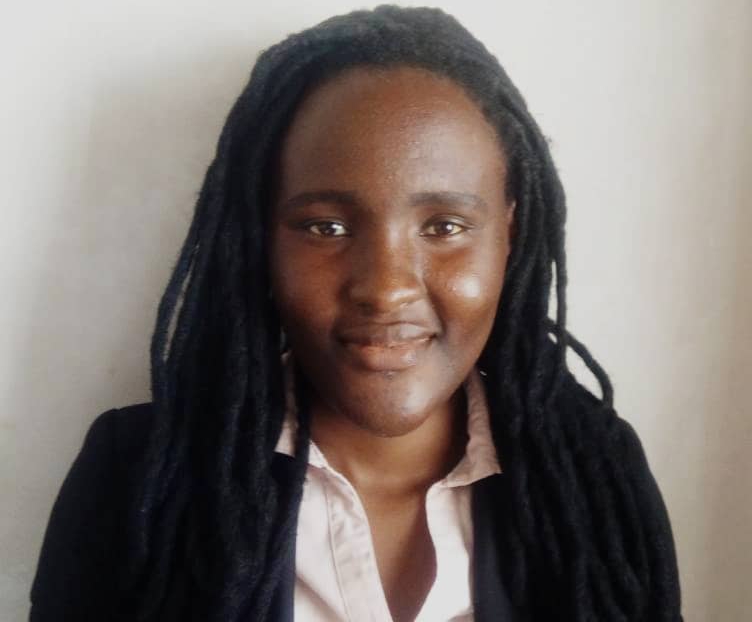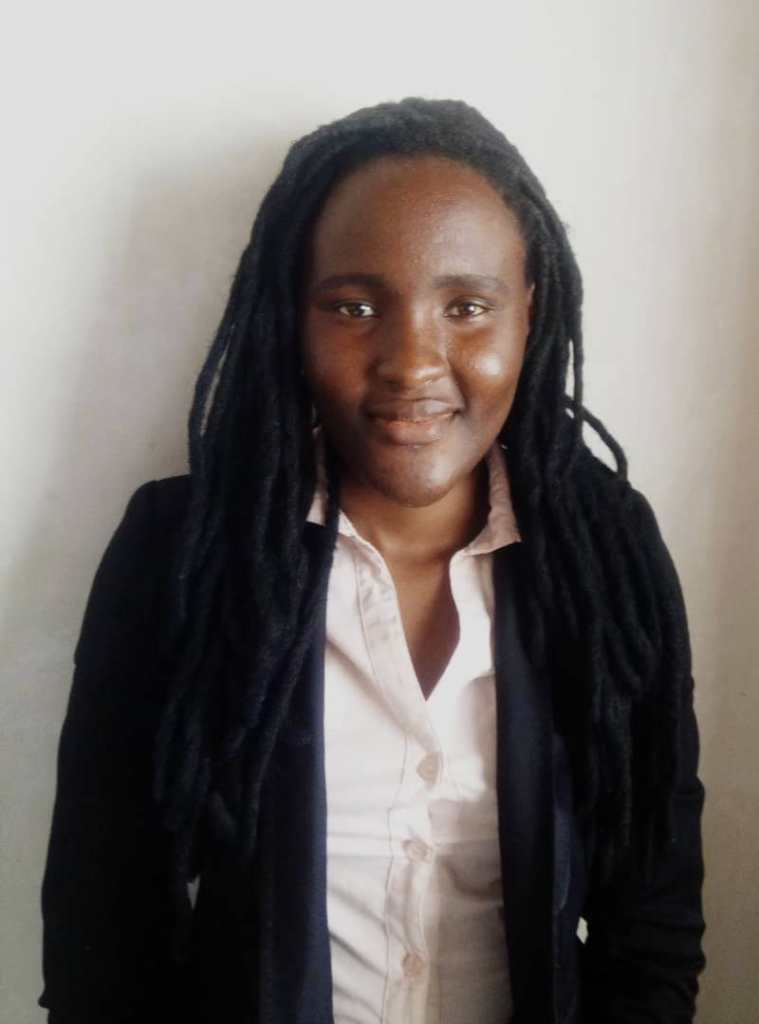
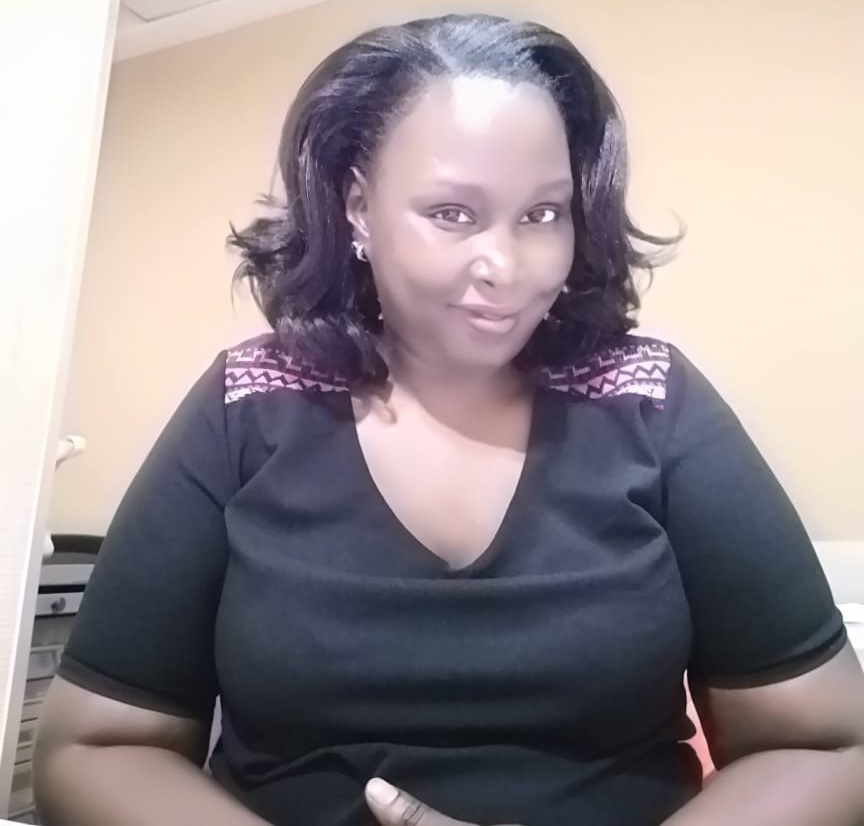
Maureen Bii

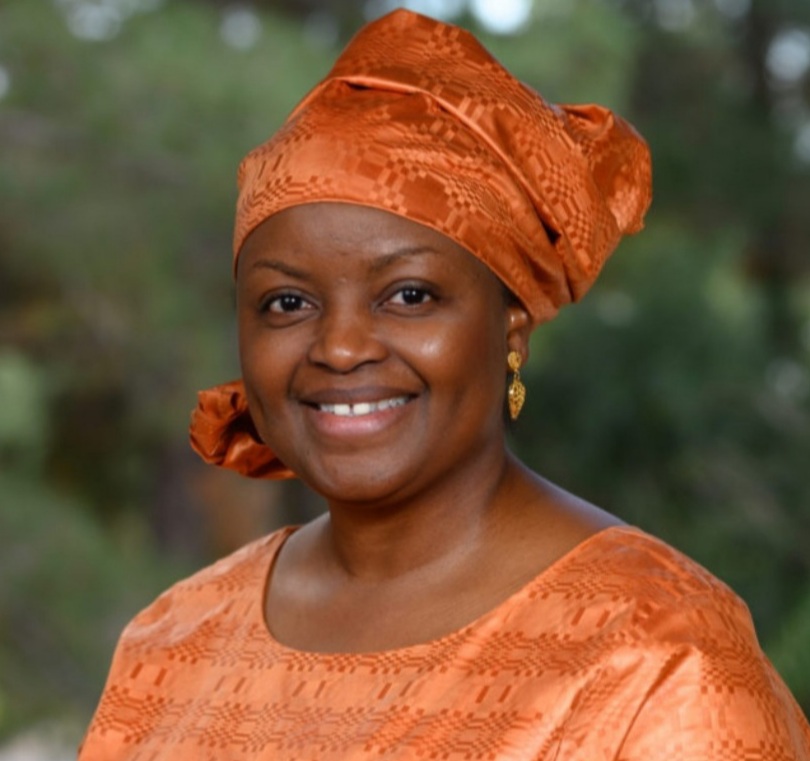
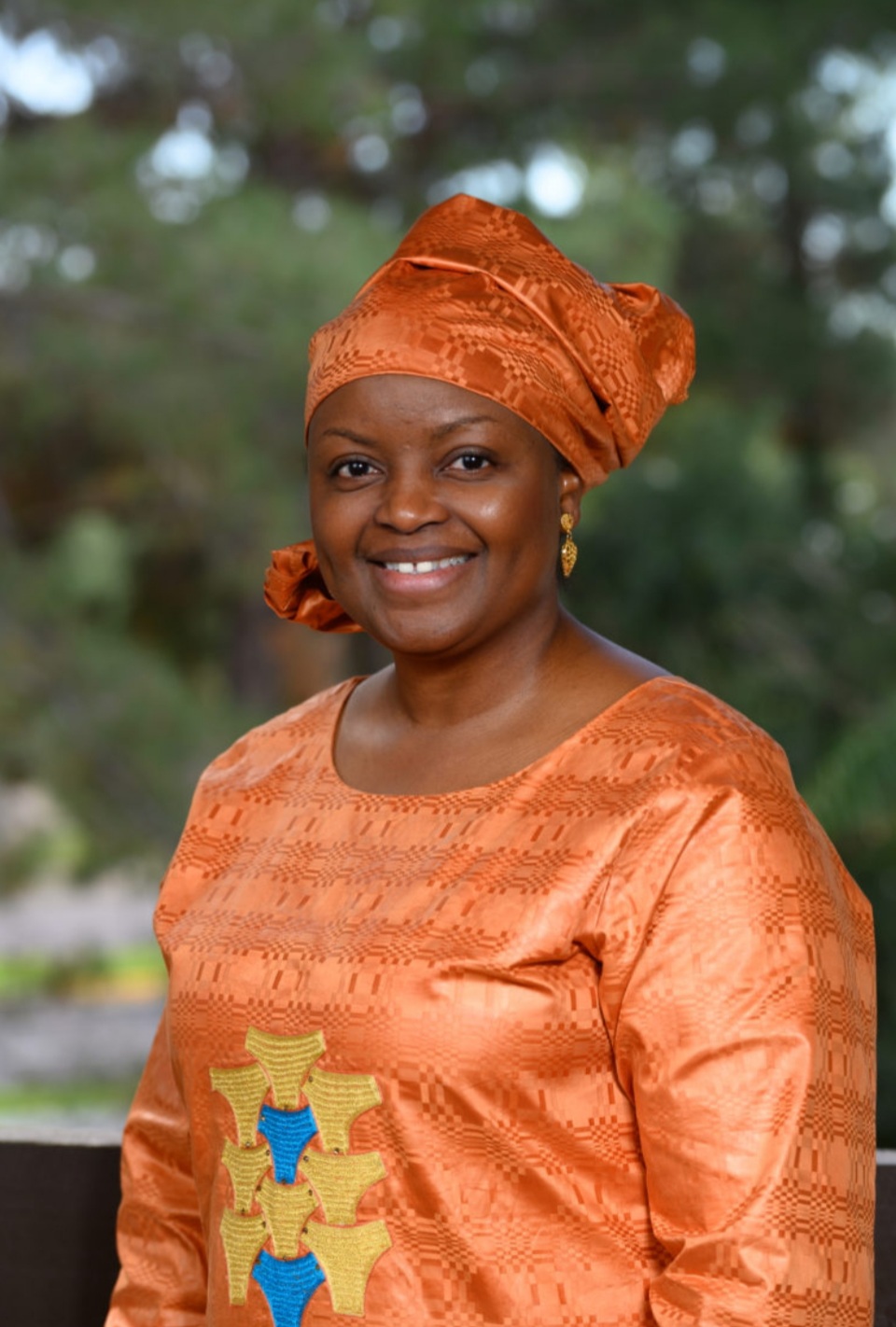
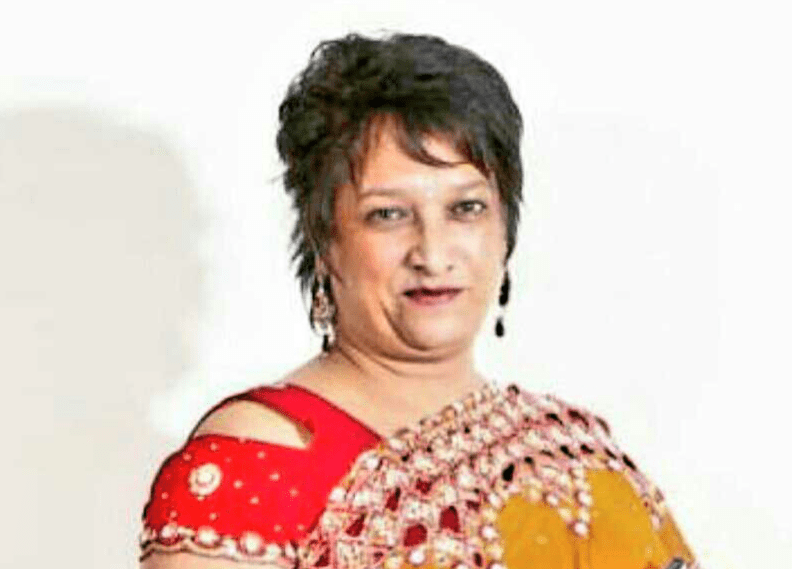
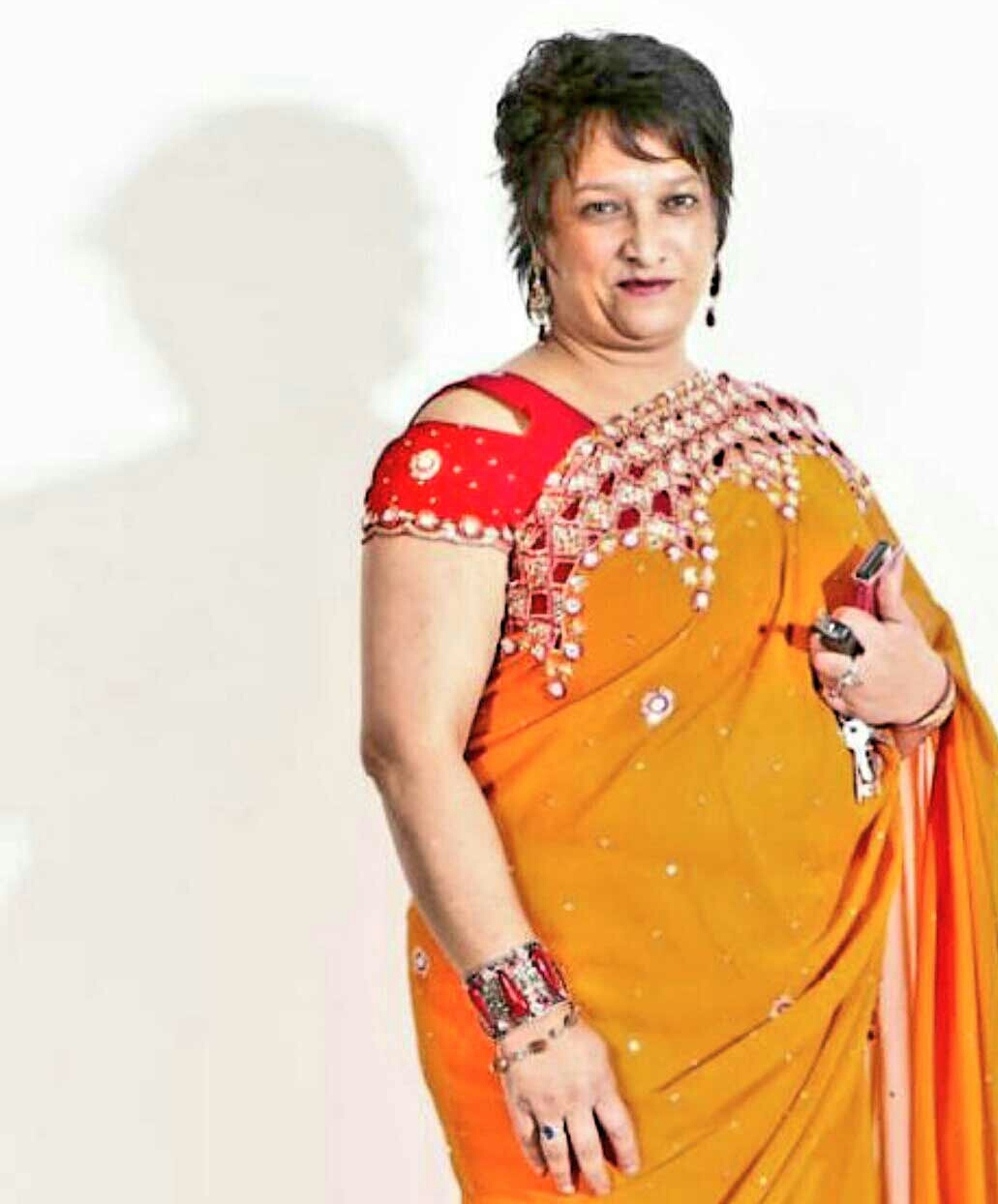
Maureen Bii, founder of Kipkogo Ogiek Women and Youth Program and the Huts of Knowledge

Maureen Bii, the founder of Kipkogo Ogiek Women and Youth Empowerment Program and the Huts of Knowledge has dedicated her entire life to the empowerment of the indigenous Ogiek community in Kenya. She is a Peace and Conflict Resolution & Training Practitioner, a community development champion, and a women & youth advocate that is driven by her personal fight for freedom. Her story shows us that we need to appreciate and utilize the rights we have been given because thousands of miles away lived an eight-year-old girl with a far-fetched dream to access her basic human rights.

This is Maureen’s story …

The Ogiek are a marginalized minority and indigenous hunter-gatherer community native to the Mau Forest with a population of 52 000 out of a total of 50 million Kenyans. The history of the Ogiek community, scattered across 6 counties in the Rift Valley region of Kenya is one marred by injustices such as the lack of citizenship rights, displacement, and recurring land disputes but discrimination is prevalent both against the Ogiek community and within the Ogiek community. Patriarchal leadership has been unrelenting towards indigenous Ogiek women and girls, depriving them of access to an education and healthcare and enabling harmful cultural practices such as child marriages and female genital mutilation (FGM).

In 1992, when my mother heard whispers in the neighbourhood, for my hand in marriage, at the tender age of 8, she refused to present me, the fourth of her five children, as a wife to the village elder. My mother, a hardworking woman, with no education and struggling to feed five children when my father left us, planned my escape, to make sure I achieved my dream of attaining my education. She sent me away to live with her sister in another village in Nakuru, the county of my birth, to save me from the clutches of early marriage and FGM.

Initially, I took shelter with my aunt to attend school but because she too, had financial difficulties, I sought out employment to pay for my education and would live and work in the homes of my employers, who were kind enough to allow me to attend school. It was not easy, as the school would frequently send me home due to outstanding fees.

It was a recurring problem since there were also limited access to technology and a subsequent lack of information on scholarships, which meant that it took me years to complete my primary and secondary education. While at school, I never complained about my situation, to anyone, nor did anyone notice but when I became more focused on my academics and participated in school drama activities, the teachers noticed my absence and questioned when I suddenly disappeared into thin air.

One of my teachers enquired after me, thinking I was married off, but she persisted in trying to locate me, to complete school. Finally, after two years, she found me. When she found out the cause of my absence was crippling school fees, she pleaded my case with the principal. With her support and fundraising initiative, I was able to finish my secondary education and settle my outstanding debt.

Six years after completing my secondary education, I finally managed to enrol in a Bachelor of Commerce (Finance) degree at Kabarak University in Nakuru and zealously searched for scholarship opportunities at the Campus Library, for fear of dropping out. I stumbled upon and applied online for a Forum for African Women Educationalists (FAWE) scholarship but received no response from the organization. Out of desperation, I took a four-hour bus trip from Nakuru to Nairobi, the capital of Kenya, to the FAWE’s Head Office, with no idea of where I would sleep that night. When the staff members heard my story, and saw my level of commitment, they sent me back home that same day, with the promise of awarding me a full scholarship and true to their word, they kept their promise for the entirety of my degree course.

It was during my second year of university, in 2008, aged 24, that I returned to the village from which I had to flee, in Nessuit, Nakuru, with the mission of creating awareness on gender equality and education empowerment. I realized the reason most of my people in the Ogiek community suffer is largely due to a lack of information. With the help of a presiding pastor, not native to the Ogiek community, we set out to provide information on scholarship availability.

Fortunately, during my third year of university, I was able to secure a job and sponsored the secondary education of two girls from the Ogiek community with the purpose of emancipating them from the cultural and poverty constraints. I also managed to secure scholarships, from organizations and good Samaritans, for ten more students, both girls and boys and in the subsequent years, a total of 75 students were sponsored. The outcome of my community participation has resulted in three medical doctors, two pilots, teachers, lawyers, marine engineers, and human resource specialists. ICT consultants, with other young men and women obtaining their economics and computer engineering degrees.

Before we could achieve such an outstanding level of success, we endured prejudice, intimidation, and resistance from the village leaders as there was a lot of discomfort in changing the status quo. However, in my absence, my most ardent supporter and teammate, Pastor Julius Lelei, was able to mobilize teachers to monitor their students to mitigate the chances of school dropouts due to the migration from the lowlands to the urban areas. Our work was also simplified by the evidence that in spite of fleeing my village in pursuit of an education, I still returned to my roots 16 years later, which proved to the village leaders that even if an Ogiek girl seeks out her education, she will still return home and invest in her people.

After graduating with a BCom degree and working full-time, I embarked on and completed my MBA at Jomo Kenyatta University of Agriculture and Technology (JKUAT) while doing numerous online courses from financial modelling to peace and conflict resolution. With my passion for empowering and developing the Ogiek community, I have founded two community-based organizations: Kipkogo Ogiek Women and Youth Empowerment Program and the Huts of Knowledge.

Kipkogo Ogiek Women and Youth Empowerment Program (KOWYEP), holds advocacy programs to highlight the problems of early marriages and female genital mutilation, provide education empowerment for children and focus on women empowerment. 

We create awareness of harmful cultural practices, among old women, who have been practicing the cut, by enlightening them on the dangers associated with FGM, such as diseases, health issues and death since the cultural mind frame is that a woman that has not undergone FGM, is an incomplete woman.  For girls, we empower them to attend classes every day and provide reusable sanitary towels, underwear, soap, and train them on menstrual health management. In addition, we also provide stationery, and writing materials to enable continuous learning. 

On women empowerment, we work closely with widows, single mothers, and teenage girls, and have started table banking, in collaboration with microfinance organizations, for 32 women who benefited from our small loans to start off income generating activities, to earn a decent income and to break away from poverty. We also offer a vocational training hub to train teenage girls’ entrepreneurial skills, like clothing and design, basket weaving, beading and agri-business. 

Our KOWYEP advocacy program has resulted in reducing the dropout rate of girls experiencing menstruation by 80% and have imparted knowledge on sexuality and self-awareness, killing FGM by 68%. We also have a teen mentorship program involving both girls and boys, to ensure that all Ogiek children get equal opportunities. We secure financial support for these children to continue their education and have also reduced illiteracy rates for future employment opportunities. 

Within the sphere of the Huts of Knowledge, we have built a classroom near the forest, to help children under the ages of five and have also added four mobile libraries for children, aged 3-7 years, that are unable to trek long distances, to school to enable them to learn informally, as they wait for the opportune time to attend school. These mobile libraries have tremendously improved the awareness of these young children and  have facilitated young mothers in their search for food for their kids, while knowing that their children are safe.

Going forward, the next focus is to build and establish an ICT centre for information sharing among students as there is none in the area. Information sharing will enable the Ogiek youth access to scholarship opportunities, farming information, grant opportunities, fellowships, online learning, and travel grants. Such opportunities are often taken for granted by many born into such luxuries or who live in close proximity to such access. 

Returning to my roots, with an empowered mind has gifted me with the honour of investing in my community. When I escaped, I fled with a vision of attaining my basic rights to an education even when the steps seemed insurmountable. Through my journey, I have learnt, with specific context to the injustices against the Ogiek community, is that empowered people are champions of peace. They help in bringing calm where there is conflict and bring understanding between warring parties and are able to support the fight for freedom through shared knowledge and wisdom. Thus, escaping from the lowlands of Kenya as a scared yet determined 8-year-old girl to the achievement of my dreams, and legacy, as a strong and empowered 38-year-old woman, has made all my sacrifices worth it.

If you are interested in learning more about Maureen or would like to get in contact with her, please reach out via her Facebook page, Kipkogo Ogiek Women Empowerment Program, or email her at hutsofknowledge@gmail.com.
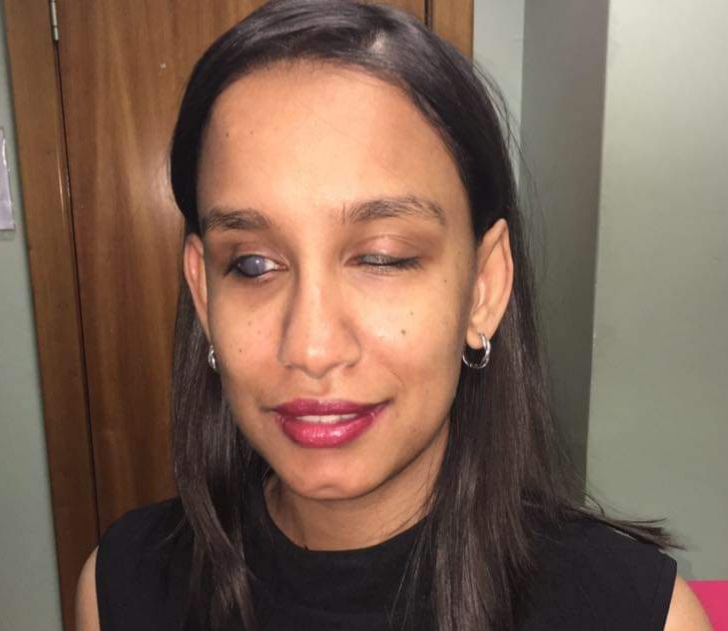
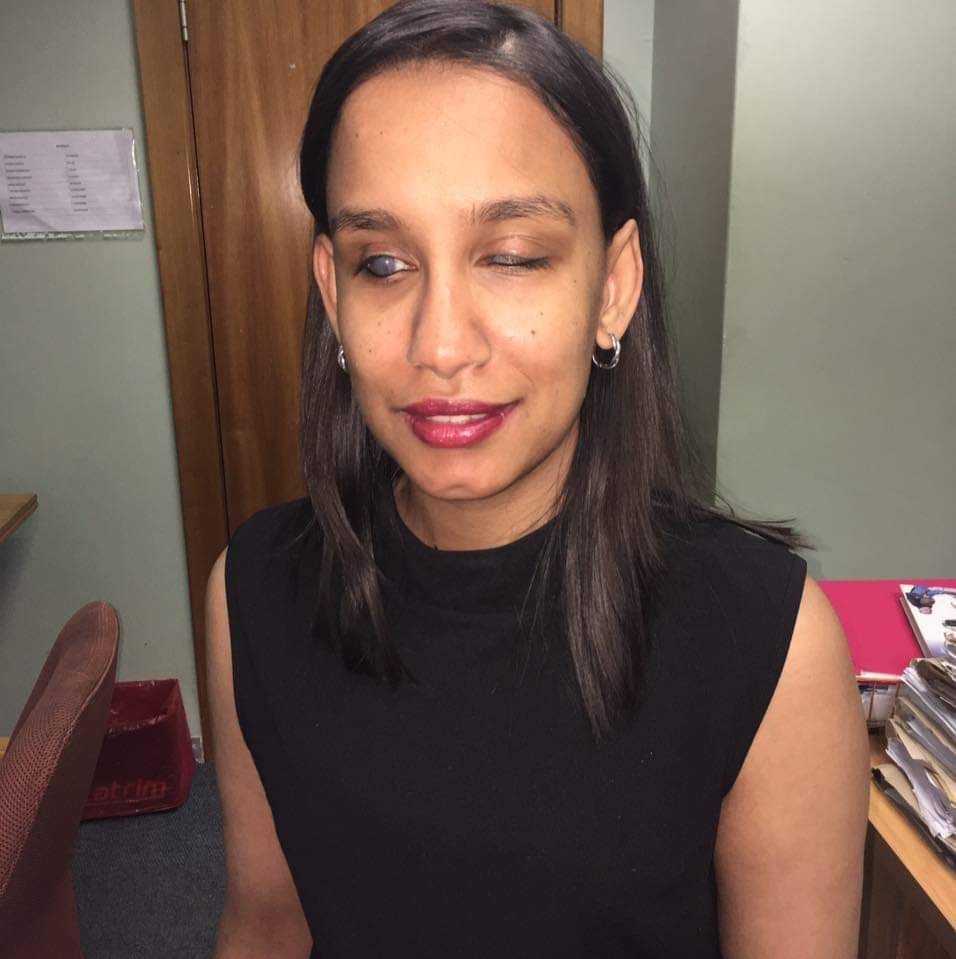
Maymoona Chouglay

Maymoona Chouglay, founder of Infinite Abilities

Maymoona Chouglay, the founder of Infinite Abilities, is a social worker both in her professional capacity and as a volunteer. She is deeply involved in trying to alleviate the societal challenges of the disabled community. Her journey to finding her own path has driven her to facilitate the lives of the visually impaired. Her story shows us that it is important to always find the silver lining in the cloud, irrespective of the challenges, and that we all have the power to turn our pain into purpose.

This is Maymoona’s story …

I am sitting in the classroom and all I see is a colourful blurriness, but I cannot see the distinct features on the faces of my fellow classmates nor the letters on the dark green board a few feet away from me. It feels like a cloud hovering in front of me, through which I need to see, but I find comfort in the presence of my mother, my pillar, and my strength. She is seated alongside me, to make the lines in the book darker, to read to me from the board and to help me with learning to write, between the lines, and on the days that she is not present in class with me, my teacher tries her best to include me in all the activities.

When I reflect on my first two years of mainstream schooling, in Johannesburg, South Africa, I can remember clearly how challenging it was trying to immerse myself in a classroom designed for and filled with learners without disabilities. The struggle to immerse myself in my new surroundings was not due to a lack of care but due to a lack of special-needs resources and infrastructure, which is predominant in most mainstream schools within South Africa. 

In 1987, I was born six months prematurely, in Kimberley, South Africa, weighing 680 grams. While being incubated, I was given too much oxygen which resulted in my retinas becoming detached. Despite having undergone several operations, and receiving the best ophthalmologic care, nothing could be done to reverse the damage, thereby causing me to become visually impaired. With the need to search for better working opportunities, my parents returned to my father’s hometown, in Johannesburg, a city situated five hours away from Kimberley.

It was while I was in Johannesburg, that I entered mainstream schooling. However, the respective school was not equipped to accommodate my condition and we were referred to Prinshof School, for the visually impaired, in Pretoria, South Africa. After we went for our first appointment at Prinshof, to ascertain if it would work for me, my mother assured me that I would manage at the special school, and that she would continue to assist me.

When I was eight years old, we relocated from Johannesburg to Pretoria to enable me to start my new journey. I went from having to sit in front of the board in my former mainstream school, to be able to read the letters, to being able to immerse myself in an accommodating world with learners who endured similar challenges as me. Prinshof was truly the game changer in my development as an individual. It set me on a path of healing and growth by creating a space of belonging. Before Prinshof, I did not have a strong sense of self but through Prinshof, I became very confident and found my sense of self.

I became active and partook in many school activities including athletics, swimming, piano lessons, and the school choir. I completed Grades 1, 2 and 3 within 6 months of commencement. The rate of my development was outstanding to the extent that Prinshof wanted to promote me to Grade 4 within my first year. However, my mother refused the suggestion with the reason of wanting me to focus on learning braille and to become more well-rounded by acquiring skills in other areas, not just academics.

For the next three years, I was thriving at Prinshof but then, in Grade 6, at age 11, my World got shaken to the core by the sudden loss of my mother to lupus. It really stunned me that my biggest supporter was no longer there to cheer me on and to guide me on my path of becoming … There are days that I still miss my mother. I miss her tender touch, her comforting hugs, and her unconditional love but as a child, it was harder to navigate the World, without her, because she was my voice, and as a child, I was still finding my voice. In the midst of the darkness, my father and I held on to each other, and even if I never got over the loss of my mother, I appreciate and have the greatest respect for my father, for always being there for me and for creating a sense of normalcy for me, when she left this World.  

One year after my mother’s passing, my father remarried, and I was blessed with a second mother. She became the mother I needed when my own mother was no longer, and our little family of three was later expanded with the arrival of my twin brothers. This sense of family has been my comfort and through the coming years, I continued to thrive at Prinshof until I completed my secondary education. When I started studying at university, interestingly, it felt like I was regressing into the real world where the mundaneness of university life was in fact, a blind person’s nightmare, all because of a lack of reasonable accommodation.

It was tough adjusting but fortunately, my mother accompanied me to campus as I embarked on my BA Degree in Social Work at the University of Pretoria. She was there for the first six months, assisting me with navigating classes and making notes, until we employed the services of an assistant that walked me to classes, typed my notes and books, where needed, and executed any other tasks that were required. Although I used a white cane, it was very difficult navigating campus with it because university buildings are not always streamlined and flat-surfaced to facilitate walking unaided or even, with a cane.

During my second year of university, I was further diagnosed with glaucoma, which caused me to lose my eyesight completely. I nearly threw in the towel and quit university because my condition got progressively worse, and the daily challenges were just mounting. It was tough but as a believer, I was reminded of one of the most enlightening verses in The Qur’an, “Allah does not burden any soul greater than it can bear” (Chapter 2, Verse 286) and I soldiered on. Six years after I started university, not only did I complete my BA Degree in Social Work, in 2012, but I also graduated, in 2013, with a BA Honours in Social Work.

I have worked and continue to work both within the governmental and non-governmental sectors, from Gauteng North Services to the Department of Social Development and am currently busy with my Masters in Disability Studies. Being a person that is living with a disability, has augmented, and aligned me to assist people with disabilities, in addition to my other social work responsibilities. I am involved in extensive voluntary community work, with other organizations, including the supervision of a home for blind children, from ensuring their well-being to their accessibility to an education, and an empowerment center under the auspices of a non-governmental organization, Garden Social Services. I was previously involved in consulting work with the braille packaging of skincare product ranges with L’Occitane, for a two-year period (2018-2019), and currently participate in public speaking engagements, disability awareness training and campaigns and have also established my own organization.

In 2019, Infinite Abilities was established as a consulting firm to serve persons with disabilities, and their families, with therapeutic to general support and empowerment services. The organization offers educational and disability awareness training to businesses and organizations and supervises social workers and social auxiliary workers in their respective roles in accordance with the Social Work Supervision Policy Framework but with a special focus on dealing with persons with disabilities. The vision of Infinite Abilities is that through its services, every professional will become aware of and be educated and equipped with the skills, tools, and guidelines to assist persons with disabilities that they may encounter in the workplace or in their everyday lives.

For the past four years, since its inception, Infinite Abilities has been a one-woman show. Hence, with the aim of expanding and bringing members on to the executive board, the organization hopes to reach more individuals, living with disabilities, by providing resources to aid in their medical care and counselling services, their educational aspirations and to enable the disabled community to live empowered lives. Furthermore, Infinite Abilities aspire to assist social workers to establish their own private practices with the aim of accommodating more persons with disabilities that are unable to reach the government’s social work services due to geographical locations or being under-capacitated.

There are numerous daily challenges that I encounter in my interactions with people that are not attuned to my visual impairment, from a personal assistant that may not read the instructions clearly, to me, to a driver that does not drop me off at a precise location and it is frustrating, and it can be depressing but I refuse to live in those moments of darkness. I am a firm believer that this condition has been bestowed upon me, to be of service to humanity, to aid me in understanding the nuances of living with a visual impairment and to use my voice to be a voice for other visually impaired children and adults.  No matter where my journey may lead to next, I will continue to strive and empower myself, to the best of my ability, to use those skills to help the disabled community but my deepest desire, in all of this, is that society learn to pass the baton, to persons living with disabilities too. We are more than just being disabled.

If you are interested in learning more about Maymoona or would like to get in contact with her, please reach out via her Facebook page, Infinite Abilities, or email her at info@infiniteabilities.co.za.

Ruvimbo Kadyevu

Ruvimbo Kadyevu, founder of EthelartConnect

Ruvimbo Kadyevu is a recipient of the Tony Elumelu Entrepreneurship Award. She is an innovator, entrepreneur and motivational speaker with a passion for the Arts. She strives to serve by developing and empowering aspiring African artists. Her personal story is a reminder of how much we tend to take for granted and teaches us to appreciate the fragility of Life. We may be here today and gone tomorrow but what we choose to do with our time determines our legacy. 

This is Ruvimbo’s story … 

“I was born prematurely, at eight months, with a lung condition called chronic bronchiectasis in the Murewa District of Zimbabwe. As a result of this condition, I suffer from permanent damage to my aveolis and bronchiles, causing symptoms like breathing difficulties, fatigue, a large production of phlegm and chronic coughing. 

It was particularly taxing to grow up with bronchiectasis especially considering that I was always misdiagnosed, which meant that I did not have the correct support system to treat it, and was also single-handedly raised by my mother. 

My mother was a head school teacher and the nature of her work entailed being despatched to work at rural schools in the Murewa District and other parts of Zimbabwe. This left her with no choice but to ask relatives to look after me in her absence. Although they agreed to take me in, I would sometimes end up staying for short periods of time because some of them did not know how to deal with my condition and because of it, I was moved to another relative.

Throughout the years, I suffered from infections and episodes and would be hospitalized all the time but it was only in 2019 that I was correctly diagnosed with bronchiectasis. I was told it was a miracle I survived and still a miracle that I am alive. 

While growing up and being hospitalized frequently, I went less and less to school and would constantly move from one house to another much like a foster kid. My illness made everything worse but luckily I was a bright student, so even if I spent one week per month at school, I still managed to catch up with my schoolwork. It was a hard fight for me to pass; no one ever thought I would make it to university or amount to anything. 

Living with a chronic lung condition is very hard and a continuous struggle. For the average healthy person, it may take 3-4 days to recover from flu but for me, it could be fatal. In an incident of getting the flu, I can be hospitalized from one to three months and be in constant pain trying to recover and have to learn to walk again. 

I battled with low self-esteem and became socially distant and had to depend on the natural Instinctive tactics of survival, to make it to the next level. I worked hard and became focused on achieving my goal to finish and graduate secondary school. I could not attend boarding school due to my health issues and was instead moved to relatives to attend better schools in the city. I passed my ordinary level (O-Level) and advanced level (A-Level) and could move on to university level but my mother could not afford my university tuition since my younger brother was starting secondary school and hence, I had to take a gap year 

During my gap year, I had to look for a job and in that time someone attempted to rape me which brought on added trauma. I returned home and received counselling while staying focused on getting to university. I applied to study psychology because of my passion to help people but I also had another passion; I wanted to pursue a degree in the Arts with the hopes of establishing a career.  Besides, passion, I was also talented but my mother instead encouraged me to focus on a more stable career choice since as I am academically gifted as well. 

I then opted to study psychology but juxtaposed it with researching the Arts industry in Zimbabwe and Africa. It was during my research that I realized there are so many artistically young and talented people out there that were sitting on their talents because of a lack of support and mentorship programmes. Due to this, and my galvanizing passion for the Arts, I established a company called EthelartConnect which promotes upcoming artists and African Visual Art on global spaces.

I established EthelartConnect, at the age of 22, during my second year of studies at the University of Zimbabwe, and had to hustle after university classes selling chargers in the streets to make my vision become a reality. Fortunately, I had a friend who was tech-savvy and believed in my vision. He helped me with setting up my website and tending to the technicalities of domain hosting and management. Although we were both amateurs in this new process, we would stay awake at night researching, reaching out to people to support us and establishing a marketing brand for the new company. We received so many rejections but still forged ahead to the current platform we have established and of course, we are still growing as an organization.

In 2018, shortly after the establishment of EthelartConnect, my lungs collapsed while I was in my final year of university. I was resuscitated after a hectic struggle but the doctors, through God’s Mercy, managed to revive me. Through this incident, I lost and later recovered my event memory. I also lost my job as a research executive for a consultancy firm due to my long period of hospitalization. Fortunately though, I managed to graduate from university with a BSc Hons in Psychology. 

In February 2020, I started developing hypoxia as my bodily cells and tissues were lacking oxygen to the point that I was again hospitalized for a 2 month period and were on life support. All this occurred before the COVID-19 pandemic hit Africa and even prior to this pandemic, I had to wear a mask to protect myself from contracting the flu. Due to rising hospital bills, I had to be discharged even though I needed oxygen support. I took a leap of faith and went home, hoping God would heal me. It was a very depressing period because it was such a struggle to breathe and I could not afford an oxygen tank, which is very costly. I thought I was losing everything. People do not realize the gift of oxygen and fail to appreciate the God-given ability to inhale oxygen. In my case, I needed to buy an oxygen tank, simply to breathe but through God’s Grace, I managed to recover, without an oxygen tank, and I hope I will never have to experience hypoxia again.

Since I was so focused on my recovery, it adversely affected my business and my artists who were dependent on me to lead the way. Although my health is a major challenge, we are working towards our goal and I have a wonderful team of young and talented individuals that assists with the administrative and managerial side of EthelartConnect.

EthelartConnect is an art talent management and marketing organization with the objective to provide clients globally with quality artistic services and promoting talents to be career-oriented. We serve artists by identifying and recognizing talent, grooming it into professional careers and brand talent into international standard markets. We then market the talent through the selling of artworks and by finding clients. We also represent artists as their front runners for partnerships and collaborations and create events, exhibitions and projects to showcase their talents. 

As an organization, we also conduct visual art awareness campaigns and embrace visual artists’ work through our media segments and feature the artists behind the artworks and their inspirational stories of becoming. Through the establishment of EthelartConnect, we have assisted more than 50 artists and during our years of operation, we have coached them into realizing their skills and have given them exposure both nationally and internationally. We have created not only a brand but also a safe space for artists to achieve more. We recently expanded and registered our business in South Africa, while working with amazing artists from Botswana and have reached other major players in Africa and Europe with the hope to promote more contemporary African Art.

I am a firm believer that our background, struggles and circumstances does not define who we are but what we do as individuals does. While Arts is my passion, my personal struggles with bronchiectasis has led me, in partnership with my friend, Anesa Murawu, also a lung condition sufferer, to establish a non-governmental organization called Breathe Hope Foundation which provides moral support for people living with and battling lung conditions and the foundation aims to create awareness among communities and the health sector for individuals such as myself. While lung conditions may not be outwardly defined as a disability, it certainly robs us of opportunities since we are always sick or prone to sickness. It is for this reason that I am fighting for people, such as myself, that struggles daily. I am a survivor; not a victim and I live one day at a time and each day I try my best to bring happiness to someone with what I have. While others may find me to be inspiring, I believe I am here today because of God’s Grace and everything I am today and everything I have managed to  achieve has been because of Him; The One whose Hand, I lean on, to guide me through every battle … “

If you are interested in learning more about Ruvimbo or would like to get in contact with her, please reach out via her Facebook page, EthelartConnect Enterprise, or email her at ethelartconnect@gmail.com

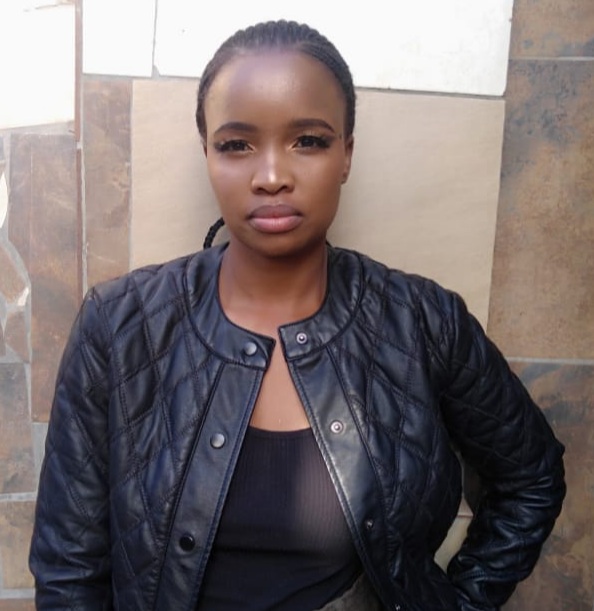
Sindiswa Mabindisa

Sindiswa Mabindisa, founder of Wretched Woman’s Diary

Sindiswa was born in the township of Tembisa, Gauteng and had a very tough upbringing that no child chooses. Her story shows us that we do not choose the situation into which we are born; it chooses us but that with the calling that God bestows upon our lives, it can take one from the slums of the Earth to the Heavens before His Eyes. He sees our beauty in the way people may not and He chooses us to do the work we are called to do, to a door no man can close.

This is Sindiswa’s story…

Their marriage was a mess; they were always fighting. Every weekend my dad was drunk, and he would hit my mom. In 1998, they eventually divorced, and mom moved out and left us with our dad. Since then my dad got involved with women that treated us badly. I remember one incident where I innocently called one of his girlfriends’ “mother”. She got so mad at me and said in a condescending tone, “andingi mamakho wena!” (I am not your mother!).

We, my elder sister (aged 7), little brother (aged 4) and I (aged 6), were then sent to Eastern Cape to live with my dad’s family but we were never made to feel like we were part of the family. We had to fend for ourselves and our little brother, from changing his nappies to doing house chores. We were children but were not treated as children, being recipients of harsh words and treatment, and this had a profound effect on me. But, instead of things getting better, things just got worse.

Back home, in Tembisa, my dad remarried eight years after my parents’ divorce. In the time that we were sent to live with our paternal family, he never supported us. My grandmother, his own mother, took him to the Maintenance Court to seek financial support. But instead of owning up to his responsibilities, he resigned from his job, just so he could evade them. Each time my grandmother took him to court, he resigned from his job. Each time. She tried numerous times, but he refused to support us.  

He then summoned us back to Tembisa to live with him and his new wife, our stepmother. We were welcomed into a living hell but this time, it was only me and my brother. Even though my dad always had a drinking problem, this new life was to escalate into me doing things I never thought in my young mind, that I would ever do.   

While we were back at home, we were forced to eat pap and tomatoes while my dad, his wife and her child would dine out at restaurants. I became the domestic worker at home. I had to cook dinner, do everyone’s laundry, include cleaning their sheets filled with semen, and every housework chore one can think of, on an empty stomach. 

As I said, my dad had a drinking problem but this time, they decided to open a shebeen (a private house selling alcohol) and they made me the “shebeen girl”. I had to sell alcohol from Friday nights until Monday mornings. This decision, of theirs, opened our doors to shady characters and soon, we would have men sleeping over at our house. Strange men, lewd men, sick men. My stepmother invited them in and refused them to leave. She said people were going to kill them, with them being so drunk, and she made space for them to sleep on the floors, alongside me. I always slept on the floors but now, I had company.

Some memories of them are vague, other memories are clear. I recall one of them touching my neck. He kissed my neck and moved his hands between my thighs and said to me that he can do anything he wants with me and he will give me money … I used to share my sleeping space with those men.

As a girl, you want the love of your father, but my dad never loved me. He made it very clear that he did not love me and sometimes, he would hit me for no reason. His words towards me were always harsh but the words that I will never forget is him saying, “Mhla nda thenga umpu uzoba ngowo kuqala umntu endizo mdubula” (The day I buy a gun, you would be the first one I’d shoot) and he always reminded me that he would shoot me once he gets himself a gun.

Finally, 2008 arrived and he got the gun but he never followed through on his threat. In a twist of fate, the year he got the gun is the year I moved out and the year he died.

In April 2008, I moved in with my mom and a few months later, when I returned from a family visit to my aunt in Katlehong, my mom fell sick. She was bedridden and in a hopeless state. I greeted her, “molweni mama” but she didn’t respond. My sister replied and said, “uMama uyagula and akakwazi ukuthetha” (Mom is sick, and she cannot talk). I looked at my mom and she was crying. I didn’t know what to say to her, but I could see she was in pain.

In that moment, I recalled the complexity of our relationship, from the sense of abandonment I felt as a child to the woman suffering before my eyes. Mom could not talk nor walk, so my sister and I used to bathe her and take care of her. Her state was saddening because she could not even tell us when she needed to use the toilet. On the 16th September 2008, I received a call in which my mom managed to muster her strength to tell me that she loves me and a day later, the 17th September 2008, she died.

I was 17 years old at the time she died and shortly after her death; I told my sister that we need to go to dad to ask for food because we had nothing to eat. I begged him for food, but he responded, “Akho kutya apha hambani!” (There’s no food here, so leave!). He was so mad at me for asking and refused. Maybe if it was my sister asking for food, he would have given her. I was so worried because my sister had a two-year-old and we were all hungry. That night he came to our house, but I then ran to his aunt’s house. He followed me to his aunt, along with my stepmother, and wanted to hit me but his aunt told him not to. He then told me, “Uba ndingafa ungezi emngcwabeni wam ngoba nawe uba ufile asoze ndize” (If I die don’t come to my funeral because when you die, I won’t go to yours).  Those were his last words to me because on the 10th November 2008, he died.

We had nowhere to go because when my mom was alive, she was renting and when she died, I asked my aunt if she could rent with us but a month later, she left to live with her biological dad and we had to make plans to move because we didn’t have money for rent. I remember so vividly the times I would knock on people’s doors to ask for a place to sleep. There were nights where I questioned the purpose of my existence.

In 2010, unbeknown to me at the time, the answer to my question was being answered. While I was on a visit in Eastern Cape, my grandmother told me about some young lady who was sick. I asked to go see her and when I got there, she was lying in her own faeces. I asked to bathe her and did that for two weeks. My cousin then asked me to come visit them in Cape Town. When I got there, her own cousin had tuberculosis (TB). I took care of her as well. I would bathe her and take her to the clinic for her checkups until she died in 2011.

In 2016, one of the grandmothers in my extended family, who was mentally ill, suffered from an epileptic fit. She was sick, vomiting and bedridden, in her own faeces. Nobody wanted to assist her, and I was told to call an ambulance. I then offered to bathe her, and this is how I started my career looking after the elderly and the disabled.  

In 2019, I established my non-profit organization called Wretched Woman’s Diary and decided to devote my time to bathing elderly people and people with different disabilities including mental limitations. I have made it my mission to identify the elderly, the frail and the chronically ill within my community and started this organization without any financial assistance or resources. I have taken it upon myself to provide home care visits and nursing care, where possible. I have personally experienced the hardships of taking care of an elderly woman on her death bed, to the extent of bathing her corpse.

Currently, I have four volunteers working for me and they are mainly responsible for dealing with the administrative aspect of Wretched Woman’s Diary which makes me solely responsible for nursing and caring for the victims of neglect. To date, the organization is caring for 10 elderly ladies, including 2 disabled children, on a daily basis.  They are vastly located in Gauteng but in some cases, my work has taken me to the Vaal, Pietermaritzburg and Mpumalanga.

As Wretched Woman’s Diary, we aim to alleviate the stigma against our senior citizens and the disabled, we aim to ensure perpetual care and assistance to the elderly, we aim to provide a safe and caring service to the elderly within their own homes and do away with social ills that are affecting our elders. The dire conditions which our elderly are faced with are disheartening; they are faced with feelings of rejection, loss and poverty and I am hoping to work in partnerships with other individuals and organizations that shares the same vision as I do because my dream is to extend my compassion and services to all provinces in South Africa, in the near future.

I am also studying towards becoming a qualified clinical psychologist with the dream of establishing care centres as far and as wide as I can go, to look after the elderly and individuals with different disabilities and limitations.

As much as I am still broken about my upbringing and have issues that I do not want to talk about, I finally found the purpose in my pain. All the years of hardship and suffering were what were needed to mould me into the person I am today. I can relate to the abandoned, to the neglected and to the rejected because I experienced abandonment, neglect and rejection. Today, I willingly go to sleep hungry, just to give someone else my plate of food, because I remember the little girl who was hungry, most days, and I would never want someone else to suffer the way I did.

If you are interested in learning more about Sindiswa or would like to get in contact with her, please reach out via her Facebook page, Wretched Woman’s Diary, or email her at sindiswamabindisa11@gmail.com

Isata Kabia

Isata Kabia, founder of Voice of Women Africa and Afrilosophy

Honorable Isata Kabia is a former Member of Parliament of Sierra Leone and was elected to represent constituency 050, in the district of Port Loko for the period 2012-2017. She has served her country since a very young age and continues to develop, motivate and train young girls and women to take up space and make their voices heard. She is very passionate about women empowerment and has made it her life’s mission to see that every girl can dream and strives to assist in providing platforms to make them independent, strong and resourceful.

This is Isata’s story …

In 1980, at the age of eight, I was reunited with my parents who had immigrated to England when I was three years old. During this period of separation from them, I lived with my maternal grandmother in Lunsar, Sierra Leone, which is situated about 2 hours away from my birthplace, Freetown. My maternal grandmother was my World and when my little brother and I were summoned to join our parents in England, I was very sad at the prospect of leaving her in Lunsar.

When I arrived in England, along with my little brother, I was very miserable and did not adjust well to my new surroundings. Everything was so different from back home and I missed my grandmother dearly. As I grew older and became more settled in England, my longing for Sierra Leone grew deeper and I wanted to return home, to see my grandmother. My parents then paid my return ticket to see my grandmother and it was on this vacation that I had my first encounter with my calling. 

During my vacation in Sierra Leone, as a more matured version of myself, I saw the magnanimity of people who had less than me. They had so little compared to the life that I was living back in England, and yet they gave so much of themselves to others. The experience with these women, and people, my people, stirred within me a desire so strong to give back, that for many years since then, their stories became my stories and their stories energized me to make a difference in their lives.

Even though I was still attending school in England, I started supporting the education of girls of my former primary school back home, by sending school materials and even tried establishing a library in my home town of Lunsar. I spent the next several years, before the start of the Civil War, in 1991, choosing to vacation only in Sierra Leone to volunteer at schools or to distribute toys and books to small children or to donate shipped items to hospitals. Every return ticket I paid, since the first, was earned through working holiday jobs back in England; that was how determined I was to keep visiting Sierra Leone and making a difference.

During my years in England, I managed to earn my BSc in Biochemistry and then moved to the United States of America for working purposes. It was here in the USA, in 1998, that I established an organization called African Women of Substance. We protested in front of the White House and raised funds through our brand of beauty pageants by educating people about Sierra Leone and the plight of our children during the Civil War. Through these funds we were able to support two orphanages back home in Freetown.

My passion for my home country led me to become the first president of the Sierra Leone Network in 2003. Under my leadership and after the end of the Civil War, our group of Sierra Leoneans visited Sierra Leone and engaged in the USA to advocate for healthcare services, the provision of education, investments and other services for the people of Sierra Leone.  

My passion for Sierra Leone had only intensified since the seeds of service were sown at the age of sixteen years and while I always planned to return home. The death of my mother, in England in 2006, led to my official return to Sierra Leone. Her death hit me hard and it was a period where my grandmother and I needed each other the most. In this time of personal struggles and the impact it had on my grandmother, I finally made the decision to return home.

Having lived a minority existence based on color, it was fascinating to move back home and experience a minority identity based on gender. Being a woman in Sierra Leone is difficult, but having grown up with the discomfort of being ‘less than’, my default mode has been to challenge the patriarchy here at home just as I have stood up to racism in England and the USA. 

I have chosen to focus specifically on the leadership of women to ensure we are at the table when decisions are being made about us. My organization, Voice of Women Africa is designed to have branches all over Africa, but I have started small, at home, with the Voice of Women Sierra Leone (VoWS) branch. We aim to build a cadre of women who believe in themselves and in other women, to train and encourage 1000 women seeking elected office in our next local and national elections. Our Pathway to Politics programme is carved out to provide knowledge in running a campaign as well as general leadership skills. Our online videos and podcasts will also amplify unheard voices advocating for rights, in service of inspiring similar actions. Our mentoring scheme bridges the generational gap by creating exchanges between our mentees from secondary schools and universities with older women activists. Our podcasts, currently under development, aim to amplify African women’s voices in order to inspire women and girls everywhere.

My social enterprise Afrilosophy, which was established in 2015, provides training in manufacturing and financial management to women and their small businesses. Our training and manufacturing centre was built and became operational in 2017. To date, we have trained 50 youth and women in manufacturing skills, 120 in ceramics and clay works and 250 women in our Village Savings and Loans scheme (VSL) initiative. Through the Village Savings and Loans scheme (VSL) initiative, we support women owned businesses with access to finance, as well as providing an informal health insurance scheme, and an interest free loan for home emergencies. Ten percent of our Afrilosophy trainees have been employed by other companies and twenty five percent of them have their own businesses or are employed by us. We have struggled for five years without support but have been able to impact 500 lives. It is a small number compared to the national scourge we are trying to address but slow progress is better than no progress and we plan to forge ahead irrespective of the circumstances.

I have also designed a programme called WAAW (Working for the Advancement of African Women) which means ‘yes’ in the Senegalese Wolof language. It specifically targets the West African region, with the hopes of starting this year. It is where our expertise through Afrilosophy will be leveraged to support women’s groups in skills training, entrepreneurship, financial inclusion and support in advocacy and creating safe spaces for women.

I want to spend the next five years building a tribe of women to harness that collective power so we can stand together, as women. I am committing this period to building the future we want by investing in women and girls, now. Our organization’s work should create expertise and capacity leadership, so that we can have the critical mass to advocate for affirmative quotas simultaneously as we show courage and seek elected seats.

Storytelling for change is something I have purposefully embarked on through the Voice of Women Sierra Leone, based on the impact that other women’s stories have had on me. Learning about initiatives inspires me to take similar action and contribute to the scaling of those efforts. My story is very much attached to the efforts made by the women and girls I work with, and I want the world to know about them. Telling my story is in service of their empowerment. I cannot empower them but by accompanying them, I am able to amplify their voices, bring attention to their challenges and provide an opportunity for greater support to our small efforts.

I am who I am because of them.

If you are interested in learning more about Isata or would like to get in contact with her, please follow her on her LinkedIn page, http://linkedin.com/in/isata-kabia-41527b29 or email her at hon.kabia@gmail.com

Ramatu Karim Sesay

Ramatu Karim Sesay, founder of Ramatu’s Girls and Women’s Empowerment Sierra Leone

At the age of 25 years, Ramatu has made great strides in spite of the obstacles thrown her way. She has a tremendous will and her story will inspire every little girl who has to fight a culture meant to break her. Her tenacity is outstanding and for her to still be standing today as a single woman, with no children and never having been married in addition to all she has accomplished pays true testament to her feisty spirit.   

This is Ramatu’s story…

My upbringing was tragic and forced me to mature quickly. I had to learn to start doing things for myself, for my siblings and for people in order to survive. At a very tender age, I was sent to live with one of my paternal family members in Port Loko, Sierra Leone to be looked after since my mother was asked to leave the paternal family compound, due to my parents’ divorce. Since she had no means to support her children, she made no objections, at that time. Under the care of my paternal aunt, I suffered tremendously and had to learn to fend for myself and my siblings. I slept on floors, was physically abused and starved, from time to time. I tried raising money for food, by braiding other peoples’ hair, but it was stolen by my aunt. Sometimes, she would also send me to the markets on a hungry stomach to sell items, after school, and when I took 1 000 or 2 000 leones to placate my hunger, she would beat me when I returned home from the markets. On weekends, I was sent to the bush to collect firewood for cooking and the abuse continued with me sometimes eating by neighbours. I endured the mistreatment over the years until she tried forcing me, at the age of 17 years, into an arranged marriage with a 62 year old carpenter. I refused to be forced into this marriage and as a result, was starved.

The final straw came in 2014, aged 19, when my aunt asked me to travel to Banthoron Village in the Port Loko District, where I was stripped naked and received cane lashings by some of the elder brothers of my father because of my refusal to this arrangement and because my aunt tarnished my name by the family who believed her wicked tales of me, including her accusations that I was not intelligent or focused on my studies. While their judgements and beatings pained me, they could not sway me to fall for their tricks because I was able to identify who I truly am and what I wanted to become.

Since I continued being defiant, and spoke up against her and exposed her during the family confrontation, my aunt refused me entry into her home but luckily for me, she was not paying for my education. I was receiving an education through a charitable organization called EducAid Sierra Leone, which caters for the less privileged in Port Loko. However, since she refused to take me back in, I could not return to my aunt’s home and was forced to stay in Banthoron Village, where I was able to read and prepare for my screening exams at another EducAid Sierra Leone branch.

During this period, I developed a deep concern for standing up against perpetrators and became passionate about gender equality and women empowerment. I wanted to improve the lives of all females living in marginalized communities and started engaging with the Banthoron village girls. I encouraged the girls to challenge cultural views that go against their rights to an education and a better life. During one of these educational sessions, I managed to borrow a phone to call one of my female school friends and a male staff member at the school I attended in Port Loko, to explain my family situation. The male staff member promised to get in touch with the Country Director of the EducAid Sierra Leone to assist me in getting out of Banthoron Village. He delivered on his promise and shortly thereafter the Country Director, my female friend and the male staff member (along with another) drove all the way from Port Loko Town to fetch me in Banthoron Village and I started a new life in Maronka Village. While I was sad to leave behind the village girls, I was ecstatic about the positive change in my story.

I was housed by EducAid in one of their buildings that served as a quarantine center during the Ebola Outbreak in 2014 and was appointed as the quarantine home mother, for a short period, to look after children, both girls and boys that were orphaned by the Ebola pandemic. I was later transferred to EducAid Rolal Senior Secondary School Port Loko to continue my schooling. Throughout this period and serving as a group leader to younger children, I managed to graduate high school although it pained me that none of my family members attended my graduation since they disowned me. After completion of high school, I continued serving EducAid and was asked to assist with their EducAid Mgbeni branch. Throughout, I was empowering, encouraging and teaching classes to children under my supervision and was asked to get involved in a Women’s Project teaching girls and women, phonics, mathematics and language arts. It was during this period, months later, that my father made contact with me, to apologize for not standing up for me because of his fear of his family and the repercussions of the elders who do not take kindly to defiance and he encouraged me to focus on my education and was proud of me for what I have accomplished thus far.

In 2016, I was transferred to a new EducAid school in Makeni to continue the Women’s Project and where I continued in my position as a home mother, gender equality representative and head of the safety committee. I also took it upon myself to engage girls in Makeni about female genital mutilation, which is a highly regarded cultural practice. I was of course met with a lot of backlash but the issues were resolved through EducAid Sierra Leone, as part of their organizational work.

I was very happy during my period at EducAid Sierra Leone as I was gaining experience and earning a stipend per month, to survive, since I had no one to support me but towards the end of my tenure, I was a victim of sexual harassment by one of the senior male teachers who wanted to have sex with me in exchange for bread, eggs and other foods but since I refused his advances, he avenged my rejections through falsified reports on my so called misdemeanours and since, there were no open platform to discuss cases of sexual harassment, noting that he was in a position of trust, I was made redundant and my tenure at EducAid Sierra Leone came to an end. It was distressful for me since I was saving most of my monthly stipends to enrol in university and now felt like I was back to square one.

In spite of this, I told myself not to give up and enquired the cost of pursuing a Bachelor of Education degree at the Ernest Bai Koroma University and to my delight my savings covered the first year tuition. To make ends meet, I sold many different snacks on campus and surrounding primary schools because I believed in the power of an education and with the help of good Samaritans, along the way, who assisted me with my struggles, I am now a 4th and final year student, who intend graduating in 2021 with B.Ed., majoring in Community Development with a minor in Agriculture.

As a young and single woman, I have faced a lot of sexual harassment and had to deal with men trying to prey on me, considering my vulnerable situation, but I have honestly been strong and dealt with every obstacle thrown my way in the most dignified way possible and I am extremely grateful for the help of truly good Samaritans who believe in me, my potential and my vision for my future and whose only heartfelt aim is to see me succeed.

My passion, dreams and aspiration for education, women’s rights, development, women empowerment and improving the livelihood of women and girls living in marginalized communities became stronger in my thoughts and heart after being faced with all the hardships. I realized all of those painful experiences have given me more strength of mind, boldness, lessons and the empowerment needed to be vibrant and fearless in the advocacy of young girls and women.

After my fruitful tenure at EducAid Sierra Leone where I gained valuable experience as a volunteer, I transformed my skills and knowledge into rallying a small group of girls in Makeni and started creating awareness on the rights of girls and women and on harmful cultural practices. My efforts have expanded through training and motivating them and as a result, my organization, Ramatu’s Foundation for Girls and Women’s Empowerment Sierra Leone was established on 26 October 2019. The Ramatu’s Foundation for Girls and Women’s Empowerment Sierra Leone is a fully functional foundation registered with the Ministry of Social Welfare, Gender and Children’s Affairs in Makeni with an office space containing 7 rooms, newly recruited staff members and board of directors and office equipment which we will expand as more funds become available.

I am deeply aspired in ensuring all females are educated on their rights and responsibilities and in ensuring that all issues affecting women and girls in Sierra Leone are eradicated with my own leadership and to include men in joining me to win the fight against arranged marriages/child marriages, rape, female genital mutilation and gender-based violence. I want to serve as a global feminist and to continue to tell my story and to help in the development of women and girls living in marginalized communities. All I want to see is a Sierra Leone or a world wherein women and girls are not treated based on selfish cultures, are not deprived of their rights and responsibilities, are given the platform for progress and equality and are given leadership positions and inclusiveness.

If you are interested in learning more about Ramatu or would like to get in contact with her, please follow her on her Facebook page, Ramatu’s Foundation for Girls and Women’s Empowerment Sierra Leone or email her at sramatukarim@gmail.com 

Nisha Singh

Nisha Singh, founder of Niche Wellness

A former preschool owner, currently working in the corporate sector and the founder of Niche Wellness, Nisha Singh is a mentor to many individuals going through personal challenges. Through her personal experience and having obtained her education, she is using her platform to teach human rights and provide mindset empowerment coaching to others, with a long-term vision of becoming a principal of her own school.

This is Nisha’s story …

My journey of stepping into my power started in January 1986 when I married my husband, at the tender age of 18 years. I came into a family with so much dreams of being loved as a wife, a daughter in law and an addition to the new family I found myself in.  Going in to the new family, I took much of Bollywood fantasies in my head but marriage made me realize the harsh reality of married life and being married to a man that would not shield me from the harshness of petty fights within his parents’ home; the home we lived in since he was not earning enough money for us to even rent our own home.

I endured years of pain while we lived with his parents. His mother gave me the same harsh treatment she received from her parent in laws. My husband did not defend me when his mum or family found fault with me for petty issues and began hitting me within three months of our marriage. I could not tell anyone as I would be seen as not being a woman of good standing; why else would a husband hit his wife? Something had to be wrong with me and I was always made to feel less than. I too, had dreams to work and educate myself, and to get my own house which I wanted to make into a home for our future children.

Twenty seven years of abuse when I did not submit to all the lies and taunts and spoke up. I was beaten physically to an extent that I had bruises on my face and my body, but in all of this, I became more resilient to find my own space and path.

Three years into the marriage, after my first child was born, I left my husband and went back to my mother’s house in Durban, South Africa, with an opportunity to make my dream a reality but he felt the distance of his wife and child being away from him. He requested that I return to him in Johannesburg, South Africa and that he would get us our own house. We bought a dilapidated house, worked to renovate it ourselves and made it livable, but the abuse continued …

Whenever he went to his mum’s house, he came back angry and would hit me as he was told some story of me having a boyfriend etc., even while knowing that I was barred from his mum’s house.

Thirteen years later, after staying in our first house, we moved to another suburb, away from his parents, but the abuse continued. By this time though, I was working and strived with night and weekend study classes to educate myself and better my earning power.

One day, in my current home, my eldest son had to grab his father off of me and threw him a few metres away, in the passage, and warned his father that if he ever hit me again, he would hurt his father.

For all the years that I was being abused, I made cases at the police station but never let justice run its course as the family would plead me to drop the charges since he would get a criminal record. So each time I forgave him and withdrew the case.

After nearly twenty seven years of marriage, and all the abuse, I finally found the courage to apply for a divorce. When I applied for a divorce, he tried manipulating me and making me feel less than him because I did not earn as much money as him. It took me nine months to finalize my divorce. I even had to fire my lawyer and took my own divorce case to court in 2012 and it was successful.   

While the court settlement included joint custody, my sons opted to stay with their father and I felt very worthless as a woman but preserved to love my children even more, to let them see me for who I am. I admit that I ill-treated my eldest son to some extent as he was behaving in the same abusive manner as his father but I went for counselling and realized that I needed to help him undo the programming he received from watching his father abuse me.

After the divorce, I continued studying and obtained my Level 6 Early Childhood Development teaching diploma, my paralegal qualification and my life coaching neuro-linguistic programming (NLP) practitioner certification, all with my own finances. I am an independent warrior woman, going on vacations and buying my own assets, whenever the need arises and I now use my real life wisdom to mentor and guide persons stepping into their own power, which took me so long to find. While my marriage ended, not all marriages have to end in divorce or separation; the persons in the marriage need to be guided to work together, focus on fulfilling each other’s needs and respect each other.

Through my experience and years of mentoring, I find that a lot of people are overwhelmed by the circumstances they find themselves in and I want people to know that lessons are presented in all of our challenges and that we must strive to be the change we want in this World. I have also learnt that hurt people hurt others but healed people heal others. My mission and prayer is to help people to step into their own power and to create a life they want as I did for myself, in spite of my circumstances.  

If you are interested in learning more about Nisha or require her life coaching services, please follow her on her Facebook pages, Niche Wellness and Finding Your Niche or email her at  Nichewellness9@gmail.com