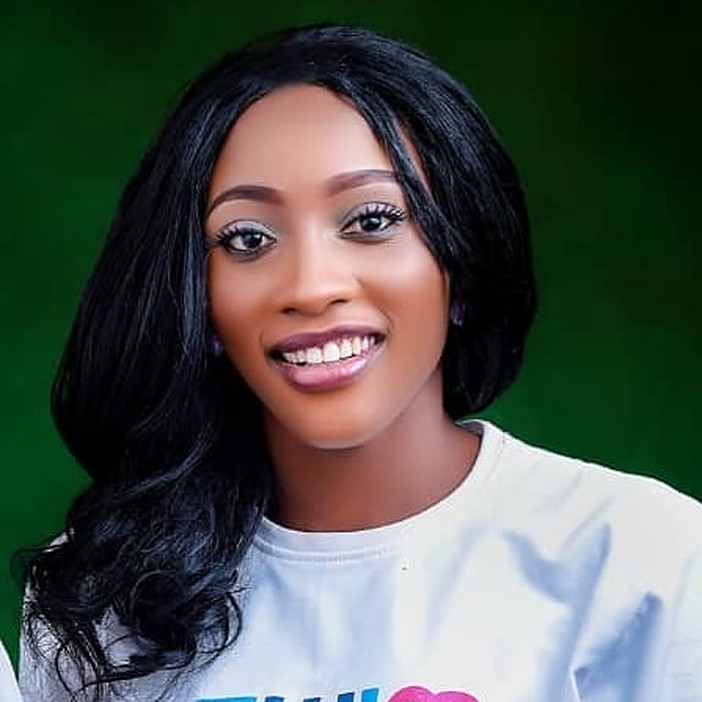
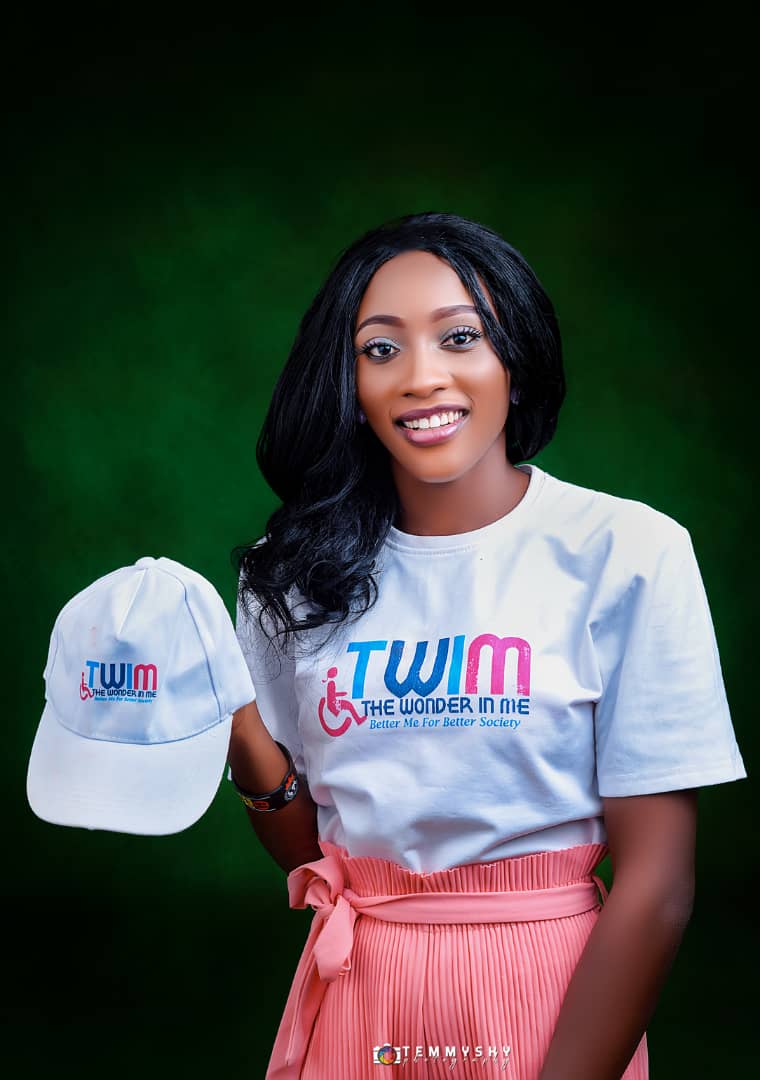
Rachel Affiong Umoh is a driven and ambitious young woman. She is a compere, has her own West African pidgin YouTube Channel called Psyche Special TV, which focuses on mental health wellness and special needs, and is a qualified psychologist with a passion to help the most vulnerable within her society. Her story shows us that the dreams we have may not always evolve as we anticipated but that we need to rise to the challenge that is presented to us because oftentimes, the challenge is the key to achieving our dreams.
This is Rachel’s story …
Prior to my birth in Kaduna State, Nigeria, my parents both emigrated separately from their respective Yoruba and Ibibio states in the South of Nigeria before meeting, marrying, and raising their three daughters, of whom I am the eldest, in the North. We grew up culturally aware of the different tribes in our families, switching easily between speaking Ibibio in Akwalbom State and Yoruba in Ogun State, when visiting our extended families. Being born into an intertribal family has been, and still is, both a source of pride and honour for me but it has also made me attuned to and impacted by the tribalism that is rife in Nigeria.
As a minority tribe in the community where I grew up in, certain access and privileges were denied not just to my family but also to certain other tribes. We were deprived of free mosquito nets and COVID-19 pandemic palliatives, denied applying for vocational training programmes and poverty alleviation incentives, such as agricultural loans and business grants, that were provided for by the government, but which were locally administered. Through the local management of such programmes, we were never timeously informed or even allowed to participate in such incentives. Recurring stigmatization and discrimination, both historically and presently, of tribes over the hierarchical access to privileges, at grassroots level, often causes rising tensions which leads to communal and tribal clashes and inter-religious conflicts in both Northern and other parts of Nigeria.
Growing up and witnessing such forms of oppression, injustices, and corruption within my region and across Nigeria and having seen, first-hand, the adverse effects it often has on the most vulnerable groups within our society, moulded my perception of the unfairness of the World surrounding me. It motivated me to want to become a lawyer and solicit for the rights of the vulnerable and the violated, to be able to provide them with the adequate support to live independent and self-fulfilling lives
As a top achiever and having been elected as the president of the press club and debate club at secondary school, I applied to study law at my chosen university in the hopes of fulfilling my childhood dream. However, despite my excellent academic record, I was denied admission because my parents did not hold high-powered positions in the country. My mother is a teacher, by profession, and a serial entrepreneur, while my father is a civil servant, but they were not connected to the crème da la crème of society, and this affected my prospects of becoming a lawyer. It felt like a gross injustice but an accepting reality and with this in mind, I proceeded to change university and course with the aim of studying mass communication because I felt that I can still advocate for the rights of the most vulnerable but using a different tactic, mass media.
However, while I was accepted to study at the next chosen university and passed the qualifying exam to be admitted into the mass communication programme, when I received notification of acceptance, I discovered that instead of being admitted into the chosen programme, I was assigned to study psycho-social rehabilitation. While this may sound confusing to others, this is the norm across Nigerian society; you may apply for one course but might end up getting admitted to another course (that you never even chose as a second option!) but we take this either with a sense of humour or a pinch of salt.
Hence, my parents encouraged me to accept studying psycho-social rehabilitation, which would certify me as a psychologist, as God’s Will for my life and with this in mind, I made the intention to commit myself to this course chosen for me although I was, at the time, not happy with the choice as psychology was all new to me. However, I was pleasantly surprised because as I learnt more about psychology in the first few weeks after the commencement of the programme, I realized the level of impact I can leave in my wake with the exposure, skills and training I would receive during my studies. It made me realize that my childhood dream of advocating for women, displaced persons and the special-needs can still come to fruition through the tools of psycho-social rehabilitation. I took to learning with zest and learnt as much as I possibly could on rehabilitation, social violation cases, HIV testing and counselling and volunteered at relevant non-governmental organizations including a 6-month working stint at Kaduna State Rehabilitation Centre and a one-year compulsory internship at the Department of Social Welfare at a general hospital in Kaduna State. The theoretical and practical exposure has been tremendous, and I eventually qualified as a psychologist in 2020.
It was during my final year of studies that I reached out to individuals within the rehabilitation and counselling sector to form a team and established a non-governmental organization, The Wonders In Me (TWIM). TWIM is a state-registered advocacy organization driven by the mission of a “Better Me For Better Society” and the belief that mental health wellness and inclusiveness is integral to a well-balanced and functioning society. While we advocate against the stigmatization and discrimination of persons with special needs, we have also ensured that 50% of our organization’s executive members and 50% of our volunteers constitutes persons with special needs. Thus, with the current 20 executive members, on board, and 100 volunteers, half of this number represents persons with special needs.
We advocate in communities, at schools, rehabilitation centres, internally displaced (IDP) camps, prisons, and other relevant organizations. The organization’s activities includes both social media campaigns and event hosting. For the past two years, we have launched mental health clubs in 20 secondary schools across Kaduna State, provided relief support to IDP camps, orphanages and rehabilitation centres and donated wheelchairs, crutches and braces, special education training materials and other rehabilitation aids to rehabilitation centres and special education schools. We also organize training programmes for staff on the proper use of modern-day rehabilitation services for children with sensory impairments and learning difficulties and host outreach awareness programmes, which includes guest speakers and key stakeholders. The long-term vision and current challenge are to get TWIM nationally registered and to establish our offices so that we can offer counselling and rehabilitation services to more individuals and expand on the current work that we do.
I am often asked what triggered my interest in advocating for special-needs as I am not a special-needs individual, but the truth is I am part of a minority tribe within my community, and this has deepened my insights into their sense and reality of not being included and having access to an active society. Thus, I would never want any special-needs individual to ever feel like they do not belong or cannot participate. Furthermore, the beauty of having grown up in an intertribal family is that it has granted me the understanding into different worlds that may, in other instances, view each with disdain or hostility and the truth is the spheres within which special-needs and able-bodied individuals navigate tend to be two different worlds. It is important to realize that irrespective of our tribal and religious affiliations, our nationalities, our abilities, or limitations, we are all the same. We are all human and it is important that we represent or provide the vulnerable and the violated with opportunities and platforms to be represented not because of their weaknesses but because they are capable, strong, and willing to participate in society that sadly, often, forgets them. It is important that we reach within ourselves and find our humanity and work together towards a world that can represent all of us and not one at the expense of another. It is this passion that drives me, despite all my personal and professional challenges, and no matter the hurdles, my story is proof to every African woman that giving up on your dreams is not an option. Keep on striving for your dreams and utilize every opportunity that presents itself to you because all the small steps you take in your journey will lead to greater strides.
If you are interested in learning more about Rachel or would like to get in contact with her, please reach out via her Facebook page, TWIM “The Wonder In Me”, or email her at rachelumoh3@gmail.com or thewonderinme262@gmail.com
 JOURNEYS OF HER
Thank you @JOH and Yumnah Jones. Giving me the opportunity to share my story is one of the great things I’ll cherish for the rest of my life. Your platform to inspire and impact the lives of young women across the globe is amazing. 💓💓
LikeLike